333E-352-Worth Tracking

333E-352-Worth Tracking

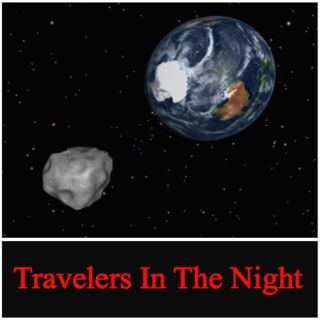
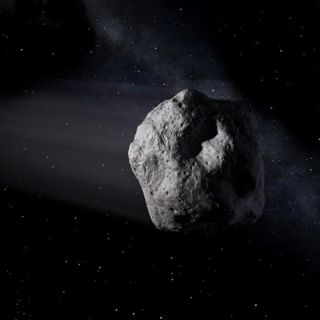
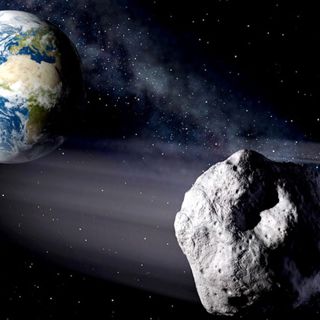
My Catalina Sky Survey teammate Greg Leonard was observing with our team's 60 inch telescope on Mt. Lemmon in Arizona when he discovered a relatively large space rock, 2017 FD157, which can theoretically come closer to the Earth's surface than the communications satellites. We don't have enough data to predict when it will make a very close approach to us. What we do know is that 2017 FD157's orbit and that of the Earth nearly intersect coming to about Earth diameter of each other. For 2017 FD157 to make a very close approach to our planet, both of them would need to be at the position on their respective paths which are closest to each other. If history is a guide, it is likely that additional observations will reveal that 2017 FD157 will never impact the Earth. About once every 11,000 years one of its size impacts the Earth with an atmospheric impact energy of several of large hydrogen bombs creating a crater a mile in diameter. If in an extremely unlikely turn of events, 2017 FD157, appears likely to impact our planet in the far distant future, humanity would be well served to mount a space mission to deflect it from it's deadly course. If humans have enough time they may be able to paint it so that over time sunlight pressure would change its path otherwise a nuclear detonation or some other more aggressive move would be necessary.

Denne episoden er hentet fra en åpen RSS-feed og er ikke publisert av Podme. Den kan derfor inneholde annonser.

Episoder(1000)

914-Deep Synoptic Array

914-Deep Synoptic Array

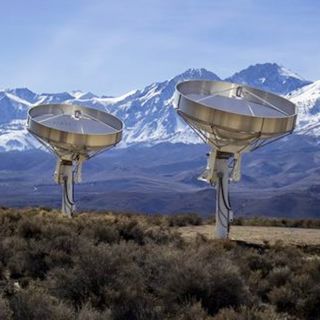
Looking into the sky at night with radio eyes you would not see the points of starlight forming the constellations instead you would see a very bright, colorful and wildly changing scene. In a desert ...

28 Aug 2min
403E-444-Near Comets

403E-444-Near Comets

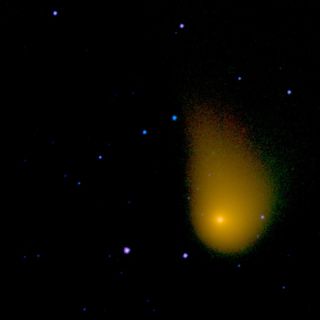
Although no comet nucleus impact on the Earth has been conclusively identified, there is some evidence that suggests the 1908 Tunguska event in Russia, which knocked down trees over a 770 square mile ...

25 Aug 2min
913-Moon Impact

913-Moon Impact

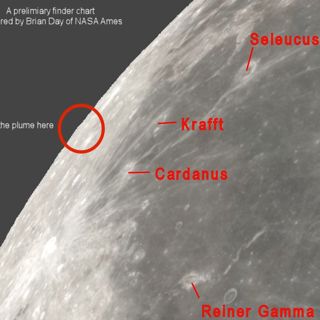
Bill Gray is an astronomer who specializes in tracking objects in space which come near the Earth. In addition to natural objects like asteroids and comets Bill also tracks rocket boosters and space j...

21 Aug 2min
402E-443-Unsung Heroes

402E-443-Unsung Heroes

In 2017 observers in 50 countries at 440 different observatories made nearly 19 million observations of asteroids and comets which enable scientists to calculate where about 800,000 objects will be in...

18 Aug 2min
912-Boston Bolide

912-Boston Bolide

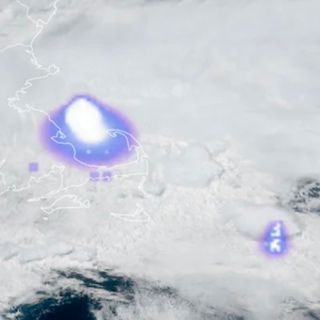
Recently on a Saturday afternoon a loud double booming sound startled residents of Massachusetts and Rhode Island as a large bolide meteor exploded high above.  This type of space rock is a message fr...

14 Aug 2min
401E-442-Brian's Debut

401E-442-Brian's Debut

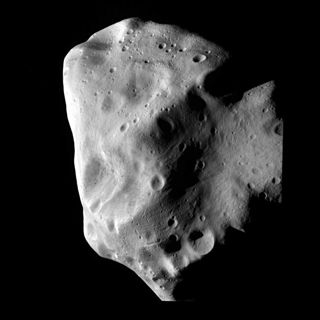
During the only 3 clears hours of his first night solo as an asteroid hunter, my new Catalina Sky Survey teammate Brian Africano discovered two new Earth approaching asteroids with our Schmidt Telesco...

11 Aug 2min
911-Comet Brightness Explosion

911-Comet Brightness Explosion

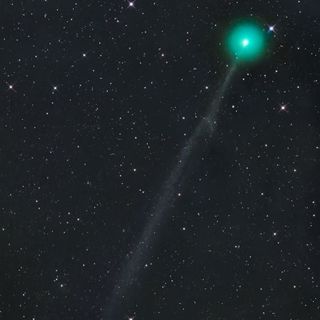
Comet 220P/McNaught orbits the Sun once every 5.5 years on a path which is between Mars and Jupiter. At that extreme distance, more than 1.5 times the Earth’s distance from the Sun, it still receives ...

7 Aug 2min
400E-441-Carson's Pair

400E-441-Carson's Pair

My Catalina Sky Survey teammate Carson Fuls was observing, in the constellation Lynx, with our Schmidt telescope on Mt. Bigelow, Arizona , when within the space of only 35 minutes, he discovered two s...

4 Aug 2min

Populært innen Vitenskap

fastlegen
tingenes-tilstand
romkapsel
jss
liberal-halvtime
rekommandert
forskningno
villmarksliv
rss-paradigmepodden
sinnsyn
tomprat-med-gunnar-tjomlid
fjellsportpodden
rss-nysgjerrige-norge
rss-inn-til-kjernen-med-sunniva-rose
rss-kunstig-intelligens-med-elisabeth-maren-og-morten
dekodet-2
rss-overskuddsliv
rss-fuglehundfolk
rss-rekommandert
smart-forklart