352E-379-Flying Mud Balls

352E-379-Flying Mud Balls

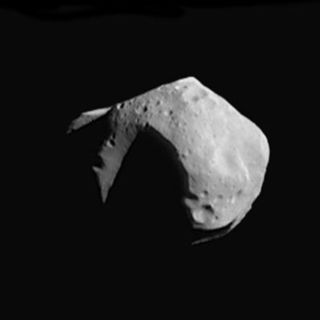
75% of asteroid hunter's discoveries are called C type asteroids. They are dark, have a high abundance of carbon, consist of clay and silicate rocks, and may have a composition which is up to 22% water. Recently Dr. Phillip A. Bland of Curtin University in Australia and Dr. Bryan Travis of the Planetary Science Institute in Tucson, Arizona published an article in the on line journal Science Advances describing their numerical simulations of the evolution of the progenitors of the C type asteroids. These researchers find that these common asteroids are likely to have started out as giant convecting mud balls which could still exist at the center of large asteroids like Ceres. The C type asteroids are particularly significant in that they are likely to have been one of the ingredients which came together under gravity to form Mercury, Venus, Earth, and Mars. Their impacts upon a young Earth are likely to be the source of the water in our oceans. Of more immediate interest is that the type C asteroids could be a handy source of water and raw materials for space colonists either as they are currently flying through space or found buried in impact craters on the Moon.

Denne episoden er hentet fra en åpen RSS-feed og er ikke publisert av Podme. Den kan derfor inneholde annonser.

Episoder(1000)

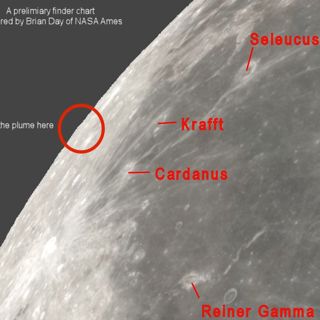
913-Moon Impact

913-Moon Impact

Bill Gray is an astronomer who specializes in tracking objects in space which come near the Earth. In addition to natural objects like asteroids and comets Bill also tracks rocket boosters and space j...

21 Aug 2min
402E-443-Unsung Heroes

402E-443-Unsung Heroes

In 2017 observers in 50 countries at 440 different observatories made nearly 19 million observations of asteroids and comets which enable scientists to calculate where about 800,000 objects will be in...

18 Aug 2min
912-Boston Bolide

912-Boston Bolide

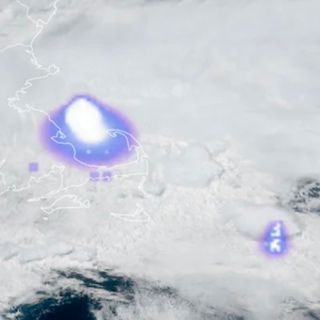
Recently on a Saturday afternoon a loud double booming sound startled residents of Massachusetts and Rhode Island as a large bolide meteor exploded high above.  This type of space rock is a message fr...

14 Aug 2min
401E-442-Brian's Debut

401E-442-Brian's Debut

During the only 3 clears hours of his first night solo as an asteroid hunter, my new Catalina Sky Survey teammate Brian Africano discovered two new Earth approaching asteroids with our Schmidt Telesco...

11 Aug 2min
911-Comet Brightness Explosion

911-Comet Brightness Explosion

Comet 220P/McNaught orbits the Sun once every 5.5 years on a path which is between Mars and Jupiter. At that extreme distance, more than 1.5 times the Earth’s distance from the Sun, it still receives ...

7 Aug 2min
400E-441-Carson's Pair

400E-441-Carson's Pair

My Catalina Sky Survey teammate Carson Fuls was observing, in the constellation Lynx, with our Schmidt telescope on Mt. Bigelow, Arizona , when within the space of only 35 minutes, he discovered two s...

4 Aug 2min
910-Mega Constellations

910-Mega Constellations

In an experiment that will involve all of the residents of planet Earth SpaceX has asked the FCC for permission to launch 1 million satellites into low Earth orbit to create a solar powered data cente...

31 Jul 2min

399E-440-Tracking Elon's Car

399E-440-Tracking Elon's Car

Elon Musk decided not to use a traditional mundane concrete block dummy payload for the first launch of the SpaceX Falcon Heavy launch vehicle to test his rockets lifting capabilities. After orbiting ...

28 Jul 2min

Populært innen Vitenskap

fastlegen
tingenes-tilstand
romkapsel
jss
liberal-halvtime
rss-nysgjerrige-norge
forskningno
rss-paradigmepodden
sinnsyn
smart-forklart
rekommandert
fjellsportpodden
tomprat-med-gunnar-tjomlid
villmarksliv
dekodet-2
rss-inn-til-kjernen-med-sunniva-rose
rss-kunstig-intelligens-med-elisabeth-maren-og-morten
vett-og-vitenskap-med-gaute-einevoll
rss-fuglehundfolk
tidlose-historier