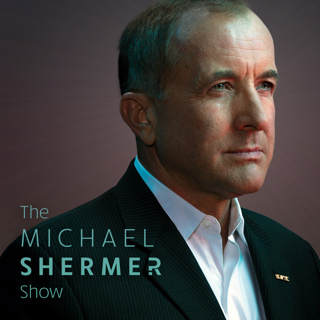
The Power of Common Knowledge: Steven Pinker on Language, Norms, and Punishment

The Power of Common Knowledge: Steven Pinker on Language, Norms, and Punishment

Common knowledge is necessary for coordination, for making arbitrary but complementary choices like driving on the right, using paper currency, and coalescing behind a political leader or movement. It's also necessary for social coordination. Humans have a sixth sense for common knowledge, and we create it with signals like laughter, tears, blushing, eye contact, and blunt speech.

But people also go to great lengths to avoid common knowledge—to ensure that even if everyone knows something, they can't know that everyone else knows they know it. And so we get rituals like benign hypocrisy, veiled bribes and threats, sexual innuendo, and pretending not to see the elephant in the room.

Pinker shows how the hidden logic of common knowledge can make sense of many of life's enigmas: financial bubbles and crashes, revolutions that come out of nowhere, the posturing and pretense of diplomacy, the eruption of social media shaming mobs and academic cancel culture, the awkwardness of a first date.

Steven Pinker is the Johnstone Professor of Psychology at Harvard University. He is an elected member of the National Academy of Sciences, a two-time Pulitzer Prize finalist, and one of Time's "100 Most Influential People in the World Today." He has won many prizes for his teaching, his research on language, cognition, and social relations, and his twelve books. His new book is When Everyone Knows That Everyone Knows: Common Knowledge and the Mysteries of Money, Power, and Everyday Life.

Denne episoden er hentet fra en åpen RSS-feed og er ikke publisert av Podme. Den kan derfor inneholde annonser.

Episoder(628)

Why I Joined the Government UAP Science Advisory Council

Why I Joined the Government UAP Science Advisory Council

Michael Shermer has been appointed to the newly formed UAP Science Advisory Council, formed at the request of the White House and in coordination with the All-domain Anomaly Resolution Office (AARO), ...

23 Jun 29min

Massimo Pigliucci on Doubt, Moral Courage, and Living Without Illusions

Massimo Pigliucci on Doubt, Moral Courage, and Living Without Illusions

What does it mean to live well when certainty is unavailable? Michael Shermer speaks with Massimo Pigliucci about moral character, ancient philosophy, and the difficult art of making decisions without...

20 Jun 1h 33min

Cathy Young: Why Free Societies Need Free Speech

Cathy Young: Why Free Societies Need Free Speech

Cathy Young returns to the show for a wide-ranging conversation about free speech, institutional trust, and the strange incentives shaping public debate today. What happens when universities, media ou...

16 Jun 1h 30min

The Zodiac Killer Wasn't Real

The Zodiac Killer Wasn't Real

The Zodiac Killer has been treated for decades as America's ultimate unsolved true crime mystery: one mysterious killer, taunting letters, cryptic ciphers, a strange costume, and a trail of victims ac...

13 Jun 1h 39min

How Algorithms Use Your Data to Control You

How Algorithms Use Your Data to Control You

Michael Shermer speaks with Oxford philosopher Carissa Véliz about the long human desire to know the future—from ancient oracles and astrology to AI, surveillance capitalism, predictive policing, and ...

9 Jun 1h 34min

Batya Ungar-Sargon: Why the Left Sees Jews Differently Now

Batya Ungar-Sargon: Why the Left Sees Jews Differently Now

Batya Ungar-Sargon joins Michael Shermer for a wide-ranging conversation about the historical relationship between Jews and the American left, and why that relationship has become increasingly straine...

6 Jun 54min

From Equality to Equity: How Social Justice Becomes Ideology

From Equality to Equity: How Social Justice Becomes Ideology

Jon Mills, a philosopher, psychoanalyst, and clinical psychologist, joins Michael Shermer to discuss how social justice ideology has moved from a concern with fairness and equal treatment into a rigid...

3 Jun 58min

Can Science Fix Criminal Justice?

Can Science Fix Criminal Justice?

America's criminal justice debate usually gets reduced to two options: abolish the system or lock everyone up forever. Economist Jennifer Doleac thinks the data point somewhere else entirely. In this ...

29 Mai 1h 6min

Populært innen Vitenskap

fastlegen
tingenes-tilstand
jss
forskningno
liberal-halvtime
rekommandert
sinnsyn
villmarksliv
dekodet-2
tomprat-med-gunnar-tjomlid
smart-forklart
rss-nysgjerrige-norge
fjellsportpodden
rss-kunstig-intelligens-med-elisabeth-maren-og-morten
nevropodden
rss-rekommandert
rss-paradigmepodden
rss-overskuddsliv
abels-tarn
rss-bondevennen