

20VC: Figma, Scale, Wiz: Inside Index's Decacorn Factory | Decision-Making, Investment Process, Biggest Lessons, Biggest Misses | Why Gross Margin is a Fallacy at Seed | Never Turn Down a Deal on Price with Martin Mignot, Partner @ Index Ventures
Martin Mignot is a Partner at Index Ventures, the best-performing fund in the world right now. In the last three months, they have sold Wiz for $ 32 billion, sold Scale for $14.9 billion, and IPO'd Figma as the largest investor. In addition to this, they are the largest or second-largest shareholders in Roblox, Revolut, Adyen and Datadog. Agenda for Today: 00:00 – Why Gross Margin is the Biggest Sin in the Early Days 04:50 – Why Most People Shouldn't Become VCs 07:40 – Why it is BS to Suggest the Future of VC is Boutique vs Mega Fund 09:10 – Do Multi-Stage Funds Really Give a S*** About Seed 13:50 – The Founder Trait That Trumps Market Size Every Time 18:45 – How Spotify Still Haunts Index Ventures & What They Learn From It? 28:50 – The Brutal Truth About European vs. U.S. Founders 34:20 – The Case for a European AI Giant (and Who Might Build It) 40:50 – The Return of the 7-Day Founder Work Week 52:10 – Biggest Lessons from Leading Revolut's Series A 56:40 – Betting Against Nick Storonsky? Don't. 1:03:10 – The One Competitor Index Ventures Admires
11 Aug 1h 19min

20VC: The $BN Greenoaks Backed Protein Bar | Hitting $100M Revenues in David's First Year: Lessons & Mistakes | $0 to $600M: The Untold RXBAR Story | Product-Market-Fit, Pricing, Branding: What Every Founder Gets Wrong Today with Peter Rahal
Peter Rahal is the Co‑Founder & CEO of David Protein, the highest protein‑to‑calorie ratio for any protein bar on the market. Peter has raised over $85M from Greenoaks, Dr. Peter Attia and Dr. Andrew Huberman with the latest round valuing the company at $725 million. The company is poised for over $100 million in first‑year revenue. Formerly, Peter co‑founded RXBAR in his mom's basement with a $10k start, growing it into a household brand and selling it to Kellogg for $600 million. poised for over $100 million first‑year revenue Agenda for Today: 00:04 – The One Piece of Advice from My Father That Made $600M 00:07 – Selling Protein Bars from a CrossFit Gym to $2M in Year One 00:12 – Why Raising Money Early Would Have Killed RXBAR's Success 00:15 – Product vs Brand: What Every Brand Gets Wrong Today 00:17 – Why Red Bull is the Best Brand in the World? What Can We Learn From It? 00:20 – Are Brands the New Religion? How Status and Community Really Work 00:27 – The Boiled Cod Stunt: Brilliant Marketing or Massive Waste of Time? 00:35 – Selling RXBAR for $600M: Inside the Decision and the TAM Ceiling 00:40 – $100M Overnight: What Really Changes When You Get Rich 00:44 – The Hidden Costs of Success: Health, Relationships and Obsession 00:47 – Why Peter Doesn't Care What People Think… and Actually Likes Upsetting Them 00:53 – The $10B Plan for David: From Protein Bars to a Portfolio of Brands
8 Aug 1h 6min

20VC: Figma's 250% Pop - The Greatest IPO Mispricing Ever | Meta and Microsoft Blowout Quarters: Broken Down | Cognition Raises at $15BN and Ramp at $22BN | CRV Downsizing and What It Means for LPs and GPs
Agenda: 00:00 – The Worst IPO Mis-Pricing Ever: What Really Happened at Figma 02:30 – Fidelity vs Founders: How Important is Fidelity When Going Public 07:00 – Why Founders Secretly Want a Pop, Even If It Makes Them Look Stupid 10:15 – The Truth Behind the $3B Figma "Left on the Table" 14:00 – Direct Listings vs IPOs: Should Figma Have Gone Direct 23:00 – CEO Compensation is Broken, Brian Halligan Doesn't Hold Back 29:00 – The New Normal: Growth Rounds with Elon-Style Moonshot Packages 33:00 – Is Canva Next? Why Founders Should "Run, Forrest, Run" to the NASDAQ 36:00 – The Case for Going Public: VCs Are a Bigger Pain Than Public Markets 44:00 – Can AI Even Work for SMBs? Why No One's Cracked the Code (Yet) 51:00 – Meta's Monster Quarter: Growth, Cash Burn, and the Real AI Strategy 56:00 – CEO of the Year? Why Jensen Huang Leaves Zuck & Satya in the Dust 1:00:00 – Cognition's $15B Deal & Mass Layoffs: The Most Savage M&A Move of 2025 1:07:00 – Ramp's $22B Raise: Genius Move or Suicide Round? 1:09:00 – CRV Shrinks, Benchmark's Bet, and the Future of Venture Strategy
7 Aug 1h 20min

20Sales: $0-$3.7BN: The Databricks CRO's Playbook to Build the Fastest GTM Engine in SaaS History | How Databricks Beat Snowflake | How To Build a Sales Org of 5,000 and Close $190M Deals with Ron Gabrisko
Ron Gabrisko is the Chief Revenue Officer at Databricks, where he joined in 2016. Under his leadership, Databricks has scaled from $0 to $3.7BN annualized revenue. He has grown the sales team from 0 to over 1,000 globally, leading expansion into enterprise, government, and international markets. Ron previously held senior sales roles at Cloudera and IBM, bringing deep experience in data and AI infrastructure. His tenure at Databricks has been defined by hypergrowth, multi-product adoption, and world-class GTM execution. Agenda for Today: 00:04 – The Databricks Origin Story: Ali, Ben Horowitz & 7 PhDs 00:08 – Ali vs JPMorgan: Turning Down $10M to Stay Cloud-First 00:13 – Prospecting Day: How Ron Scaled the GTM Culture 00:16 – Why Databricks' Pricing Model Was Its Secret Weapon 00:19 – Enterprise vs SMB: The Risky Bet That Paid Off 00:23 – From $2M to $13M ARR: How Ron Built the First Sales Engine 00:29 – Can AI Replace Salespeople? Ron's Brutally Honest Take 00:36 – How to Get Your First Million-Dollar Rep (and Keep Them) 00:42 – The Culture Secret Behind Scaling to 5,000 Sales Reps 00:45 – Why Databricks Waited Until $500M ARR to Go International 00:52 – What Makes a Great Sales Meeting? Ron's Gold Standard 00:58 – The Snowflake Wars: Why Ron Says Databricks Is 5 Years Ahead
4 Aug 1h 15min
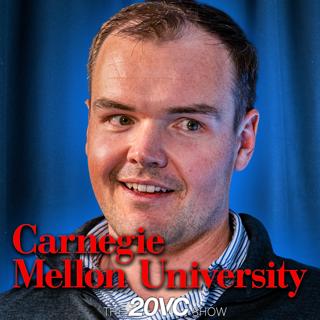
20VC: Inside Carnegie Mellon's $4BN Endowment | Why 90% of LPs Shouldn't Invest in VC | The $140BN Problem with Multi-Stage Funds | The Hidden Math Behind DPI, TVPI, and Illiquidity with Miles Dieffenbach
Miles Dieffenbach is Managing Director of Investments at Carnegie Mellon University, where he helps oversee a $4 billion endowment with a focus on venture capital, private equity, and alternative investments. Under his leadership, CMU's private book has remained self-funding during some of the toughest years for liquidity. Agenda for Today: 00:04 – "I Had Cancer at 26 – It Changed Everything" 07:00 – Inside the $4BN Carnegie Mellon Endowment: The Investment Blueprint 10:45 – Are LPs Getting Screwed in Venture? 13:30 – 90% of LPs Shouldn't Be in Venture – Here's Why 16:00 – Seed Funds Are a Trap (And No One Wants to Admit It) 20:00 – The $140BN Problem with Multi-Stage Funds 24:00 – "Index Is the Best in the Game – Here's Why They Win" 29:30 – "The Dirty Secret of LPs: Brand Over Performance" 34:30 – "When Founder-Friendly Goes Too Far" 38:00 – "The OpenAI Bubble – Will It All Go to Zero?" 44:00 – "Ping Pong Diligence & Wildest Fundraising Stories"
4 Aug 1h 27min
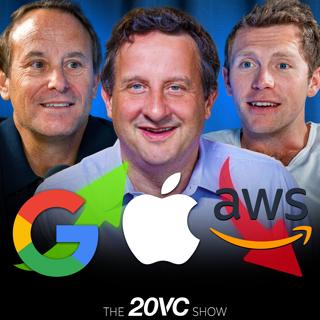
20VC: Benchmark Loses Another Partner | Elad Gil Raises a Monster $1.5BN Solo GP Fund | Why Apple Need a Management Overhaul | Why Google is the Best Performing Hyperscaler | Will Cursor Hit $4BN ARR & Lovable $400M ARR by EOY 2026?
Agenda: 00:00 - Why Benchmark Is Bleeding Partners (and Why That's the New Normal) 04:57 - "I Wouldn't Leave Benchmark… Unless I Had THIS" — Jason on Brand vs Autonomy 09:01 - The Rise of the Solo GP & The Death of LP Conventional Wisdom 13:50 - The Unstoppable Force of Elad Gil & The Myth of LP Discipline 18:45 - Is Vibe Coding the New SaaS? Jason's $10K/Month Spend Reveal 26:57 - Cursor's Growth Is Insane—But Is It Sustainable? 31:44 - Will Microsoft, Google, or Amazon Win the AI Infra War? 37:42 - Is GitHub Copilot the Biggest Miss in Microsoft's History? 44:15 - Are Big Tech Incumbents Now Too Powerful to Fail? 48:00 - Apple's AI Problem: Is It Time for a Management Overhaul? 52:30 - Figma's IPO: $30B Return, Zero Hype. What Happened? 1:06:00 - Final Bets: Cursor to $4B ARR, Lovable to $400M ARR, OpenAI to $800BN?
31 Jul 1h 21min

20VC: a16z's Martin Casado on Anthropic vs OpenAI: Where Value Accrues | Cursor vs Replit vs Lovable: Who Wins and Who Loses | The One Sin in AI Investing | Why Open Source is a National Security Risk with China
Martin Casado is a General Partner @ a16z where he leads the firms $1.25BN infrastructure fund. At a16z, Martin has led investments in companies like Cursor, dbt Labs, and Fivetran to name a few. Before joining a16z, he co-founded Nicira, acquired by VMware for $1.26B. At VMware, he served as CTO of Networking. Widely regarded as a visionary in enterprise infrastructure, Martin has helped shape the modern cloud computing stack. Agenda: 00:00 – Analysis of Current AI Investment Landscape 04:45 – Will Anthropic Kill the AI App Layer? 09:20 – "The Oligopoly Is Coming—Just Like Cloud" 12:50 – Are AI Models Actually Terrible Venture Investments? 15:40 – Why it is BS to Put Down AI Apps for Having Temporary Revenue 21:30 – "Open Source Is a National Security Weapon—And We're Losing" 26:40 – "Have the Foundation Models of the Future All Been Founded Already" 34:30 – Why it is BS to Denigrate AI Apps for Having Low Margins 38:40 – Does AI Make 1x Engineers 10x or 10x Becomes 100x 44:10 – "We're All Dead Wrong About AI and Job Loss" 50:30 – "The Only Sin in Venture: Backing the Wrong Winner" 55:10 – What People Think They Know About Wealth But Do Not
28 Jul 1h 10min

20Product: Should We Kill the PM Role Entirely | How Does Product Design Change Most in a World of AI | How Do Monzo Build Product Today: What Works, What Does Not | Why Most Product Sucks and What Makes Truly Great Product
Fernando Fanton is one of the most respected product leaders in Europe, having held Chief Product Officer roles at Monzo and Just Eat. He previously led product and tech at Rappi, one of Latin America's most valuable startups. Today, Fernando is the CPO @ Property Finder; one of the biggest breakout unicorns from MENA. Agenda: 00:00 – Is "having a vision" actually killing great product teams? 03:15 – Why do most products suck—and what separates the great ones? 07:20 – Should we kill the PM role entirely? Fernando says maybe. 11:45 – Is Monzo's obsession with trust more powerful than speed? 16:10 – What's the #1 reason internal tools will never replace SaaS? 21:00 – Will AI wipe out the need for designers and PMs? 26:30 – Is it arrogant for product teams to protect users from "bad" choices? 32:15 – What's the future of product when OpenAI controls the whole stack? 37:40 – What Monzo product blew up—and why no one saw it coming? 42:55 – Can a bank built on principles really become a $100B company?
27 Jul 1h 7min