How to Think About Social Justice

How to Think About Social Justice

Those who are pursuing social justice too often fail to incorporate the insights of sociology, and when they do make use of sociology, they often draw heavily from claims that are highly contested, unsupported by the evidence, or outright false. This book shows why learning to think sociologically can help us to think better about social justice, pointing us toward possibilities for social change while also calling attention to our limits; providing us with hope, but also making us cautious. Offering a series of tips for thinking better about social justice, with each chapter giving examples of bad sociological thinking and making the case for drawing from a broader range of sociological theory and research to inform social justice efforts, it advocates an approach rooted in intellectual and moral humility, grounded in the normative principles of classical liberalism. A fresh approach to social justice that argues for the importance of sociological understanding of the world in our efforts to change it, How to Think Better About Social Justice will appeal to scholars and students of sociology with interests in social justice issues and the sociology of morality, as well as those working to bring about social change.

Bradley Campbell is a professor of sociology at California State University, Los Angeles. His work examines moral conflict, including violent conflicts such as genocide as well as nonviolent conflicts on college campuses over politics and free speech. He is the author of The Geometry of Genocide: A Study in Pure Sociology and co-author of The Rise of Victimhood Culture: Microaggressions, Safe Spaces, and the New Culture Wars. He has also co-authored op-ed articles about contemporary moral conflicts that have appeared in Time, The Chronicle of Higher Education, and The New York Times.

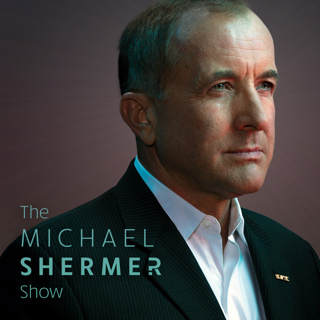
Shermer and Campbell discuss: the telos of sociology: truth or activism? • Can we make people better? • evaluating ideologies • victimhood culture vs. honor culture • conflicting rights and social tradeoffs • CRT, DEI, cancel culture, identity politics • the true motives of woke, progressive leftists • How widespread is the problem of woke ideology? • equality vs. equity • overt racism vs. systemic racism.

Denne episoden er hentet fra en åpen RSS-feed og er ikke publisert av Podme. Den kan derfor inneholde annonser.

Episoder(631)

The Truth About Sex Differences (Steve Stewart-Williams)

The Truth About Sex Differences (Steve Stewart-Williams)

How do men and women differ? Where do the differences come from? And how do they shape modern life? Drawing on a century of research and a billion years of evolution, Steve Stewart-Williams explains w...

11 Jul 55min

America at 250: What Did the Founders Get Right?

America at 250: What Did the Founders Get Right?

Michael Shermer makes the case that the U.S. Founding Fathers were not only steeped in Enlightenment values on which the Declaration of Independence was based, but they were also scientists searching ...

6 Jul 17min

When History Goes on Trial: Demjanjuk, Eichmann, and Justice After Atrocity

When History Goes on Trial: Demjanjuk, Eichmann, and Justice After Atrocity

John Demjanjuk lived for decades as a retired autoworker in suburban Cleveland. Then investigators accused him of being "Ivan the Terrible," one of the most notorious guards at Treblinka. What followe...

27 Jun 1h 32min

Why I Joined the Government UAP Science Advisory Council

Why I Joined the Government UAP Science Advisory Council

Michael Shermer has been appointed to the newly formed UAP Science Advisory Council, formed at the request of the White House and in coordination with the All-domain Anomaly Resolution Office (AARO), ...

23 Jun 29min

Massimo Pigliucci on Doubt, Moral Courage, and Living Without Illusions

Massimo Pigliucci on Doubt, Moral Courage, and Living Without Illusions

What does it mean to live well when certainty is unavailable? Michael Shermer speaks with Massimo Pigliucci about moral character, ancient philosophy, and the difficult art of making decisions without...

20 Jun 1h 33min

Cathy Young: Why Free Societies Need Free Speech

Cathy Young: Why Free Societies Need Free Speech

Cathy Young returns to the show for a wide-ranging conversation about free speech, institutional trust, and the strange incentives shaping public debate today. What happens when universities, media ou...

16 Jun 1h 30min

The Zodiac Killer Wasn't Real

The Zodiac Killer Wasn't Real

The Zodiac Killer has been treated for decades as America's ultimate unsolved true crime mystery: one mysterious killer, taunting letters, cryptic ciphers, a strange costume, and a trail of victims ac...

13 Jun 1h 39min

How Algorithms Use Your Data to Control You

How Algorithms Use Your Data to Control You

Michael Shermer speaks with Oxford philosopher Carissa Véliz about the long human desire to know the future—from ancient oracles and astrology to AI, surveillance capitalism, predictive policing, and ...

9 Jun 1h 34min

Populært innen Vitenskap

fastlegen
tingenes-tilstand
jss
forskningno
sinnsyn
liberal-halvtime
rekommandert
dekodet-2
vett-og-vitenskap-med-gaute-einevoll
villmarksliv
tomprat-med-gunnar-tjomlid
rss-inn-til-kjernen-med-sunniva-rose
abid-nadia-skyld-og-skam
rss-nysgjerrige-norge
diagnose
fjellsportpodden
rss-rekommandert
rss-paradigmepodden
rss-bondevennen
rss-overskuddsliv