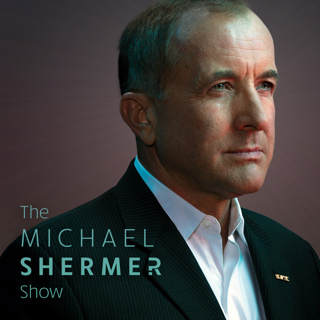
Neuroscientist Explains Selective Memory (Charan Ranganath)

Neuroscientist Explains Selective Memory (Charan Ranganath)

A new understanding of memory is emerging from the latest scientific research. In Why We Remember, pioneering neuroscientist and psychologist Charan Ranganath radically reframes the way we think about the everyday act of remembering. Combining accessible language with cutting-edge research, he reveals the surprising ways our brains record the past and how we use that information to understand who we are in the present, and to imagine and plan for the future.

Memory, Dr. Ranganath shows, is a highly transformative force that shapes how we experience the world in often invisible and sometimes destructive ways. Knowing this can help us with daily remembering tasks, like finding our keys, and with the challenge of memory loss as we age. What's more, when we work with the brain's ability to learn and reinterpret past events, we can heal trauma, shed our biases, learn faster, and grow in self-awareness.

Including fascinating studies and examples from pop culture, and drawing on Ranganath's life as a scientist, father, and child of immigrants, Why We Remember is a captivating read that unveils the hidden role memory plays throughout our lives. When we understand its power—and its quirks—we can cut through the clutter and remember the things we want to remember. We can make freer choices and plan a happier future.

Charan Ranganath is a Professor at the Center for Neuroscience and Department of Psychology and director of the Dynamic Memory Lab at the University of California at Davis. For over 25 years, Dr. Ranganath has studied the mechanisms in the brain that allow us to remember past events, using brain imaging techniques, computational modeling and studies of patients with memory disorders. He has been recognized with a Guggenheim Fellowship and a Vannevar Bush Faculty Fellowship. He lives in Davis, California. Outside of neuroscience, Dr. Ranganath is also a songwriter and guitarist with a number of recording credits, including a song on a feature film soundtrack.

Shermer and Ranganath discuss: how memories are stored by neurons • forgetting — memory in there somewhere or lost forever? • episodic, semantic, working, flashbulb, long-term, and short-term memory • recovered memories vs. false memories + confabulation, conflation • Alzheimer's, dementia, senility • PTSD and bad memories • déjá vu • memory triggers • learning as a form of memory • social memories (extended self) • MEMself vs. POVself • uploading memories into the cloud • improving memory: what works, what doesn't.

Denne episoden er hentet fra en åpen RSS-feed og er ikke publisert av Podme. Den kan derfor inneholde annonser.

Episoder(631)

The Truth About Sex Differences (Steve Stewart-Williams)

The Truth About Sex Differences (Steve Stewart-Williams)

How do men and women differ? Where do the differences come from? And how do they shape modern life? Drawing on a century of research and a billion years of evolution, Steve Stewart-Williams explains w...

11 Jul 55min

America at 250: What Did the Founders Get Right?

America at 250: What Did the Founders Get Right?

Michael Shermer makes the case that the U.S. Founding Fathers were not only steeped in Enlightenment values on which the Declaration of Independence was based, but they were also scientists searching ...

6 Jul 17min

When History Goes on Trial: Demjanjuk, Eichmann, and Justice After Atrocity

When History Goes on Trial: Demjanjuk, Eichmann, and Justice After Atrocity

John Demjanjuk lived for decades as a retired autoworker in suburban Cleveland. Then investigators accused him of being "Ivan the Terrible," one of the most notorious guards at Treblinka. What followe...

27 Jun 1h 32min

Why I Joined the Government UAP Science Advisory Council

Why I Joined the Government UAP Science Advisory Council

Michael Shermer has been appointed to the newly formed UAP Science Advisory Council, formed at the request of the White House and in coordination with the All-domain Anomaly Resolution Office (AARO), ...

23 Jun 29min

Massimo Pigliucci on Doubt, Moral Courage, and Living Without Illusions

Massimo Pigliucci on Doubt, Moral Courage, and Living Without Illusions

What does it mean to live well when certainty is unavailable? Michael Shermer speaks with Massimo Pigliucci about moral character, ancient philosophy, and the difficult art of making decisions without...

20 Jun 1h 33min

Cathy Young: Why Free Societies Need Free Speech

Cathy Young: Why Free Societies Need Free Speech

Cathy Young returns to the show for a wide-ranging conversation about free speech, institutional trust, and the strange incentives shaping public debate today. What happens when universities, media ou...

16 Jun 1h 30min

The Zodiac Killer Wasn't Real

The Zodiac Killer Wasn't Real

The Zodiac Killer has been treated for decades as America's ultimate unsolved true crime mystery: one mysterious killer, taunting letters, cryptic ciphers, a strange costume, and a trail of victims ac...

13 Jun 1h 39min

How Algorithms Use Your Data to Control You

How Algorithms Use Your Data to Control You

Michael Shermer speaks with Oxford philosopher Carissa Véliz about the long human desire to know the future—from ancient oracles and astrology to AI, surveillance capitalism, predictive policing, and ...

9 Jun 1h 34min

Populært innen Vitenskap

fastlegen
tingenes-tilstand
jss
forskningno
sinnsyn
liberal-halvtime
rekommandert
dekodet-2
vett-og-vitenskap-med-gaute-einevoll
villmarksliv
tomprat-med-gunnar-tjomlid
rss-inn-til-kjernen-med-sunniva-rose
abid-nadia-skyld-og-skam
rss-nysgjerrige-norge
diagnose
fjellsportpodden
rss-rekommandert
rss-paradigmepodden
rss-bondevennen
rss-overskuddsliv