Conserving our Southeastern Grasslands with Dwayne Estes

Conserving our Southeastern Grasslands with Dwayne Estes

Many of us grew up hearing about the decline of the old growth forests and their impacts on neotropical songbirds and other wildlife. I think this was especially true for those of us who grew up here in the eastern U.S. However, the story that hasn't been told as well is that of the southeastern grasslands and how they have declined. Yes, I said "southeastern grasslands" because historically, much of the southeast was a diverse patchwork of grassland communities, not a continuous forest like it has often been portrayed.

On today's episode of Backyard Ecology, we talk with Dwayne Estes, Executive Director of the Southeastern Grasslands Initiative (SGI). SGI works in a region that basically covers from Columbia, MO across to Long Island, NY, down to Miami, FL and back across to Brownsville, TX. Even though New York and some of these other areas aren't what we traditionally think of as part of the southeast, all of these areas have very similar grasslands. In addition to his work with SGI, Dwayne is also a Professor of Biology in the Center of Excellence for Field Biology, Austin Peay State University.

As Dwayne tells us, it has only been within the last decade or so that we've begun to realize just how diverse our southeastern grasslands were. Despite the fact that most of us probably think of Kansas and the Great Plains when we hear the term "grasslands," the southeastern U.S. actually has more types of grasslands than the entire Great Plains of the U.S. and Canada combined.

All these different types of southeastern grasslands also translate to a greater biodiversity of animals than can be found in Great Plains. Scientists now think that approximately half of all the plants and animals in the eastern U.S. are tied to grasslands. Part of this biodiversity stems from the fact that not all animals like the same types of grasslands – some species like short grass, some like tall grass, some need larger tracts, some are happy on smaller acreages, some like drier areas, and some are drawn to wetter areas. By having so many different types of southeastern grasslands, there are opportunities for all of these different habitat preferences to be met.

And just to be clear, when we talk about southeastern grasslands, we aren't talking about mowed yards. We're talking about short-grass prairies, tall grass prairies, savannahs, glades, wet prairies, coastal plains, and other similar locations where native grasses and their associated wildflowers are the dominant vegetation. Trees and shrubs can exist in those areas too, as in the case of savannahs, but they aren't the dominant vegetation type like you see in a forest setting.

Nowadays, it can be hard to find naturally occurring southeastern grasslands because many of our southeastern grasslands have been turned into agricultural lands (croplands or pastures) or allowed to grow up into forests after fire was removed from the ecosystem. Some of the best places to look for existing southeastern grassland remnants are often in powerline rights-of-ways, along rocky roadsides, along old fence rows, or in similar places.

It is entirely possible for someone to have a southeastern grassland remnant on their property and not even realize it. Most of our remaining southeastern grasslands have been reduced to only a few acres and are located on private land which makes small landowners critical in identifying, managing, and helping to conserve our southeastern grasslands. Larger tracts of southeastern grasslands still exist in a few places, but they are much less common than the smaller grasslands.

The Southeastern Grasslands Initiative is working to raise awareness of our southeastern grasslands and to provide science-based resources for identifying, managing, and conserving those habitats. They are accomplishing this by partnering with many different conservation and educational organizations and agencies, as well as, with individuals who are just interested in southeastern grasslands and want to help make a difference. The Southeastern Grasslands Initiative fully embraces the concept of working hand-in-hand with others to accomplish their mutual goals.

Among the many resources that the Southeastern Grasslands Initiative is developing which will be of direct benefit to interested individuals is information which will help landowners determine whether they have a southeastern grassland remnant hiding on their property. It's hard to protect or take care of something if you don't even know it exists. So, the first step is learning how to figure out if you have something that might be worth protecting or conserving.

The Southeastern Grasslands Initiative is also embarking on a new project that will provide seed lists by ecoregion for homeowners and landowners who want to plant southeastern grasslands species on their properties. These lists will be tailored to each of our different ecoregions, as well as the specific soil types and available sunlight at each location. A prototype seed list for the Nashville Basin region is available on the Southeastern Grasslands Initiative's website with more lists being developed and added in 2021 and 2022.

I highly encourage everyone to listen to this episode and then check out the amazing resources available on the Southeastern Grasslands Initiative's (SGI) website. They also have some great volunteer opportunities (both in-person and remotely) if you want to get more involved.

Links:

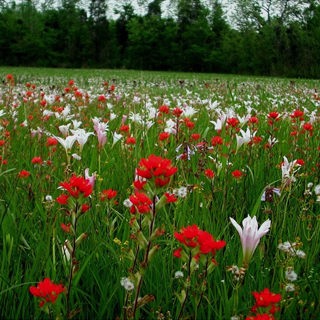
Episode Image:

  • Wet prairie in the Piedmont region of North Carolina.
  • Photo credit: Southeastern Grasslands Initiative

Denne episoden er hentet fra en åpen RSS-feed og er ikke publisert av Podme. Den kan derfor inneholde annonser.

Episoder(118)

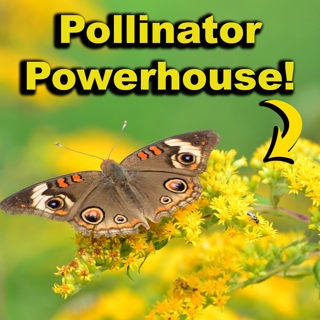
Goldenrod Geek-out! What You Need to Know About This Ecological Powerhouse!

Goldenrod Geek-out! What You Need to Know About This Ecological Powerhouse!

Summary In this episode, Sam Hoadley and I talk about how goldenrods (Solidago sp.) are keystone species and all the ecological roles that they play. We also touch on some of the evolving discussions ...

23 Jul 58min
Simple Ways to Help Eastern Bluebirds

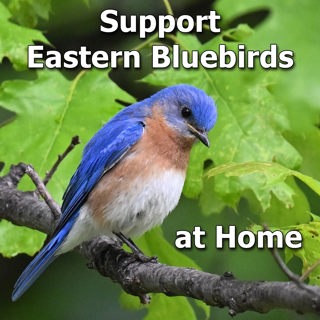
Simple Ways to Help Eastern Bluebirds

Summary In this episode, Ashley Kennedy and I discuss simple ways that anyone can help eastern bluebirds. Our discussion is based off her recently published research looking at the diets of nestling e...

3 Jun 36min
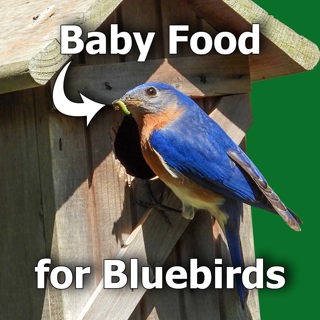
New Research Reveals Diet of Baby Eastern Bluebirds

New Research Reveals Diet of Baby Eastern Bluebirds

Summary In this episode, Ashley Kennedy and I discuss the results of her research on the diets of nestling eastern bluebirds. Ashley used GoPro cameras located on active bluebird nestboxes to take pic...

7 Mai 29min
More than just a forest: Our surprisingly diverse eastern ecosystems

More than just a forest: Our surprisingly diverse eastern ecosystems

Summary The general impression that many people have is that prior to European settlement the whole eastern U.S. was one giant old growth forest. But that wasn't the case. Using an interdisciplinary a...

18 Feb 21min
How to Be Successful with Your Habitat Goals

How to Be Successful with Your Habitat Goals

Summary When it comes to creating habitat, having a written set of goals can be extremely helpful in moving a task from the "I'll get to it someday" category to the "I'm actually going to get this don...

8 Jan 10min
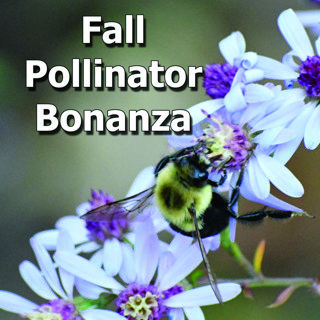
Short's aster: A beautiful late season extravaganza for pollinators

Short's aster: A beautiful late season extravaganza for pollinators

Summary Late blooming native plants are crucial sources of pollen and nectar for pollinators. One of my favorite species that blooms in October, and often into early November, is Short's aster (Symphy...

23 Okt 20257min
The Science Behind "Leave the Leaves"

The Science Behind "Leave the Leaves"

Summary "Leave the leaves" has become an increasingly common mantra each fall. However, until recently little to no scientific research had been done to quantify impacts of leaving your leaves in a ty...

9 Okt 202547min
Black-eyed Susan: A must-have for the pollinator garden

Black-eyed Susan: A must-have for the pollinator garden

Summary Black-eyed Susan (Rudbeckia hirta) is a beautiful native plant that can be found throughout most of the eastern U.S. and makes a great addition to pollinator and native plant gardens. It can g...

25 Sep 20259min

Populært innen Vitenskap

fastlegen
tingenes-tilstand
abels-tarn
liberal-halvtime
romkapsel
jss
rekommandert
vett-og-vitenskap-med-gaute-einevoll
sinnsyn
dekodet-2
villmarksliv
fjellsportpodden
rss-rekommandert
tomprat-med-gunnar-tjomlid
rss-inn-til-kjernen-med-sunniva-rose
rss-nysgjerrige-norge
rss-overskuddsliv
diagnose
abid-nadia-skyld-og-skam
forskningno