The Great Backyard Bird Count

The Great Backyard Bird Count

The Great Backyard Bird Count is an annual citizen science / community science project hosted by the Cornell Lab of Ornithology, Audubon, and Birds Canada. This international project takes place all over the world for four days every February. In 2021, it will happen February 12-15.

In today's episode of the Backyard Ecology podcast, we talk with Becca Rodomsky-Bish, Project Leader for the Great Backyard Bird Count, about the project, its importance, and how we can participate. We also talk about some tips and tools for people who may enjoy watching birds, but are just starting to learn how to identify them.

In 2020, approximately 270,000 people from across the world participated in the Great Backyard Bird Count. Approximately 100,000 to 160,000 of those were from North America. One of the cool interactive features on the Great Backyard Bird Count's website is a map that lights up the locations of new submissions as they are entered. As the weekend progresses, you can see the globe light up with people participating in the project.

Despite its name, the Great Backyard Bird Count isn't restricted to just your backyard. You can participate anywhere including at home, at a city or county park, at a state park, in the local schoolyard, etc. It's also possible to do the count from a stationary location, such as a comfy chair by the window, or while walking your favorite trail.

Participants in the Great Backyard Bird Count are asked to identify and count the birds that they see for a minimum of 15 minutes. You can do multiple counts and you can count for longer than 15 minutes if you would like. After making your observations, you enter your data into eBird which is an online database of bird observations from around the world. You can enter your data either on your computer or on your mobile device, depending on your personal preference.

One thing that Becca stressed was that anyone can participate in the Great Backyard Bird Count. You don't have to be an "expert birder." If you enjoy watching birds, but aren't real confident about identify them, that's ok. We all started somewhere, and we're all still learning new birds. The good news is that there are lots of tools available to help you. Field guides are one option and is the option that many of us who have been watching and identifying birds for awhile first learned how to use. However, today there are other tools available as well.

One of those tools is an app created by the Cornell Lab of Ornithology. The app is called Merlin and it guides you through the identification process by asking you a series of questions. Based on your answers, it will offer you a few possible identifications for the bird that you are looking at. As of this recording, I haven't personally used Merlin, but I've been told by multiple people that it is pretty good at helping you get to the correct identification.

Even after the Great Backyard Bird Count is over, you can continue to add your bird observations to eBird. The lists created in eBird can be extremely valuable sources of information. As individuals, we can use them to help us keep track of our personal observations overtime and in different locations. At a larger scale, scientists can also use the observations entered into eBird to help answer broader ecological questions.

Even something as simple as knowing what birds are found in a given area can help us understand what the habitat in that area looks like because certain bird species may only be found in certain habitats. Not finding certain birds in an area can also be important information, especially if those birds were once found in that area. That's one of the ways that long-term databases or lists of birds observed in a single location over a long period of time can be very important in identifying trends or population changes over time.

To date, there have been over 100 scientific papers published using eBird data. The research in many of those papers likely wouldn't have been possible without the contributions of individuals like you and I to citizen science / community science projects like the Great Backyard Bird Count or eBird. Researchers, like everyone else, can only be in one place at a time. However, if we are all helping to make observations and reporting data, then we can do so much more. Not only does the information we gather make it easier to spot changes occurring right now, but it can also be used in the future to answer questions that we may not even know to ask yet.

Links:

Episode image:

  • Participants in the Great Backyard Bird Count
  • Photo credit: Pamela Monahan

Episoder(115)

Top 10 Backyard Ecology Blog Articles: October 2022 - October 2023

Top 10 Backyard Ecology Blog Articles: October 2022 - October 2023

I always like to do roundups of the top 10 blog articles and top 10 podcast episodes at the end of every year because I know how easy it is to miss stuff. Sometimes we have the best intentions to go b...

14 Des 202310min
Top 10 Backyard Ecology Videos

Top 10 Backyard Ecology Videos

Did you know that we have a Backyard Ecology YouTube channel? If you're like many of the blog readers and podcast listeners who responded to our 2023 end-of-year survey, then answer is "probably not."...

7 Des 20238min
Tips and Tricks for Growing Prairie Plants in Your Native Plant Garden

Tips and Tricks for Growing Prairie Plants in Your Native Plant Garden

Did you know that for many of our most commonly grown native wildflowers and grasses, 2/3 or more of the plant is underground in the form of roots? Or that you can reduce weeding requirements in your ...

30 Nov 202354min
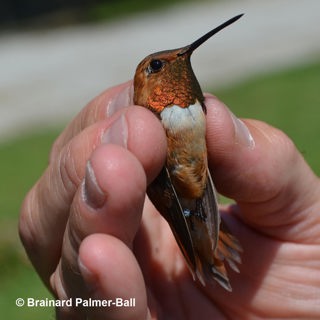
Resharing Your Favorites: Winter Hummingbirds

Resharing Your Favorites: Winter Hummingbirds

Did you know that some hummingbirds will overwinter in the eastern U.S.? These aren't our normal ruby throated hummingbirds that visit our feeders and yards all summer long. These are often western sp...

16 Nov 202359min
Fall Cleanup in the Pollinator and Wildlife Garden: A Comprehensive Guide to What You Need to Know and Do

Fall Cleanup in the Pollinator and Wildlife Garden: A Comprehensive Guide to What You Need to Know and Do

When gardening with native plants for pollinators and wildlife, much of the traditional fall cleanup for gardens is not only unnecessary but could be detrimental. And if you don't have to do all that ...

2 Nov 202314min
Resharing Your Favorites: Gardening with Native Plants

Resharing Your Favorites: Gardening with Native Plants

Did you know that common milkweed isn't native to Georgia? Or that there are many native plants which can be grown in large pots on a patio or balcony? Or that some simple "cues to care" can significa...

5 Okt 20231h 3min
The Secret to Building a Thriving Backyard Ecosystem: Embracing "It Depends"

The Secret to Building a Thriving Backyard Ecosystem: Embracing "It Depends"

"It depends" is often the most accurate and expert answer that you can give to questions related to biology and ecology. Granted, it can be a frustrating answer because we all love simple, straightfor...

20 Sep 20239min
Building Thriving Ecosystems and Exploring Nature in Your Backyard with Backyard Ecology

Building Thriving Ecosystems and Exploring Nature in Your Backyard with Backyard Ecology

Over the last 6-8 months, we've been working hard to make Backyard Ecology even better and to implement new ways to help people on an even deeper level. I am so excited because I can finally share som...

12 Sep 202310min

Populært innen Vitenskap

fastlegen
rekommandert
jss
tingenes-tilstand
liberal-halvtime
sinnsyn
rss-rekommandert
forskningno
tomprat-med-gunnar-tjomlid
rss-nysgjerrige-norge
villmarksliv
dekodet-2
fjellsportpodden
rss-paradigmepodden
smart-forklart
kvinnehelsepodden
tidlose-historier
nevropodden
utenrikshospitalet
rss-lundqvist-podden