Nike's Win-At-All-Costs Culture : Matt Hart - 2020-12-15

Nike's Win-At-All-Costs Culture : Matt Hart - 2020-12-15

Is Nike too big to fail?

Matt Hart is a freelance journalist whose new book Win at all Costs investigates Nike's Oregon Project, diving into its culture of cheating, lying, and misogyny. The book is a page-turning sports thriller reminiscent of a Shakespearean drama with one of the top coaches in the world felled by hubris.

Coach Claire talks to Matt about the rise and fall of former coach Alberto Salazar, if he is indeed a villain through and through, the win-at-all-costs mindset of sports today, how young athletes are affected, the women at Nike, if Nike has some redeeming qualities as an organization, and if most people even care about any of this. It's a fascinating discussion that is sure to appeal to true crime fans!

Matt Hart's writing covers sports science, human-powered adventure and exploration, performance-enhancing drugs, nutrition, and evolution. His work has appeared in The Atlantic, The New York Times, National Geographic Adventure, Outside, and Men's Journal magazine, among others. His reporting on the investigations into Salazar appeared on the front page, above the fold, of The New York Times in May 2017. In addition to his access to the Gouchers, other sources for the book include former Nike employees, athletes, and coaches; famed sports-scientist and Oregon Project whistleblower Steve Magness; and Olympic marathon gold medalist Frank Shorter, among many others.

About Matt's Book WIN AT ALL COSTS:

In May 2017, journalist Matt Hart received a USB drive containing a single file—a 4.7-megabyte PDF named "Tic Toc, Tic Toc. . . ." He quickly realized he was in possession of a stolen report prepared a year earlier by the United States Anti-Doping Agency (USADA). It was part of an investigation into legendary running coach Alberto Salazar, a Houston-based endocrinologist named Dr. Jeffrey Brown, and the cheating by Nike-sponsored runners. The file began Hart's reporting on the Nike Oregon Project and led him to uncover a win-at-all-costs culture of greed, corporate malfeasance, and abuse.

WIN AT ALL COSTS is an explosive and revealing narrative depicting the deception and performance-enhancing drug use at the Nike Oregon Project. Hart writes richly detailed portraits of athletes Kara and Adam Goucher, Galen Rupp, and Mo Farah, as well as the coaches and doctors at the root of the cheating. The book recounts how the secretive program began to unravel when Steve Magness, an assistant coach to Salazar broke the code of silence by alerting USADA. He was followed by Olympians Adam and Kara Goucher who, risking their prosperous careers, became whistleblowers on their former Nike running family at headquarters in Beaverton, Oregon.

Combining sports drama and corporate exposé, WIN AT ALL COSTS uncovers a relentless culture of deceit and drug misuse at Nike; as well as abuse of power, gender discrimination, medical malpractice, and systemic cheating at the highest levels of professional athletics. The book is also a cautionary tale about the excess of greed, corporate malfeasance, and the pushing of athletic boundaries. Deeply researched, unsettling, and ultimately entertaining, WIN AT ALL COSTS will astonish readers by the extremes that coaches and athletes will go to achieve athletic greatness—no matter the cost.

Questions Matt is asked:

3:20 On your website, you say that humans learn through storytelling. What made you want to tell the story of Nike and its infamous coach, Alberto Salazar?

4:28 Your new book, Win At All Costs, is a fascinating deep dive into the world of Nike, from its scrappy, rebel beginnings to the behemoth brand that it is today. Essentially, it's a "David becomes Goliath" story. How would you describe the changes that the company went through from its humble beginnings to today?

6:33 Let's talk about Alberto Salazar. When he started out as an athlete he became one of the greatest American marathoners, and then became an absolute legend as a coach. I was struck reading your book how Skakespearean he really is. He's like this man in power brought down by his hubris. How would you describe him as an athlete, coach, and father?

10:18 It's easy to paint Alberto Salazar as the evil cult leader who got everybody under his spell, but how do you see that? Obviously there were people complicit in it and athletes at the top of the sport, some of them are willing to do anything to get ahead too. So how do you see it? Do you see Alberto as just the evil cult leader or is it more complicated than that?

13:25 Galen Rupp was what, 15 or 16 when he began to be coached by Alberto? That's a child, and you're not really able to make decisions, especially when somebody who has a reputation like Alberto comes into your life and says, "Hey, I see something special in you. Let me take you under my wing." I have a lot of sympathy for Galen Rupp. I know not everybody in the running community does, but I do. But he's an adult now, so we'll see what happens with his career.

15:12 It's like you want to hate Nike for all of the things that they've done, but yet they also have the Bowerman Track Club which is like women supporting women. Shalane Flanagan is now one of the coaches there. If you look at them on Instagram, it's just like picture perfect empowerment and everything that it's supposed to be. It's just like how can you have two things like that in the same town and in the same company?

17:56 It's easy to kind of say, okay, Alberto was the bad apple, but we've got Jerry Schumacher and he's the best, and he's wonderful, and still that Nike is just that one guy. But a lot of the stuff you talk about goes higher up than just Alberto Salazar. It goes to everybody above him, and I thought that it was really eye opening when you talked about salaries. In the world of running, it's very secretive how much pro runners make, and you were able to find out that Kara Goucher got paid $35,000 while her husband Adam got paid $90,000 when they joined. Can you talk about that and about why they were willing to tell you that?

20:11 Compared to just about any other professional sport, coaches' salaries all seemed incredibly low. And maybe it's because obviously running doesn't bring in the money that the NFL does. We don't sit around watching running, at least not too many people do, which still I think is very bizarre that there's millions and millions of runners in the United States and yet track and field and running is not that interesting to people. Why do you think that is? Why doesn't running have the fan base that baseball or the NFL or something like that does?

22:24 I coach a lot of athletes and many of them just simply aren't interested in what the elites do. And this leads me to my question for you. This whole scandal with the Nike Oregon Project, has it affected Nike at all as far as sales? People are still buying their shoes, right?

24:28 Nike is still paying for the defense of Alberto Salazar. Any insight on why?

26:13 Did you interview Mary Cain for the book?

26:57 Alberto was a son figure and a father figure and so many of the athletes say that, "He's like a father. I love… " Even Kara Goucher was like, "He's a father figure to me. He's the best," and all of that, and now it's a very different story.

28:26 You talk in the book about how Alberto Salazar who has $1 million budget or something, he has access to the latest technology, and massage therapists, and all of that, he would personally massage Galen Rupp, and there's a couple things that you might be suspicious are going on there when that happens, but it seems like that was the testosterone. Is that what you found? It just seems weird to me.

31:29 There were stories of athletes being prescribed things for ailments that they didn't have. Everybody on the team had a thyroid problem all of a sudden. And then there were the L-Carnitine infusions, and obviously infusing yourself with anything is against clean sport. But when they were caught, they just said, "Oh, it didn't do anything for me." Do you want to talk a little bit about the whole infusion story?

34:26 Is there a USADA test for L-Carnitine, because it's an amino acid?

35:06 I'm surprised L-Carnitine hasn't become more of the thing because to be perfectly honest, when this whole story broke, I was training for a marathon and I went to GNC and got myself some L-Carnitine. People see this and hear this, recreational runners or sub-elites, and they're like, "Huh, that's interesting." And yet, they go ahead and follow that gray line. It's almost like exposing the truth encourages more people to cheat, do you think?

37:44 I'd love to talk a little bit about the women at Nike. We learned all about Kara Goucher and her reduction clause. So when she decided to have a baby, she basically was not paid. So she was not paid for a very long period of time while she still was technically working for Nike. Again, this goes back to the contracts being super, super secretive. Do you think at least that has changed in the world of running for women as far as how they're treated when they decide to have a family?

40:09 What do you feel is the future of sports and running and Nike?

42:52 Hopefully with the good example of the Bowerman Track Club, Nike might be able to change for the better from the inside, and then with work like yours, hopefully will change for the better from the outside.

44:13 Matt, what's next for you with your running and your writing?


Questions I ask everyone:

45:01 If you could go back and talk to yourself when you started running, what advice would you give?

46:15 What is the greatest gift running has given you?

46:51 Where can listeners connect with you?

Quotes by Matt:

"As an athlete, I learned this through the reporting, that Alberto Salazar would try basically anything to try to improve performance. Now that's not all drugs and illicit means. That's kind of anything from massage to dry needling to whatever else might be in the popular culture of athletes at the time."

"Athletes at the end of the day are 100% responsible for what they put into their body. Any athlete that's working with Alberto Salazar, it does want to aggressively pursue hard training and they'll do kind of whatever they're asked or whatever they think can help them stand on top of the podium, and that's the win at all costs sort of zero sum game that sports have become."

"Of the $36 billion Nikes makes a year, some $4.6 billion of it is the run category, and so that's I think their largest category, to sell to runners. Now it's a different question of whether we want to watch those runners run."

"You have to imagine years of training at a level you simply couldn't maintain without drugs changes you physiologically. You're steps ahead or you're stronger or you're faster. And so, that's a whole other discussion, the long-term benefits of drugs and is someone still a cheat if they've gotten off them."


Take a Listen on Your Next Run

Want more awesome interviews and advice? Subscribe to our iTunes channel

Mentioned in this podcast:

Matt Hart's website with links to book: Win at All Costs: Inside Nike Running and Its Culture of Deception

Bowerman Track Club

Runners Connect Winner's Circle Facebook Community

RunnersConnect Facebook page

claire@runnersconnect.net

https://www.precisionhydration.com/


Follow Matt on:

Instagram

Twitter


We really hope you've enjoyed this episode of Run to the Top.

The best way you can show your support of the show is to share this podcast with your family and friends and share it on your Facebook, Twitter, or any other social media channel you use.

The more people who know about the podcast and download the episodes, the more I can reach out to and get top running influencers, to bring them on and share their advice, which hopefully makes the show even more enjoyable for you!

Denne episoden er hentet fra en åpen RSS-feed og er ikke publisert av Podme. Den kan derfor inneholde annonser.

Episoder(768)

The #1 Easy Pace Mistake That Wrecks Your Fall Marathon Training

The #1 Easy Pace Mistake That Wrecks Your Fall Marathon Training

Welcome back to Run to the Top! After a year-long break, we're back with a new format, a new permanent co-host in Coach Sara, and a lineup of new segments designed to make this show more interactive a...

24 Jun 38min
Learning From Injury Setbacks to Run Smarter & Faster

Learning From Injury Setbacks to Run Smarter & Faster

Pretty much every runner deals with injury setbacks. The silver lining is that the recovery process can teach many important lessons. Coach Andie Cozzarelli joins us on the show to chat about her own ...

25 Jun 20251h 13min

Exploring The AI Running Revolution with Dr. John Holash and Dr. Cody Ray van Rassel

Exploring The AI Running Revolution with Dr. John Holash and Dr. Cody Ray van Rassel

The technological revolution has taken over running. Dr. John Holash and Dr. Cody Ray van Rassel are specialists in exercise physiology at the University of Calgary. We brought them on today's show to...

18 Jun 20251h 31min
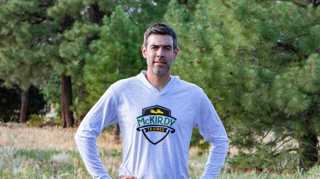
How Coach James McKirdy is Bringing the Pro Treatment to Everyday Runners

How Coach James McKirdy is Bringing the Pro Treatment to Everyday Runners

Coach James McKirdy is bringing the pro treatment to non-professional athletes by offering the McKirdy Micro Race series with services like personal pacing and bottle service. We brought James on to ...

11 Jun 20251h

The Science Behind Ketones as Fuel Source with Founder of Ketone IQ Michael Brandt

The Science Behind Ketones as Fuel Source with Founder of Ketone IQ Michael Brandt

Michael Brandt founded Ketone IQ after noticing its high metabolic efficiency to make fueling with ketones easier. We're bringing him on the show to chat all about ketones including: How he got start...

4 Jun 20251h 5min

Interview with Wayne Larden - TCS Sydney Marathon Race Director

Interview with Wayne Larden - TCS Sydney Marathon Race Director

The TCS Sydney Marathon is the newest Abbot World Marathon Major and we're joined by race director Wayne Larden to learn more about it. We'll answer questions like: How did the Sydney Marathon become...

28 Mai 202532min

How to Run with your Slower (or Much Faster) Friends

How to Run with your Slower (or Much Faster) Friends

Running in groups adds a social element to training but it can be tricky finding a pace that works for everyone involved. Today's show is all about getting the most out of training in groups and we'll...

21 Mai 202552min

Running News: Marathon Results Roundup, Grand Slam Track Debut, NCAA Paying Athletes Directly and More

Running News: Marathon Results Roundup, Grand Slam Track Debut, NCAA Paying Athletes Directly and More

We're covering the top news stories in running on today's show, including a roundup of headlines including: Top American performances at the Boston Marathon Women's course records at both the London ...

14 Mai 20251h 19min

Populært innen Helse

fastlegen
rss-gukild-johaug
psykodrama
hvordan-har-du-det-mann
leger-om-livet
relasjonspodden-med-dora-thorhallsdottir-kjersti-idem
rss-kunsten-a-leve
rss-dagen-for-dagen
rss-skravla-gar
foreldreradet
morten-ramm-lar-kakla-ga-til-du-sovner
g-punktet
treningsprat
hjernesterk
rss-loping-for-nybegynnere
rss-lopedrommen
klimaks
kjed-deg-i-sovn-verdens-kjedeligste-podcast
bak-fasaden-en-reise-i-livet-med-sykepleier-ine
sinnsyn