
Levee Wars, New Neurons, Animal Farts. April 6, 2018, Part 2
Science Friday6 Apr 2018

Levee Wars, New Neurons, Animal Farts. April 6, 2018, Part 2

The mighty Mississippi is shackled and constrained by a series of channels, locks, and levees. The height of those levee walls is regulated by the Army Corps of Engineers to ensure that riverside districts equally bear the risk of flooding. But some districts have piled more sand atop their levees to protect against imminent flood risk during emergency conditions—and then left those sandbags there after the danger passed, leaving a system of levees with irregular heights. A team of investigative reporters at ProPublica has shown that those higher levee walls protect the people and developments behind them, but shift the risk of flooding onto neighboring communities who have followed the rules.

A new study reported in Cell Stem Cell this week found evidence of new neurons and their stem cell progenitors in brains as old as 79, some with numbers of neurons on par with younger brains. Columbia University neurobiologist and study author Maura Boldrini describes the work, and why we’re still resolving questions about aging brains.

Not all farts are created equal—some animals don’t have the affinity for flatus, while others use their stench strategically. Zoologist Dani Rabaiotti and ecologist Nick Caruso, authors of the book Does It Fart? The Definitive Field Guide to Animal Flatulence, discuss how there really is much more to flatology (the study of flatulence) once you get a closer whiff.

Subscribe to this podcast. Follow our show on Instagram, TikTok, Facebook, and Bluesky @scifri and sign up for our newsletters. Got a science question that’s keeping you up at night? Call us: 877-472-4374


Hosted by Simplecast, an AdsWizz company. See pcm.adswizz.com for information about our collection and use of personal data for advertising.

Denne episoden er hentet fra en åpen RSS-feed og er ikke publisert av Podme. Den kan derfor inneholde annonser.

Episoder(1379)

How do you find a ‘lost’ species?

How do you find a ‘lost’ species?

The earth is facing a biodiversity crisis, and there’s a lot of attention on species that are threatened, or at risk of dying out completely. But, there’s another critter category that’s a little more...

14 Aug 18min

What we get wrong about vaccine hesitancy

What we get wrong about vaccine hesitancy

President Trump has signed an executive order calling for a change to the childhood vaccination schedule. Specifically, he wants to separate the MMR vaccine, which protects against measles, mumps, and...

13 Aug 12min

Why this lab studies the speed of bug pee and other curiosities

Why this lab studies the speed of bug pee and other curiosities

In a lab in the Rocky Mountains, a group of scientists is hard at work trying to find answers across biology, physics, and engineering: They’re looking into things like the hydrodynamics of insect pee...

12 Aug 18min

Some primates undergo even more extreme childbirth than humans

Some primates undergo even more extreme childbirth than humans

Human childbirth is often difficult and incredibly painful—just ask anyone who’s been through it. And for a long time, childbirth seemed to be uniquely difficult for humans. But a new study suggests t...

11 Aug 11min
Deb Haaland is a politician, and proud of it

Deb Haaland is a politician, and proud of it

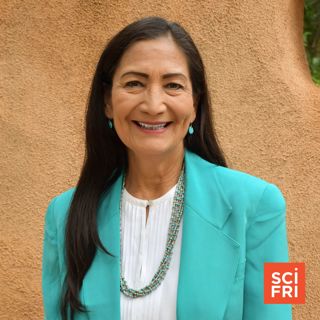
Former Interior Secretary Deb Haaland, a member of the Laguna Pueblo tribe, was the first Native person to hold a cabinet position. Now she’s running to be governor of New Mexico.  Haaland joins Host ...

10 Aug 17min

Sitting all day is terrible for us. Moving a little can help

Sitting all day is terrible for us. Moving a little can help

Keeping your butt in a seat for hours a day increases the risk of heart attacks, diabetes, psychiatric conditions, and more. But in our tech-filled world, many of us lead sedentary lives, whether beca...

7 Aug 18min

A Nagasaki survivor and physician recounts his life's work

A Nagasaki survivor and physician recounts his life's work

Dr. Masao Tomonaga was only 2 years old when the United States bombed his home city of Nagasaki. He survived, and grew up to become a physician for other survivors, known as hibakusha. He also studied...

6 Aug 18min

What do people eat? Plant and animal DNA in sewage provide clues

What do people eat? Plant and animal DNA in sewage provide clues

Imagine you wanted to get a general idea of what people are eating in a given community. You could look at grocery store sales, or do surveys, but neither can capture a complete picture.  Microbiome r...

5 Aug 12min

Populært innen Vitenskap

fastlegen
tingenes-tilstand
romkapsel
abels-tarn
jss
liberal-halvtime
vett-og-vitenskap-med-gaute-einevoll
rekommandert
villmarksliv
dekodet-2
sinnsyn
fjellsportpodden
rss-overskuddsliv
rss-rekommandert
tomprat-med-gunnar-tjomlid
rss-inn-til-kjernen-med-sunniva-rose
kvinnehelsepodden
hva-er-greia-med
rss-lundqvist-podden
diagnose