Scientist Politicians, Microbiome, Wildlife Car Accidents. June 1, 2018, Part 1
Science Friday1 Jun 2018

Scientist Politicians, Microbiome, Wildlife Car Accidents. June 1, 2018, Part 1

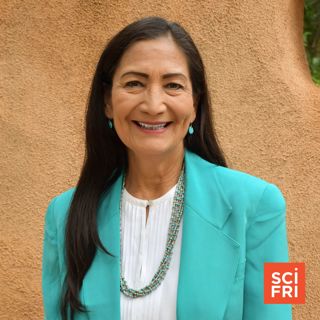
This year’s midterm elections have seen an upswing in the number of scientists running for office. There are approximately 60 candidates with STEM backgrounds in the races for federal offices, and 200 for state positions, according to 314 Action, an advocacy organization that helps scientists run for office. But why would a scientist want to leave the lab for the Hill? According to volcanologist and Congressional candidate Jess Phoenix, “Science by definition is political because the biggest funder of scientific research in our country is the government.” And Aruna Miller, who is a Maryland State Delegate for District 15 and a former civil engineer for the Department of Transportation, says that “Your job as an engineer isn’t only your profession. It is to be a citizen of your country…. You have to be engaged in our community.”

By now, we all know about the microbes that live in our gut and digestive tract—different species of bacteria living together in the same environment. Now researchers are trying to learn more about what keeps these bacteria living together in harmony. Scientists suspect the secret “microbe whisperer” is actually a member of the immune system—a molecule called immunoglobulin A. That molecule keeps the gastrointestinal system free of pathogens and, researchers hope, might one day be used to combat diseases of the digestive tract.

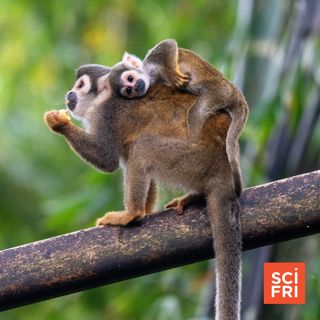
States like Wyoming and Montana are high risk for wildlife-vehicle collisions. These accidents result in expensive damages and sometimes even death for both wildlife and drivers. One group of scientists found an unlikely solution. You’ve probably driven by one before and not noticed it, but wildlife reflectors are poles on the side of the road. There have been a lot of studies on reflectors, but Riginos said the results are mixed and not very impressive. So Riginos and her team developed an experiment. They’d cover up some reflectors, leave others uncovered, and then compare the results. “We covered them with this cheap, easily available and durable material, which just happened to be white canvas bags,” Riginos said. And to their surprise—the bags turned out to be more effective than the reflectors. “We could actually see that in the white bags situation, that the deer were more likely to stop and wait for cars to pass before crossing the road, instead of just running headlong into the road,” said Riginos.

Subscribe to this podcast. Follow our show on Instagram, TikTok, Facebook, and Bluesky @scifri and sign up for our newsletters. Got a science question that’s keeping you up at night? Call us: 877-472-4374


Hosted by Simplecast, an AdsWizz company. See pcm.adswizz.com for information about our collection and use of personal data for advertising.

Denne episoden er hentet fra en åpen RSS-feed og er ikke publisert av Podme. Den kan derfor inneholde annonser.

Episoder(1338)

Why do sports announcers talk like that?

Why do sports announcers talk like that?

If you watch sports, whether the recent NBA finals or the ongoing World Cup matches, you may have noticed that the athletes aren’t the only ones putting on a show. The announcers seem to be playing a ...

19 Jun 13min

Swords, cannibalism, poison: inside the world of killer microbes

Swords, cannibalism, poison: inside the world of killer microbes

There is a murderous crime spree happening right under—and perhaps inside—our noses. Killer microbes armed with weapons are eviscerating, assassinating, and detonating their fellow microbes. And the n...

18 Jun 21min

When music transports you to a different place

When music transports you to a different place

Do you ever hear a song that transports you to a specific place and time? This auditory wormhole has a name: musical daydreams. Music cognition expert Elizabeth Margulis studies why they happen, and w...

17 Jun 18min

A vast whale graveyard + Zombie sea cucumbers

A vast whale graveyard + Zombie sea cucumbers

Researchers just published details of a massive undersea graveyard of whales deep in the Indian Ocean. Spanning about 1,200 kilometers (745 miles), it contains whale remains dating back more than 5 mi...

16 Jun 18min

Should we bring mountain lions back to the Northeast?

Should we bring mountain lions back to the Northeast?

Big cats used to roam the entire United States. You might know them as mountain lions, pumas, cougars, or catamounts. Though they go by many names, they're actually all the same species.  Their curren...

15 Jun 12min

Blue Origin explosion hits NASA timeline + Artemis III crew

Blue Origin explosion hits NASA timeline + Artemis III crew

When Blue Origin’s New Glenn spacecraft exploded in an enormous fireball during a ground test a couple weeks ago, it sent shockwaves not only through the air, but through NASA’s timeline for the upcom...

12 Jun 12min

Why can I handle tequila but not rum?

Why can I handle tequila but not rum?

‘Tis the season for porch beers and happy hours, and we’re taking on listener questions about how alcohol affects us. Like, is a glass of wine at dinner really good for you? And why do sugary drinks g...

11 Jun 21min

AI + turfgrass science in the most high-tech World Cup yet

AI + turfgrass science in the most high-tech World Cup yet

The 2026 World Cup will be the largest one yet, and FIFA is trying to make it the most high-tech, too. The federation has partnered with tech giant Lenovo to launch Football AI Pro, which is designed ...

10 Jun 19min

Populært innen Vitenskap

fastlegen
tingenes-tilstand
rss-nysgjerrige-norge
jss
forskningno
dekodet-2
liberal-halvtime
villmarksliv
rekommandert
sinnsyn
rss-paradigmepodden
tomprat-med-gunnar-tjomlid
rss-inn-til-kjernen-med-sunniva-rose
rss-overskuddsliv
rss-rekommandert
nevropodden
hva-er-greia-med
rss-bondevennen
fjellsportpodden
kvinnehelsepodden