
Shutdown and Science, Smartphone and Overdoses. Jan 11, 2019, Part 1
Science Friday11 Jan 2019

Shutdown and Science, Smartphone and Overdoses. Jan 11, 2019, Part 1

The partial shutdown of the U.S. government is approaching its third week, and it has caused a backlog for scientists employed or funded by the government. Scientists have had to leaving data collection and experiments in limbo. The Food and Drug Administration has had to suspend domestic food inspections of vegetables, seafood, and other foods that are at high risk for contamination. Journalist Lauren Morello, Americas bureau chief for Nature, puts the current shutdown in context to previous government stoppages. Morello also tells us how agencies and scientists are coping during this time and what we might see if the shutdown continues. And Science Friday producer Katie Feather reports back from the American Astronomical Society conference about how the shutdown has affected the meeting and the work of scientists.

Last year, about 47,000 people in the United States died from an opioid overdose, including prescription and synthetic drugs like fentanyl, according to the CDC. And as the epidemic of opioid abuse continues, those looking to reduce death rates are searching for ways to keep drug users safer. But what if your smartphone could monitor your breathing, detect early signs of an overdose, and call for help in time to save your life? Researchers writing in Science Translational Medicine this week think they have just that: smartphone software that can ‘hear’ the depressed breathing rates, apnea, and changes in body movement that might indicate a potential overdose. University of Washington PhD candidate Rajalakshmi Nandakumar explains how the software, which uses smartphone speakers and microphones to mimic a bat’s sonar, can ‘hear’ the rise and fall of someone’s chest—and could someday even coordinate with emergency services to send help.

Starting January 1, 2019, hospitals have been required to post online a machine-readable list of detailed prices for materials and procedures—from the cost of an overnight stay in a hospital bed, to a single tablet of Tylenol, to the short set of stitches you get in the emergency room. The new requirement is a Trump administration expansion of Obama-era rules growing out of the Affordable Care Act, which required that this list of prices be made available upon request. But while the increased availability of this pricing information might seem like a win for consumers, it’s not actually all that useful in many cases. First, the price lists don’t give a simple number for common procedures, but break down each part of every procedure item by item, in no particular order, and labeled with acronyms and abbreviations. Second, the price lists, called ‘Chargemasters,’ are the hospital equivalent of the car sticker price—they represent what the hospital would like to be paid for a service, not the price that most consumers actually do pay, or the prices that may have been negotiated by your insurance company. Julie Appleby, senior correspondent at Kaiser Health News, joins Ira to explain what the price lists actually show, why they matter, and what consumers might be able to do to get a better estimate of potential health care costs.

Subscribe to this podcast. Follow our show on Instagram, TikTok, Facebook, and Bluesky @scifri and sign up for our newsletters. Got a science question that’s keeping you up at night? Call us: 877-472-4374


Hosted by Simplecast, an AdsWizz company. See pcm.adswizz.com for information about our collection and use of personal data for advertising.

Denne episoden er hentet fra en åpen RSS-feed og er ikke publisert av Podme. Den kan derfor inneholde annonser.

Episoder(1379)

How do you find a ‘lost’ species?

How do you find a ‘lost’ species?

The earth is facing a biodiversity crisis, and there’s a lot of attention on species that are threatened, or at risk of dying out completely. But, there’s another critter category that’s a little more...

14 Aug 18min

What we get wrong about vaccine hesitancy

What we get wrong about vaccine hesitancy

President Trump has signed an executive order calling for a change to the childhood vaccination schedule. Specifically, he wants to separate the MMR vaccine, which protects against measles, mumps, and...

13 Aug 12min

Why this lab studies the speed of bug pee and other curiosities

Why this lab studies the speed of bug pee and other curiosities

In a lab in the Rocky Mountains, a group of scientists is hard at work trying to find answers across biology, physics, and engineering: They’re looking into things like the hydrodynamics of insect pee...

12 Aug 18min

Some primates undergo even more extreme childbirth than humans

Some primates undergo even more extreme childbirth than humans

Human childbirth is often difficult and incredibly painful—just ask anyone who’s been through it. And for a long time, childbirth seemed to be uniquely difficult for humans. But a new study suggests t...

11 Aug 11min
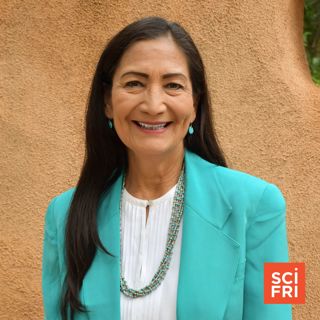
Deb Haaland is a politician, and proud of it

Deb Haaland is a politician, and proud of it

Former Interior Secretary Deb Haaland, a member of the Laguna Pueblo tribe, was the first Native person to hold a cabinet position. Now she’s running to be governor of New Mexico.  Haaland joins Host ...

10 Aug 17min
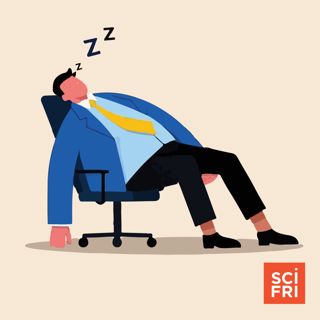
Sitting all day is terrible for us. Moving a little can help

Sitting all day is terrible for us. Moving a little can help

Keeping your butt in a seat for hours a day increases the risk of heart attacks, diabetes, psychiatric conditions, and more. But in our tech-filled world, many of us lead sedentary lives, whether beca...

7 Aug 18min

A Nagasaki survivor and physician recounts his life's work

A Nagasaki survivor and physician recounts his life's work

Dr. Masao Tomonaga was only 2 years old when the United States bombed his home city of Nagasaki. He survived, and grew up to become a physician for other survivors, known as hibakusha. He also studied...

6 Aug 18min
What do people eat? Plant and animal DNA in sewage provide clues

What do people eat? Plant and animal DNA in sewage provide clues

Imagine you wanted to get a general idea of what people are eating in a given community. You could look at grocery store sales, or do surveys, but neither can capture a complete picture.  Microbiome r...

5 Aug 12min

Populært innen Vitenskap

fastlegen
tingenes-tilstand
romkapsel
jss
liberal-halvtime
rekommandert
villmarksliv
abels-tarn
dekodet-2
vett-og-vitenskap-med-gaute-einevoll
sinnsyn
fjellsportpodden
rss-overskuddsliv
rss-rekommandert
tomprat-med-gunnar-tjomlid
rss-inn-til-kjernen-med-sunniva-rose
hva-er-greia-med
rss-nysgjerrige-norge
diagnose
kvinnehelsepodden