

Measles, Poetry Month, Lemur Hibernation. April 26, 2019, Part 2
Science Friday26 Apr 2019

Measles, Poetry Month, Lemur Hibernation. April 26, 2019, Part 2

Back in 1963, before the development of the measles, mumps, and rubella (MMR) vaccine, there were 4 million cases of measles every year. It took nearly four decades, but by 2000, enough people had become vaccinated that the measles virus was eliminated in the U.S.

But since then, the ranks of unvaccinated people have grown, and the measles virus has been reintroduced into the U.S. This week, Centers for Disease Control and Prevention (CDC) officials report over 600 cases of measles across 22 states. Dr. Saad Omer, professor of Global Health, Epidemiology, and Pediatrics at Emory University joins Ira to answer questions about the current outbreak, including how much worse conditions could get.

Every year, hundreds pack Pioneer Works in Brooklyn, New York for “The Universe In Verse,” a live celebration of writing that has found inspiration from science and scientists. This year’s event, which featured readings from guests including Amanda Palmer, David Byrne, and Josh Groban, celebrated the 100th anniversary of Sir Arthur Eddington’s groundbreaking experiment to prove general relativity. The poems also honored Albert Einstein’s legacy in describing the universe as we understand it today.

Maria Popova, founder and editor of Brain Pickings, and astrophysicist Janna Levin, both writers as well, join Ira for a conversation about the enduring link between art and science, and share readings of their favorite works.

What has big eyes, a bushy tail, and is the only primate to go into hibernation six months out of the year? It’s the fat-tailed dwarf lemur, an endangered species endemic to the island of Madagascar. During their hibernation period, the lemurs enter a state of torpor, which essentially disables the animals’ internal thermostat. It turns out we humans possess the same gene that is activated when the lemur initiates torpor—we just don’t know how to activate it. Science Friday video producer Luke Groskin traveled to the only captive colony of dwarf lemurs in the world outside of Madagascar, the Duke Lemur Center in North Carolina, to investigate the sleeping cuties’ hibernation habits—and how they could apply to humans.

Subscribe to this podcast. Follow our show on Instagram, TikTok, Facebook, and Bluesky @scifri and sign up for our newsletters. Got a science question that’s keeping you up at night? Call us: 877-472-4374


Hosted by Simplecast, an AdsWizz company. See pcm.adswizz.com for information about our collection and use of personal data for advertising.

Denne episoden er hentet fra en åpen RSS-feed og er ikke publisert av Podme. Den kan derfor inneholde annonser.

Episoder(1379)

How do you find a ‘lost’ species?

How do you find a ‘lost’ species?

The earth is facing a biodiversity crisis, and there’s a lot of attention on species that are threatened, or at risk of dying out completely. But, there’s another critter category that’s a little more...

14 Aug 18min

What we get wrong about vaccine hesitancy

What we get wrong about vaccine hesitancy

President Trump has signed an executive order calling for a change to the childhood vaccination schedule. Specifically, he wants to separate the MMR vaccine, which protects against measles, mumps, and...

13 Aug 12min

Why this lab studies the speed of bug pee and other curiosities

Why this lab studies the speed of bug pee and other curiosities

In a lab in the Rocky Mountains, a group of scientists is hard at work trying to find answers across biology, physics, and engineering: They’re looking into things like the hydrodynamics of insect pee...

12 Aug 18min

Some primates undergo even more extreme childbirth than humans

Some primates undergo even more extreme childbirth than humans

Human childbirth is often difficult and incredibly painful—just ask anyone who’s been through it. And for a long time, childbirth seemed to be uniquely difficult for humans. But a new study suggests t...

11 Aug 11min
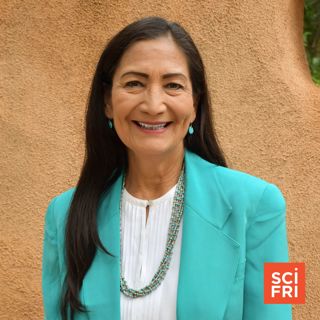
Deb Haaland is a politician, and proud of it

Deb Haaland is a politician, and proud of it

Former Interior Secretary Deb Haaland, a member of the Laguna Pueblo tribe, was the first Native person to hold a cabinet position. Now she’s running to be governor of New Mexico.  Haaland joins Host ...

10 Aug 17min
Sitting all day is terrible for us. Moving a little can help

Sitting all day is terrible for us. Moving a little can help

Keeping your butt in a seat for hours a day increases the risk of heart attacks, diabetes, psychiatric conditions, and more. But in our tech-filled world, many of us lead sedentary lives, whether beca...

7 Aug 18min

A Nagasaki survivor and physician recounts his life's work

A Nagasaki survivor and physician recounts his life's work

Dr. Masao Tomonaga was only 2 years old when the United States bombed his home city of Nagasaki. He survived, and grew up to become a physician for other survivors, known as hibakusha. He also studied...

6 Aug 18min

What do people eat? Plant and animal DNA in sewage provide clues

What do people eat? Plant and animal DNA in sewage provide clues

Imagine you wanted to get a general idea of what people are eating in a given community. You could look at grocery store sales, or do surveys, but neither can capture a complete picture.  Microbiome r...

5 Aug 12min

Populært innen Vitenskap

fastlegen
tingenes-tilstand
romkapsel
jss
liberal-halvtime
rekommandert
villmarksliv
abels-tarn
dekodet-2
vett-og-vitenskap-med-gaute-einevoll
sinnsyn
fjellsportpodden
rss-overskuddsliv
rss-rekommandert
tomprat-med-gunnar-tjomlid
rss-inn-til-kjernen-med-sunniva-rose
hva-er-greia-med
rss-nysgjerrige-norge
diagnose
kvinnehelsepodden