
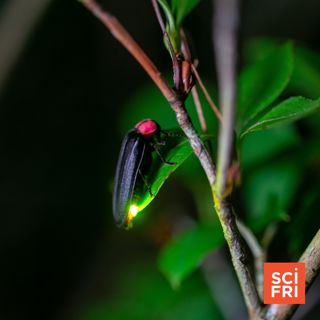
Ethics Of Hawaiian Telescope, Bird Song, Alaska Universities Budget Cut. August 2, 2019, Part 1
Science Friday2 Aug 2019

Ethics Of Hawaiian Telescope, Bird Song, Alaska Universities Budget Cut. August 2, 2019, Part 1

Mauna Kea is the tallest mountain in Hawaii, towering over the Pacific at nearly 14,000 feet. That high altitude, combined with the mountain’s dry, still air and its extreme darkness at night, make it an ideal place for astronomy. There are already 13 observatories on the summit plateau. Now, astronomers want to build another, called the Thirty Meter Telescope, or TMT, which would become the largest visible-light telescope on the mountain.

But many native Hawaiians don’t want it there, for a multitude of reasons. Science Friday talked with Kawika Winter, a multidisciplinary ecologist at the Hawaii Institute of Marine Biology and the He'eia National Estuarine Research Reserve, who summed it up this way:

"The notion of pursuit of knowledge is an important one here. But is it pursuit of knowledge at all costs? Is it pursuit of knowledge at the expense of our humanity?

From the native Hawaiian perspective this is just the same thing that's happened before. It's preventing people from accessing sacred places. It's desecration of sacred places through construction. It's all of these issues, but this time it's for a ‘good reason.’ This time it's for science, this time it's for knowledge, so now it should be ok, right? But it's the same thing that's been happening for 200 years. It doesn't matter what the reason is.

Engaging native Hawaiians is not a box to check off in the process. And you check it off at the end, say 'yeah, we checked with native Hawaiians.' That's not the proper way to engage in science in indigenous places. So we're trying to advocate for a different model for approaching science, and integrating native peoples, indigenous peoples, and indigenous cultures into the process. And that's how we can make sure the science we conduct doesn't come at the expense of our humanity."

Many native Hawaiians say the way this fight has been portrayed in the media—as Hawaiian culture versus science—is disrespectful of their culture, ignorant of their motives, and oblivious to the fact that science has long been an important part of traditional Hawaiian culture. Nearly a thousand scientists and astronomers have now signed an open letter in solidarity with those who would like to see a halt in construction.

When a baby human learns to talk, there’s a predictable pattern of learning: First, they listen to the language spoken around them, then they babble and try to make the same sounds, and then they eventually learn the motor skills to shape that babble into words and meaning.

Researchers who study songbirds know this is also the process by which a baby male zebra finch learns the unique songs that as an adult he will use to mate and defend territory. The same holds true for canaries, nightingales, warblers, and beyond. And for many birds, like humans, the window where they learn their “language” best is a short one that closes early in life. In fact, bird song is studied closely as an analogy for human speech—an example of sophisticated brain machinery for learning that evolved separately in birds and humans.

Alaska governor Mike Dunleavy’s budget cuts to the University of Alaska total about $136 million, or roughly 41 percent of state support. As a result, the University of Alaska Board of Regents voted 8 to 3 to move towards consolidating the entire university system to a single accredited university.

UA president Jim Johnsen says under any plan, it’s likely that the cuts will have a ripple effect on enrollment and research. He says both are avenues that could result in less money for the university as a whole. A task force has been put together to determine how to move forward with the single university model.

Subscribe to this podcast. Follow our show on Instagram, TikTok, Facebook, and Bluesky @scifri and sign up for our newsletters. Got a science question that’s keeping you up at night? Call us: 877-472-4374


Hosted by Simplecast, an AdsWizz company. See pcm.adswizz.com for information about our collection and use of personal data for advertising.

Denne episoden er hentet fra en åpen RSS-feed og er ikke publisert av Podme. Den kan derfor inneholde annonser.

Episoder(1379)

How do you find a ‘lost’ species?

How do you find a ‘lost’ species?

The earth is facing a biodiversity crisis, and there’s a lot of attention on species that are threatened, or at risk of dying out completely. But, there’s another critter category that’s a little more...

14 Aug 18min
What we get wrong about vaccine hesitancy

What we get wrong about vaccine hesitancy

President Trump has signed an executive order calling for a change to the childhood vaccination schedule. Specifically, he wants to separate the MMR vaccine, which protects against measles, mumps, and...

13 Aug 12min

Why this lab studies the speed of bug pee and other curiosities

Why this lab studies the speed of bug pee and other curiosities

In a lab in the Rocky Mountains, a group of scientists is hard at work trying to find answers across biology, physics, and engineering: They’re looking into things like the hydrodynamics of insect pee...

12 Aug 18min

Some primates undergo even more extreme childbirth than humans

Some primates undergo even more extreme childbirth than humans

Human childbirth is often difficult and incredibly painful—just ask anyone who’s been through it. And for a long time, childbirth seemed to be uniquely difficult for humans. But a new study suggests t...

11 Aug 11min
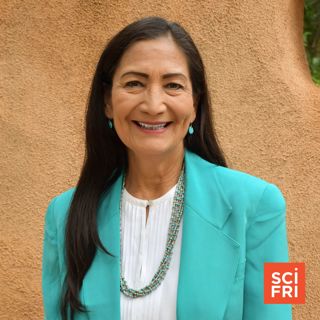
Deb Haaland is a politician, and proud of it

Deb Haaland is a politician, and proud of it

Former Interior Secretary Deb Haaland, a member of the Laguna Pueblo tribe, was the first Native person to hold a cabinet position. Now she’s running to be governor of New Mexico.  Haaland joins Host ...

10 Aug 17min

Sitting all day is terrible for us. Moving a little can help

Sitting all day is terrible for us. Moving a little can help

Keeping your butt in a seat for hours a day increases the risk of heart attacks, diabetes, psychiatric conditions, and more. But in our tech-filled world, many of us lead sedentary lives, whether beca...

7 Aug 18min

A Nagasaki survivor and physician recounts his life's work

A Nagasaki survivor and physician recounts his life's work

Dr. Masao Tomonaga was only 2 years old when the United States bombed his home city of Nagasaki. He survived, and grew up to become a physician for other survivors, known as hibakusha. He also studied...

6 Aug 18min
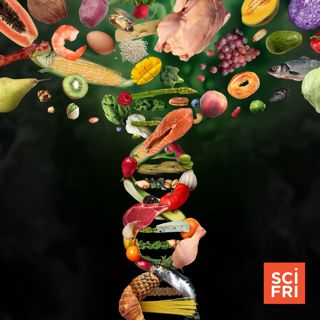
What do people eat? Plant and animal DNA in sewage provide clues

What do people eat? Plant and animal DNA in sewage provide clues

Imagine you wanted to get a general idea of what people are eating in a given community. You could look at grocery store sales, or do surveys, but neither can capture a complete picture.  Microbiome r...

5 Aug 12min

Populært innen Vitenskap

fastlegen
tingenes-tilstand
romkapsel
rss-nysgjerrige-norge
liberal-halvtime
rekommandert
jss
villmarksliv
dekodet-2
abels-tarn
sinnsyn
vett-og-vitenskap-med-gaute-einevoll
fjellsportpodden
rss-overskuddsliv
rss-rekommandert
rss-paradigmepodden
tomprat-med-gunnar-tjomlid
diagnose
rss-inn-til-kjernen-med-sunniva-rose
nordnorsk-historie