
Parker Solar Probe, Slime Molds. Dec 6, 2019, Part 1
Science Friday6 Des 2019

Parker Solar Probe, Slime Molds. Dec 6, 2019, Part 1

In August 2018, NASA sent the Parker Solar Probe off on its anticipated seven-year-long mission to study the sun. Already, it has completed three of its 24 scheduled orbits, and data from two of those orbits are already telling us things we didn’t know about the star at the center of our solar system. The probe has collected information on the factors that influence the speed of solar wind, the amount of dust in the sun’s bubble-like region—the heliosphere—and also where scientists’ models were wrong.

David McComas, professor of astrophysical sciences at Princeton University and principal investigator of the integrated science investigation of the sun, breaks down the very first data collected from the Parker Solar Probe mission. He’s joined by Aleida Higginson, Parker Solar Probe deputy project scientist for science operations, who will update us on the mission that’s giving us an unprecedented look at our sun.

What makes a creature charismatic?

In our new segment, we’ll feature one creature a month, and try to convince you that it’s worthy of the coveted Charismatic Creature title. By “creature” we mean almost anything—animals, viruses, subterranean fungal networks, you name it. And by “charismatic,” we don’t just mean cute, clever, or even all that nice! We just mean they have that special something that makes us want to lean in and learn everything about them—because they can’t all be baby pandas.

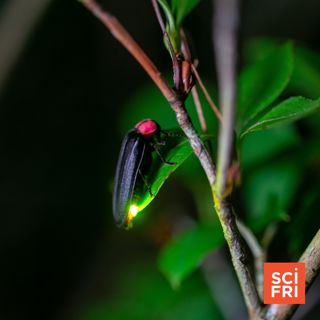
Over the past two months, we’ve received dozens of listener suggestions—everything from turtles to tardigrades. We had to choose just one, and we’re starting simple—single celled simple. Our first charismatic creature is Physarum polycephalum, the “multi-headed” slime mold.

Despite having no brain or neurons and being just one giant goopy cell, these slime molds keep defying our expectations. They can solve mazes, recreate the Tokyo railway network (animation below), learn, and even anticipate events. They can make rational and irrational choices that mirror our own. Not to mention they’re visually stunning too.

Despite having no brain or neurons and being just one giant goopy cell, these slime molds keep defying our expectations. They can solve mazes, recreate the Tokyo railway network (animation below), learn, and even anticipate events. They can make rational and irrational choices that mirror our own. Not to mention they’re visually stunning too.

Joining Ira to make the case that slime molds are uniquely charismatic is Science Friday’s Elah Feder and collective intelligence researchers Simon Garnier from New Jersey Institute of Technology and Tanya Latty from the University of Sydney.

Oregon is not very good at recycling, and it’s getting worse, according to a new report. Overall recycling rates in the state have steadily declined for the last several years, even as the amount of waste generated per person in the state has grown.

The report, published Thursday by the group Environment Oregon, uses data released yearly by the Oregon Department of Environmental Quality. It finds that Oregon faces major barriers to meeting its recycling goals. Nationally, recyclable plastics are being replaced with lower-value plastics. In Oregon, polystyrene (the flaky, foam-like material used in single-use coffee cups) isn’t recycled by municipal governments, and a legislative proposal to ban it statewide failed last year. Consumers can take certain polystyrene products to privately run drop boxes in some cities around the state.

This doesn’t mean that Oregonians aren’t passionate about recycling. The biggest barrier to recycling in Oregon is structural: less of the material placed in recycling bins can be repurposed by domestic facilities, and exporting recyclables to countries like China has become more difficult.

“The bottom line is, we need to take more of these products out of the waste stream,” Celeste Meiffren-Swango, the state director of Environment Oregon, said.

It’s not just an Oregon problem, it’s a national—even global—issue. For years, recycling in the United States has relied on Asian countries to take our waste. Many countries, finding that arrangement unprofitable, have started incinerating the recycling, dumping it in landfills, or simply stopped accepting recyclables from the United States altogether. The few countries that still purchase U.S. recyclables are increasingly facing unexpected health impacts stemming from too much waste and no way to process it.

Subscribe to this podcast. Follow our show on Instagram, TikTok, Facebook, and Bluesky @scifri and sign up for our newsletters. Got a science question that’s keeping you up at night? Call us: 877-472-4374


Hosted by Simplecast, an AdsWizz company. See pcm.adswizz.com for information about our collection and use of personal data for advertising.

Denne episoden er hentet fra en åpen RSS-feed og er ikke publisert av Podme. Den kan derfor inneholde annonser.

Episoder(1338)

Why do sports announcers talk like that?

Why do sports announcers talk like that?

If you watch sports, whether the recent NBA finals or the ongoing World Cup matches, you may have noticed that the athletes aren’t the only ones putting on a show. The announcers seem to be playing a ...

19 Jun 13min

Swords, cannibalism, poison: inside the world of killer microbes

Swords, cannibalism, poison: inside the world of killer microbes

There is a murderous crime spree happening right under—and perhaps inside—our noses. Killer microbes armed with weapons are eviscerating, assassinating, and detonating their fellow microbes. And the n...

18 Jun 21min

When music transports you to a different place

When music transports you to a different place

Do you ever hear a song that transports you to a specific place and time? This auditory wormhole has a name: musical daydreams. Music cognition expert Elizabeth Margulis studies why they happen, and w...

17 Jun 18min

A vast whale graveyard + Zombie sea cucumbers

A vast whale graveyard + Zombie sea cucumbers

Researchers just published details of a massive undersea graveyard of whales deep in the Indian Ocean. Spanning about 1,200 kilometers (745 miles), it contains whale remains dating back more than 5 mi...

16 Jun 18min

Should we bring mountain lions back to the Northeast?

Should we bring mountain lions back to the Northeast?

Big cats used to roam the entire United States. You might know them as mountain lions, pumas, cougars, or catamounts. Though they go by many names, they're actually all the same species.  Their curren...

15 Jun 12min

Blue Origin explosion hits NASA timeline + Artemis III crew

Blue Origin explosion hits NASA timeline + Artemis III crew

When Blue Origin’s New Glenn spacecraft exploded in an enormous fireball during a ground test a couple weeks ago, it sent shockwaves not only through the air, but through NASA’s timeline for the upcom...

12 Jun 12min

Why can I handle tequila but not rum?

Why can I handle tequila but not rum?

‘Tis the season for porch beers and happy hours, and we’re taking on listener questions about how alcohol affects us. Like, is a glass of wine at dinner really good for you? And why do sugary drinks g...

11 Jun 21min

AI + turfgrass science in the most high-tech World Cup yet

AI + turfgrass science in the most high-tech World Cup yet

The 2026 World Cup will be the largest one yet, and FIFA is trying to make it the most high-tech, too. The federation has partnered with tech giant Lenovo to launch Football AI Pro, which is designed ...

10 Jun 19min

Populært innen Vitenskap

fastlegen
tingenes-tilstand
jss
rss-nysgjerrige-norge
forskningno
liberal-halvtime
rekommandert
villmarksliv
dekodet-2
tomprat-med-gunnar-tjomlid
sinnsyn
rss-paradigmepodden
rss-inn-til-kjernen-med-sunniva-rose
rss-overskuddsliv
hva-er-greia-med
nevropodden
rss-rekommandert
rss-ingeniorpodden
rss-bondevennen
fjellsportpodden