Astronaut Training, Marsquakes, Whale Migration. March 6, 2020, Part 2
Science Friday6 Mar 2020

Astronaut Training, Marsquakes, Whale Migration. March 6, 2020, Part 2

Do You Have The ‘Right Stuff’ To Be An Astronaut?

If you’ve ever considered being an astronaut, this might be your chance to land that dream job. This week, NASA opened applications for a new class of astronaut candidates. It’s a full-time position based in Houston, Texas, paying over $104,000 per year. Job duties would include “conducting operations in space, including on the International Space Station (ISS) and in the development and testing of future spacecraft” and “performing extravehicular activities (EVA) and robotics operations using the remote manipulator system.” Please note that “substantial travel” is required.

How do you know if you have the ‘right stuff’ to apply?

Frank Rubio, a NASA astronaut who completed the most recent previous selection program in 2017, joins Ira to talk about what other qualities are valuable in an astronaut applicant—and the training program for those accepted.

Could A “Marsquake” Knock Down Your House?

On April 6, 2019, NASA’s InSight Mars lander recorded a sound researchers had been waiting to hear for months. To the untrained listener, it may sound like someone had turned up the volume on the hum of Martian wind. But NASA researchers could hear the likely first-ever “marsquake” recorded by the mission.

NASA’s InSight carries a suite of instruments to help study what’s happening deep within the Martian surface, including an ultra-sensitive seismometer (SEIS) for detecting suspected quakes on Mars. Now closing in on the end of it’s two-year primary mission, NASA scientists are studying the seismic data they’ve collected so far, comparing it to the well-known tectonic activity of Earth, and mapping out what to explore from here. Deputy principal investigator Suzanne Smrekar joins Ira to answer our pressing marsquake questions.

New Insight Into Whales On The Go

Like the seasonal migrations of birds, whales are roamers. Every year, they travel thousands of miles, from the warm waters of the equatorial regions for breeding to the colder polar waters for feeding. But how do they find their way so consistently and precisely every year?

New research in Current Biology this month adds more weight to one idea of how whales stay on course: Similar to birds, whales may detect the Earth’s magnetic field lines. Duke University graduate student Jesse Granger explains why a strong connection between gray whale strandings and solar activity could boost the magnetoreception theory.

Other research in Marine Mammal Science explores why whales leave the food-rich waters of the Arctic and Antarctic at all. Marine ecologist Robert Pitman of Oregon State University’s Marine Mammal Center explains why this annual movement may not be about breeding—but rather, allowing their skin to molt and remain healthy.

Subscribe to this podcast. Follow our show on Instagram, TikTok, Facebook, and Bluesky @scifri and sign up for our newsletters. Got a science question that’s keeping you up at night? Call us: 877-472-4374


Hosted by Simplecast, an AdsWizz company. See pcm.adswizz.com for information about our collection and use of personal data for advertising.

Denne episoden er hentet fra en åpen RSS-feed og er ikke publisert av Podme. Den kan derfor inneholde annonser.

Episoder(1380)

Colorado’s snow drought deals a major blow to recreation

Colorado’s snow drought deals a major blow to recreation

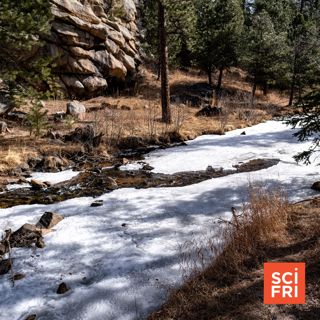
Winter in Colorado looked very different this year. Many parts of the state experienced record-high temperatures and record-low snowpack, which had downstream effects on farming, sports, tourism, and ...

17 Aug 11min
How do you find a ‘lost’ species?

How do you find a ‘lost’ species?

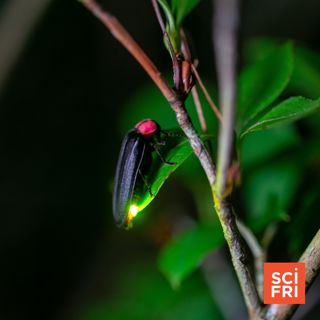
The earth is facing a biodiversity crisis, and there’s a lot of attention on species that are threatened, or at risk of dying out completely. But, there’s another critter category that’s a little more...

14 Aug 18min
What we get wrong about vaccine hesitancy

What we get wrong about vaccine hesitancy

President Trump has signed an executive order calling for a change to the childhood vaccination schedule. Specifically, he wants to separate the MMR vaccine, which protects against measles, mumps, and...

13 Aug 12min

Why this lab studies the speed of bug pee and other curiosities

Why this lab studies the speed of bug pee and other curiosities

In a lab in the Rocky Mountains, a group of scientists is hard at work trying to find answers across biology, physics, and engineering: They’re looking into things like the hydrodynamics of insect pee...

12 Aug 18min
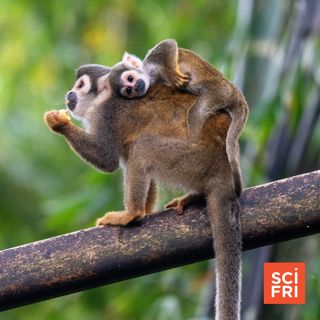
Some primates undergo even more extreme childbirth than humans

Some primates undergo even more extreme childbirth than humans

Human childbirth is often difficult and incredibly painful—just ask anyone who’s been through it. And for a long time, childbirth seemed to be uniquely difficult for humans. But a new study suggests t...

11 Aug 11min
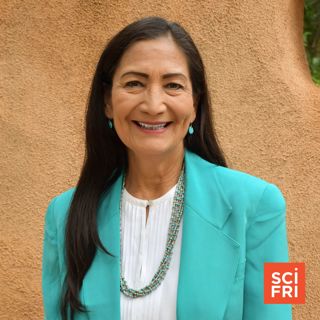
Deb Haaland is a politician, and proud of it

Deb Haaland is a politician, and proud of it

Former Interior Secretary Deb Haaland, a member of the Laguna Pueblo tribe, was the first Native person to hold a cabinet position. Now she’s running to be governor of New Mexico.  Haaland joins Host ...

10 Aug 17min
Sitting all day is terrible for us. Moving a little can help

Sitting all day is terrible for us. Moving a little can help

Keeping your butt in a seat for hours a day increases the risk of heart attacks, diabetes, psychiatric conditions, and more. But in our tech-filled world, many of us lead sedentary lives, whether beca...

7 Aug 18min

A Nagasaki survivor and physician recounts his life's work

A Nagasaki survivor and physician recounts his life's work

Dr. Masao Tomonaga was only 2 years old when the United States bombed his home city of Nagasaki. He survived, and grew up to become a physician for other survivors, known as hibakusha. He also studied...

6 Aug 18min

Populært innen Vitenskap

fastlegen
tingenes-tilstand
romkapsel
rss-nysgjerrige-norge
liberal-halvtime
rekommandert
jss
villmarksliv
dekodet-2
abels-tarn
sinnsyn
vett-og-vitenskap-med-gaute-einevoll
fjellsportpodden
rss-overskuddsliv
rss-rekommandert
rss-paradigmepodden
tomprat-med-gunnar-tjomlid
diagnose
rss-inn-til-kjernen-med-sunniva-rose
nordnorsk-historie