
Healthcare Ripple Effects, Resilient Flowers, Cancer Detection. April 10, 2020, Part 1
Science Friday10 Apr 2020

Healthcare Ripple Effects, Resilient Flowers, Cancer Detection. April 10, 2020, Part 1

Routine Healthcare Is Falling Through The COVID-19 Cracks

Our healthcare system is straining under the weight of the coronavirus epidemic, with hospital emergency rooms and ICUs around the country facing shortages of masks, ventilators, hospital beds, and medical staff. But the epidemic is also upsetting parts of the healthcare system that aren’t directly treating COVID patients. How are you supposed to keep up with regular medical care when you’re not supposed to leave the house, or when your primary care doctor’s office is shut down

Michael Barnett is an assistant professor at the Harvard T. H. Chan School of Public Health who studies access to healthcare services, as well as a primary care physician at Brigham and Women’s Hospital in Boston. He joins Ira to talk about how patients and clinics are attempting to navigate a healthcare landscape altered by the global pandemic—including telemedicine and virtual health services, the economics of private doctors’ offices, and shortages of regular medications.

These Flowers Bounce Back

Everywhere, colorful, spirit-lifting flowers are blooming. But if you’ve stepped off a path to avoid an oncoming runner recently, don’t worry. New research, published in the journal New Phytologist, finds some flowers have a unique ability to “bounce back” after injury—say after getting squished by a falling branch or shoe. This gives flowers a second chance at being pollinated, preserving their role in the seasonal ecosystem.

One of the authors of this study, Nathan Muchhala, an assistant professor of biology at the University of Missouri in St. Louis, joins Science Friday to discuss the unique properties of flowers.

How Dogs Are Helping Scientists Build A Smell Detector For Cancer

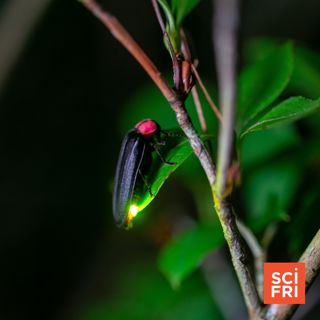
Scientists are now training dogs to sniff out cancer. A team at UPenn and Monell Chemical Chemical Senses Center are using dogs’ heightened sense of smell to detect the specific chemicals produced by cancer cells. The scientists are using this data to produce a device that could be used in ovarian cancer detection.

Science Friday’s video producer Luke Groskin and digital producer Daniel Peterschmidt talk with Ira about a trip to the cancer laboratory, where they met the scientists—and dogs—behind this unique research. This is part of Science Friday’s Methods, where we bring you into the field alongside the scientists working to answer big questions, by using gorgeous video and pictures. You can read the article and watch the videos about their trip at sciencefriday.com/smellingcancer.

Big Data’s Latest On Tracking The Spread of COVID-19

In an effort to stop the spread of the novel coronavirus, some European countries are collecting information on the movements of residents using cell phone data. This helps determine who is following stay-at-home orders, and who isn’t. Facebook and Google want to use their data about user movements to do the same. But some say this is a big breach of privacy. Amy Nordrum of IEEE Spectrum joins Ira to discuss this story and more of the latest COVID-19 news.

Subscribe to this podcast. Follow our show on Instagram, TikTok, Facebook, and Bluesky @scifri and sign up for our newsletters. Got a science question that’s keeping you up at night? Call us: 877-472-4374


Hosted by Simplecast, an AdsWizz company. See pcm.adswizz.com for information about our collection and use of personal data for advertising.

Denne episoden er hentet fra en åpen RSS-feed og er ikke publisert av Podme. Den kan derfor inneholde annonser.

Episoder(1338)

Why do sports announcers talk like that?

Why do sports announcers talk like that?

If you watch sports, whether the recent NBA finals or the ongoing World Cup matches, you may have noticed that the athletes aren’t the only ones putting on a show. The announcers seem to be playing a ...

19 Jun 13min

Swords, cannibalism, poison: inside the world of killer microbes

Swords, cannibalism, poison: inside the world of killer microbes

There is a murderous crime spree happening right under—and perhaps inside—our noses. Killer microbes armed with weapons are eviscerating, assassinating, and detonating their fellow microbes. And the n...

18 Jun 21min

When music transports you to a different place

When music transports you to a different place

Do you ever hear a song that transports you to a specific place and time? This auditory wormhole has a name: musical daydreams. Music cognition expert Elizabeth Margulis studies why they happen, and w...

17 Jun 18min

A vast whale graveyard + Zombie sea cucumbers

A vast whale graveyard + Zombie sea cucumbers

Researchers just published details of a massive undersea graveyard of whales deep in the Indian Ocean. Spanning about 1,200 kilometers (745 miles), it contains whale remains dating back more than 5 mi...

16 Jun 18min

Should we bring mountain lions back to the Northeast?

Should we bring mountain lions back to the Northeast?

Big cats used to roam the entire United States. You might know them as mountain lions, pumas, cougars, or catamounts. Though they go by many names, they're actually all the same species.  Their curren...

15 Jun 12min

Blue Origin explosion hits NASA timeline + Artemis III crew

Blue Origin explosion hits NASA timeline + Artemis III crew

When Blue Origin’s New Glenn spacecraft exploded in an enormous fireball during a ground test a couple weeks ago, it sent shockwaves not only through the air, but through NASA’s timeline for the upcom...

12 Jun 12min

Why can I handle tequila but not rum?

Why can I handle tequila but not rum?

‘Tis the season for porch beers and happy hours, and we’re taking on listener questions about how alcohol affects us. Like, is a glass of wine at dinner really good for you? And why do sugary drinks g...

11 Jun 21min

AI + turfgrass science in the most high-tech World Cup yet

AI + turfgrass science in the most high-tech World Cup yet

The 2026 World Cup will be the largest one yet, and FIFA is trying to make it the most high-tech, too. The federation has partnered with tech giant Lenovo to launch Football AI Pro, which is designed ...

10 Jun 19min

Populært innen Vitenskap

fastlegen
tingenes-tilstand
jss
rss-nysgjerrige-norge
forskningno
liberal-halvtime
rekommandert
villmarksliv
dekodet-2
tomprat-med-gunnar-tjomlid
sinnsyn
rss-paradigmepodden
rss-inn-til-kjernen-med-sunniva-rose
rss-overskuddsliv
hva-er-greia-med
nevropodden
rss-rekommandert
rss-ingeniorpodden
rss-bondevennen
fjellsportpodden