
Global COVID Hotspots, Fact Check My Feed, Koji Fermenting. May 15, 2020, Part 1
Science Friday15 Mai 2020

Global COVID Hotspots, Fact Check My Feed, Koji Fermenting. May 15, 2020, Part 1

Fact Check My Feed: Finding The Falsehoods In ‘Plandemic’

Science Friday continues to weigh the truth and sift through the seemingly never-ending stream of misleading claims about the novel coronavirus. This week, virologist Angela Rasmussen joins Ira to help us decipher the uncertainties around this week’s COVID-19 headlines.

While what we know and don’t know about COVID-19 changes daily, some things are certain: Rasmussen lays out some of the many falsehoods in the viral “Plandemic” video that circulated last week. She also explains why it’s important to know that a small study that found coronavirus RNA in semen samples leaves many questions unanswered—and that the presence of viral RNA doesn’t necessarily indicate a sexually-transmitted virus. Plus, more fact-checking of misconceptions about herd immunity, and more.

Global Flare-ups Of COVID-19 Hot Spots

Each country has tackled “flattening the curve” of COVID-19 cases in their own way and some countries were hailed as early successes in containing outbreaks. But two of these countries have seen recent increases: In reports earlier this week, Germany saw 900 new cases in a 24-hour period and as of Thursday, Singapore has identified more than 750 new cases, almost all linked to dormitories of foreign workers. Reporter Maggie Koerth of FiveThirtyEight.com talks about what the increasing numbers might mean for U.S. states that have started to reopen. She also discusses COVID-19 cases in Africa and South America, plus more science news of the week, including scientists that have identified heat-resistant algae that could help bleached corals.

Koji: The Mold You Want In Your Kitchen

Koji-inoculated starches are crucial in centuries-old Asian foods like soy sauce and miso—and, now, inspiring new and creative twists from modern culinary minds.

Rich Shih and Jeremy Umansky, two food fanatics, have written a new book describing the near-magical workings of the fungus, which, like other molds, uses enzymes to break starches, fats, and proteins down into food for itself. It just so happens that, in the process, it’s making our food tastier.

You can grow koji on grains, vegetables, and other starchy foods, and make sauces, pastes, alcohols, and vinegars. Even cure meats. Umansky and Shih say the possibilities are endless—and they have the koji pastrami and umami popcorn to prove it.

Subscribe to this podcast. Follow our show on Instagram, TikTok, Facebook, and Bluesky @scifri and sign up for our newsletters. Got a science question that’s keeping you up at night? Call us: 877-472-4374


Hosted by Simplecast, an AdsWizz company. See pcm.adswizz.com for information about our collection and use of personal data for advertising.

Denne episoden er hentet fra en åpen RSS-feed og er ikke publisert av Podme. Den kan derfor inneholde annonser.

Episoder(1380)

Colorado’s snow drought deals a major blow to recreation

Colorado’s snow drought deals a major blow to recreation

Winter in Colorado looked very different this year. Many parts of the state experienced record-high temperatures and record-low snowpack, which had downstream effects on farming, sports, tourism, and ...

17 Aug 11min
How do you find a ‘lost’ species?

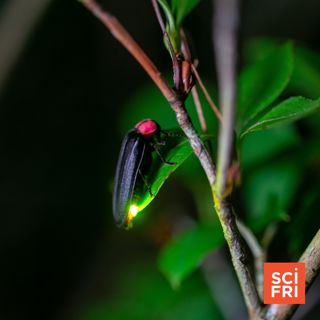
How do you find a ‘lost’ species?

The earth is facing a biodiversity crisis, and there’s a lot of attention on species that are threatened, or at risk of dying out completely. But, there’s another critter category that’s a little more...

14 Aug 18min
What we get wrong about vaccine hesitancy

What we get wrong about vaccine hesitancy

President Trump has signed an executive order calling for a change to the childhood vaccination schedule. Specifically, he wants to separate the MMR vaccine, which protects against measles, mumps, and...

13 Aug 12min

Why this lab studies the speed of bug pee and other curiosities

Why this lab studies the speed of bug pee and other curiosities

In a lab in the Rocky Mountains, a group of scientists is hard at work trying to find answers across biology, physics, and engineering: They’re looking into things like the hydrodynamics of insect pee...

12 Aug 18min

Some primates undergo even more extreme childbirth than humans

Some primates undergo even more extreme childbirth than humans

Human childbirth is often difficult and incredibly painful—just ask anyone who’s been through it. And for a long time, childbirth seemed to be uniquely difficult for humans. But a new study suggests t...

11 Aug 11min
Deb Haaland is a politician, and proud of it

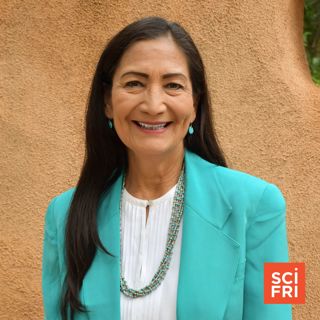
Deb Haaland is a politician, and proud of it

Former Interior Secretary Deb Haaland, a member of the Laguna Pueblo tribe, was the first Native person to hold a cabinet position. Now she’s running to be governor of New Mexico.  Haaland joins Host ...

10 Aug 17min

Sitting all day is terrible for us. Moving a little can help

Sitting all day is terrible for us. Moving a little can help

Keeping your butt in a seat for hours a day increases the risk of heart attacks, diabetes, psychiatric conditions, and more. But in our tech-filled world, many of us lead sedentary lives, whether beca...

7 Aug 18min

A Nagasaki survivor and physician recounts his life's work

A Nagasaki survivor and physician recounts his life's work

Dr. Masao Tomonaga was only 2 years old when the United States bombed his home city of Nagasaki. He survived, and grew up to become a physician for other survivors, known as hibakusha. He also studied...

6 Aug 18min

Populært innen Vitenskap

fastlegen
tingenes-tilstand
rss-nysgjerrige-norge
romkapsel
liberal-halvtime
rekommandert
jss
villmarksliv
dekodet-2
tomprat-med-gunnar-tjomlid
rss-paradigmepodden
vett-og-vitenskap-med-gaute-einevoll
fjellsportpodden
abels-tarn
sinnsyn
rss-rekommandert
rss-overskuddsliv
diagnose
nordnorsk-historie
rss-inn-til-kjernen-med-sunniva-rose