
Proactive Policing, The Social Brain. June 12, 2020, Part 2
Science Friday12 Jun 2020

Proactive Policing, The Social Brain. June 12, 2020, Part 2

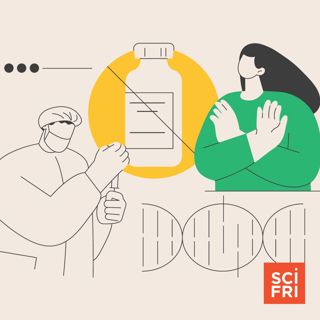
In the 1980s and 1990s, in the midst of rising crime rates and a nationally waning confidence in policing, law enforcement around the country adopted a different approach to addressing crime. Instead of just reacting to crime when it happened, officers decided they’d try to prevent it from happening in the first place, employing things like “hot spots” policing and “stop and frisk,” or “terry stops.” The strategy is what criminologists call proactive policing, and it’s now become widely used in police departments across the nation, especially in cities.

Critics and experts debate how effective these tactics are in lowering crime rates. While there’s some evidence that proactive policing does reduce crime, now public health researchers are questioning if the practice—which sometimes results in innocent people being stopped, searched, and detained—comes with other unintended physical and mental health consequences.

Samuel Walker, emeritus professor of criminology at the University of Nebraska Omaha and an expert in police accountability, reviews what led police departments to adopt a more proactive approach, while medical sociologist Alyasah Ali Sewell explains the physical and mental health impacts of stop-question-and-frisk policing.

Over the past few months, people’s social lives have transformed. We’re now told to stay home, and when we do go out, to maintain at least six feet between ourselves and others—forget about a handshake or a hug. Many are now isolated in their homes, with just a screen and its two-dimensional images to keep them company. But our brains are wired for social connections. “We’re social primates,” says psychiatrist Julie Holland. “It’s in the job description.”

Holland’s new book, Good Chemistry: The Science of Connection, from Soul to Psychedelics, looks at what happens to the brain’s chemistry when we connect socially, and how devastating disconnections can be. She joins Ira to talk about the social life of the brain, community, and the mental health impact of the stressful times we’re living in.

Subscribe to this podcast. Follow our show on Instagram, TikTok, Facebook, and Bluesky @scifri and sign up for our newsletters. Got a science question that’s keeping you up at night? Call us: 877-472-4374


Hosted by Simplecast, an AdsWizz company. See pcm.adswizz.com for information about our collection and use of personal data for advertising.

Denne episoden er hentet fra en åpen RSS-feed og er ikke publisert av Podme. Den kan derfor inneholde annonser.

Episoder(1338)

Why do sports announcers talk like that?

Why do sports announcers talk like that?

If you watch sports, whether the recent NBA finals or the ongoing World Cup matches, you may have noticed that the athletes aren’t the only ones putting on a show. The announcers seem to be playing a ...

19 Jun 13min

Swords, cannibalism, poison: inside the world of killer microbes

Swords, cannibalism, poison: inside the world of killer microbes

There is a murderous crime spree happening right under—and perhaps inside—our noses. Killer microbes armed with weapons are eviscerating, assassinating, and detonating their fellow microbes. And the n...

18 Jun 21min

When music transports you to a different place

When music transports you to a different place

Do you ever hear a song that transports you to a specific place and time? This auditory wormhole has a name: musical daydreams. Music cognition expert Elizabeth Margulis studies why they happen, and w...

17 Jun 18min

A vast whale graveyard + Zombie sea cucumbers

A vast whale graveyard + Zombie sea cucumbers

Researchers just published details of a massive undersea graveyard of whales deep in the Indian Ocean. Spanning about 1,200 kilometers (745 miles), it contains whale remains dating back more than 5 mi...

16 Jun 18min

Should we bring mountain lions back to the Northeast?

Should we bring mountain lions back to the Northeast?

Big cats used to roam the entire United States. You might know them as mountain lions, pumas, cougars, or catamounts. Though they go by many names, they're actually all the same species.  Their curren...

15 Jun 12min

Blue Origin explosion hits NASA timeline + Artemis III crew

Blue Origin explosion hits NASA timeline + Artemis III crew

When Blue Origin’s New Glenn spacecraft exploded in an enormous fireball during a ground test a couple weeks ago, it sent shockwaves not only through the air, but through NASA’s timeline for the upcom...

12 Jun 12min

Why can I handle tequila but not rum?

Why can I handle tequila but not rum?

‘Tis the season for porch beers and happy hours, and we’re taking on listener questions about how alcohol affects us. Like, is a glass of wine at dinner really good for you? And why do sugary drinks g...

11 Jun 21min

AI + turfgrass science in the most high-tech World Cup yet

AI + turfgrass science in the most high-tech World Cup yet

The 2026 World Cup will be the largest one yet, and FIFA is trying to make it the most high-tech, too. The federation has partnered with tech giant Lenovo to launch Football AI Pro, which is designed ...

10 Jun 19min

Populært innen Vitenskap

fastlegen
tingenes-tilstand
jss
rss-nysgjerrige-norge
forskningno
liberal-halvtime
rekommandert
villmarksliv
dekodet-2
tomprat-med-gunnar-tjomlid
sinnsyn
rss-paradigmepodden
rss-inn-til-kjernen-med-sunniva-rose
rss-overskuddsliv
hva-er-greia-med
nevropodden
rss-rekommandert
rss-ingeniorpodden
rss-bondevennen
fjellsportpodden