The End of Everything, Bright Fluorescence, Gene Editing a Squid. August 7, 2020, Part 2
Science Friday7 Aug 2020

The End of Everything, Bright Fluorescence, Gene Editing a Squid. August 7, 2020, Part 2

When it comes to the eventual end of our universe, cosmologists have a few classic theories: the Big Crunch, where the universe reverses its expansion and contracts again, setting the stars themselves on fire in the process. Or the Big Rip, where the universe expands forever—but in a fundamentally unstable way that tears matter itself apart. Or it might be heat death, in which matter and energy become equally distributed in a cold, eventless soup.

These theories have continued to evolve as we gain new understandings from particle accelerators and astronomical observations. As our understanding of fundamental physics advances, new ideas about the ending are joining the list. Take vacuum decay, a theory that’s been around since the 1970s, but which gained new support when CERN confirmed detection of the Higgs Boson particle. The nice thing about vacuum decay, writes cosmologist Katie Mack in her new book, The End of Everything: (Astrophysically Speaking), is that it could happen at any time, and would be almost instantaneous—painless, efficient.

Mack joins Ira to talk about the diversity of universe-ending theories, and how cosmologists like her think about the big questions, like where the universe started, how it might end, and what happens after it does.

Over the years, researchers have created thousands of chemical dyes that fluoresce in every color of the rainbow—but there’s a catch. Most of those dyes fluoresce most brightly when they’re in a dilute liquid solution. Now, researchers say they’ve created what they call a “plug-and-play” approach to locking those dyes into a solid form, without dimming their light.

The new strategy uses a colorless, donut-shaped molecule called a cyanostar. When combined with fluorescent dye, cyanostar molecules insulate the dye molecules from each other, and allow them to pack closely together in an orderly checkerboard—resulting in brightly-fluorescing solid materials.

Amar Flood, a professor of chemistry at Indiana University, says the new materials can be around thirty times brighter than other materials on a per-volume basis, and the approach works for any number of off-the-shelf dyes—no tweaking required. Flood joins SciFri’s Charles Bergquist to discuss the work and possible applications for the new technology.

Scientists at Woods Hole Marine Biological Laboratory recently thrilled the genetics world by announcing they’ve successfully knocked out a gene in squid for the first time.

“I’m like a kid in a candy store with how much opportunity there is now,” says Karen Crawford, one of the researchers and a biology professor at St. Mary’s College of Maryland. Crawford explains this modification has huge implications for the study of genetics: Squids’ big brains mean this work could hold the key to breakthroughs in research for human genetic diseases, like Huntington’s disease and cystic fibrosis.

Joining Ira to talk about the news are Crawford and her co-lead on the research, Josh Rosenthal, a senior scientist at the Marine Biological Laboratory in Woods Hole, Massachusetts.

Subscribe to this podcast. Follow our show on Instagram, TikTok, Facebook, and Bluesky @scifri and sign up for our newsletters. Got a science question that’s keeping you up at night? Call us: 877-472-4374


Hosted by Simplecast, an AdsWizz company. See pcm.adswizz.com for information about our collection and use of personal data for advertising.

Denne episoden er hentet fra en åpen RSS-feed og er ikke publisert av Podme. Den kan derfor inneholde annonser.

Episoder(1380)

Colorado’s snow drought deals a major blow to recreation

Colorado’s snow drought deals a major blow to recreation

Winter in Colorado looked very different this year. Many parts of the state experienced record-high temperatures and record-low snowpack, which had downstream effects on farming, sports, tourism, and ...

17 Aug 11min
How do you find a ‘lost’ species?

How do you find a ‘lost’ species?

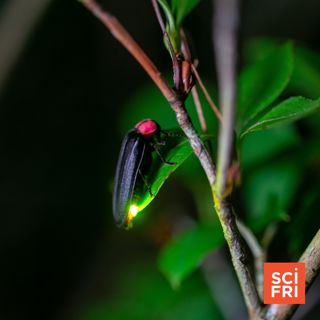
The earth is facing a biodiversity crisis, and there’s a lot of attention on species that are threatened, or at risk of dying out completely. But, there’s another critter category that’s a little more...

14 Aug 18min
What we get wrong about vaccine hesitancy

What we get wrong about vaccine hesitancy

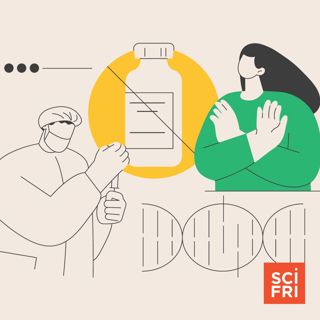
President Trump has signed an executive order calling for a change to the childhood vaccination schedule. Specifically, he wants to separate the MMR vaccine, which protects against measles, mumps, and...

13 Aug 12min
Why this lab studies the speed of bug pee and other curiosities

Why this lab studies the speed of bug pee and other curiosities

In a lab in the Rocky Mountains, a group of scientists is hard at work trying to find answers across biology, physics, and engineering: They’re looking into things like the hydrodynamics of insect pee...

12 Aug 18min
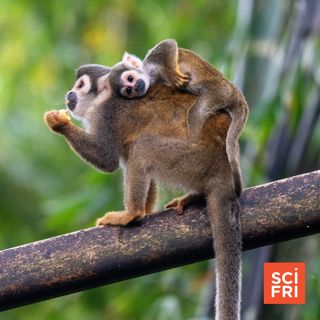
Some primates undergo even more extreme childbirth than humans

Some primates undergo even more extreme childbirth than humans

Human childbirth is often difficult and incredibly painful—just ask anyone who’s been through it. And for a long time, childbirth seemed to be uniquely difficult for humans. But a new study suggests t...

11 Aug 11min
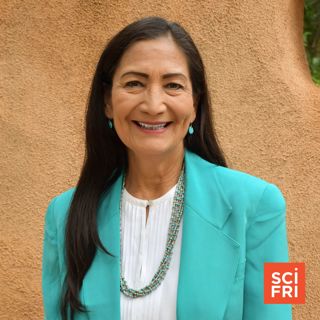
Deb Haaland is a politician, and proud of it

Deb Haaland is a politician, and proud of it

Former Interior Secretary Deb Haaland, a member of the Laguna Pueblo tribe, was the first Native person to hold a cabinet position. Now she’s running to be governor of New Mexico.  Haaland joins Host ...

10 Aug 17min

Sitting all day is terrible for us. Moving a little can help

Sitting all day is terrible for us. Moving a little can help

Keeping your butt in a seat for hours a day increases the risk of heart attacks, diabetes, psychiatric conditions, and more. But in our tech-filled world, many of us lead sedentary lives, whether beca...

7 Aug 18min

A Nagasaki survivor and physician recounts his life's work

A Nagasaki survivor and physician recounts his life's work

Dr. Masao Tomonaga was only 2 years old when the United States bombed his home city of Nagasaki. He survived, and grew up to become a physician for other survivors, known as hibakusha. He also studied...

6 Aug 18min

Populært innen Vitenskap

fastlegen
tingenes-tilstand
rss-nysgjerrige-norge
romkapsel
liberal-halvtime
rekommandert
jss
villmarksliv
dekodet-2
tomprat-med-gunnar-tjomlid
rss-paradigmepodden
vett-og-vitenskap-med-gaute-einevoll
fjellsportpodden
abels-tarn
sinnsyn
rss-rekommandert
rss-overskuddsliv
diagnose
nordnorsk-historie
rss-inn-til-kjernen-med-sunniva-rose