Science And The Election, Disinformation, Vampire Bats. Oct 30, 2020, Part 1
Science Friday30 Okt 2020

Science And The Election, Disinformation, Vampire Bats. Oct 30, 2020, Part 1

Choosing the next U.S. president is not the only decision voters will make in the upcoming 2020 elections. Major science policies are also on the ballot. In some states, people will be casting votes on propositions that influence scientific research and the environment. While in other local elections, candidates with scientific backgrounds are in the running for public office. Jeffrey Mervis of Science Magazine talks about California stem cell research policies and Nevada renewable energy propositions, and how a science platform could help or harm candidates.

Plus, this election season has been filled with disinformation—unverified stories of voter fraud, rumors of uncounted and tossed out mail-in ballots, claims of third parties hacking voter results, and other false information. And with possible delayed election results due to the overwhelming number of absentee ballots, driven in part by COVID, there could be even more of this disinformation spread before the final polls are announced. Disinformation expert Deen Freelon discusses how these unverified and fake news stories take hold. Freelon also provides techniques on how to decipher fact from fiction in your overfilled news feeds.

Relatedly, the November election will likely have big consequences for climate policy in the United States. It comes at a critical time. Scientists say major action is needed by 2030 to avoid the worst effects of global warming. President Donald Trump does not have a climate policy. His administration has rolled back Obama-era climate initiatives. Democratic presidential candidate Joe Biden is promising to put the country on a path toward a 100% clean energy economy and net-zero emissions from the U.S. no later than 2050. Polls show about 70% of Pennsylvanians want their state lawmakers to do more to address climate change. But polls rarely carry examples of what actions people want. A recent StateImpact survey shows Pennsylvanians want a lot — from state and federal lawmakers. The one-question survey attracted responses from more than 200 people, who asked for everything from specific policy proposals such as Pennsylvania’s entrance into the Regional Greenhouse Gas Initiative (RGGI) and the Green New Deal, to desperate pleas such as “listen to science!!!!!!!!!!!!!!!!!!!!” (Read the full piece at ScienceFriday.com.)

And it’s almost Halloween, which means it’s time to get a little spooky. A perfect time for the newest installment of our Charismatic Creature Corner!

This month, we’re diving into the wild world of vampire bats. These little mammals are native to Central and South America, and have bodies about the size of a mouse.

And yes, let’s address the elephant in the room: Vampire bats have a diet that consists entirely of blood. They gravitate toward livestock, but have been known to feed on people too. Their status as blood-suckers makes them one of the only mammals classified as parasites.

Despite their gruesome diets, vampire bats are extremely social creatures, and are known to display acts of friendships with other bats. In fact, a study last year found that vampire bat friendships forged in captivity actually last when the bats are released into the wild. Friendships are important for vampire bats: They result in food sharing, which is integral to keeping everyone fed and happy.

Science Friday’s Charismatic Creature Correspondent, producer Kathleen Davis, is back to convince Ira that this creature is worthy of entry into the Charismatic Creature Corner Hall of Fame. Joining them is Dan Riskin, an evolutionary biologist and adjunct professor of biology at the University of Toronto, Mississauga.

Subscribe to this podcast. Follow our show on Instagram, TikTok, Facebook, and Bluesky @scifri and sign up for our newsletters. Got a science question that’s keeping you up at night? Call us: 877-472-4374


Hosted by Simplecast, an AdsWizz company. See pcm.adswizz.com for information about our collection and use of personal data for advertising.

Denne episoden er hentet fra en åpen RSS-feed og er ikke publisert av Podme. Den kan derfor inneholde annonser.

Episoder(1381)

What can moments of lucidity teach us about Alzheimer’s?

What can moments of lucidity teach us about Alzheimer’s?

Watching a loved one with Alzheimer's or dementia slowly lose their cognitive abilities can be heartbreaking. While the person you once knew seems to be slipping away, sometimes people with Alzheimer'...

18 Aug 17min
Colorado’s snow drought deals a major blow to recreation

Colorado’s snow drought deals a major blow to recreation

Winter in Colorado looked very different this year. Many parts of the state experienced record-high temperatures and record-low snowpack, which had downstream effects on farming, sports, tourism, and ...

17 Aug 11min
How do you find a ‘lost’ species?

How do you find a ‘lost’ species?

The earth is facing a biodiversity crisis, and there’s a lot of attention on species that are threatened, or at risk of dying out completely. But, there’s another critter category that’s a little more...

14 Aug 18min
What we get wrong about vaccine hesitancy

What we get wrong about vaccine hesitancy

President Trump has signed an executive order calling for a change to the childhood vaccination schedule. Specifically, he wants to separate the MMR vaccine, which protects against measles, mumps, and...

13 Aug 12min

Why this lab studies the speed of bug pee and other curiosities

Why this lab studies the speed of bug pee and other curiosities

In a lab in the Rocky Mountains, a group of scientists is hard at work trying to find answers across biology, physics, and engineering: They’re looking into things like the hydrodynamics of insect pee...

12 Aug 18min
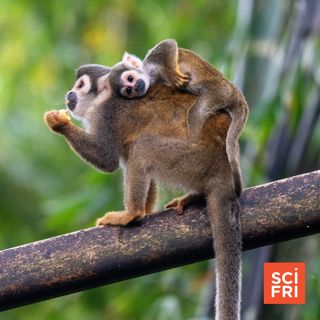
Some primates undergo even more extreme childbirth than humans

Some primates undergo even more extreme childbirth than humans

Human childbirth is often difficult and incredibly painful—just ask anyone who’s been through it. And for a long time, childbirth seemed to be uniquely difficult for humans. But a new study suggests t...

11 Aug 11min
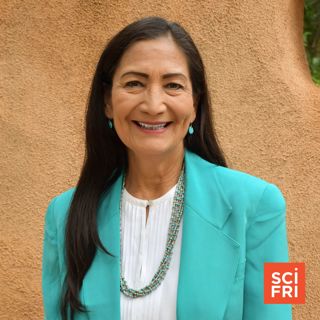
Deb Haaland is a politician, and proud of it

Deb Haaland is a politician, and proud of it

Former Interior Secretary Deb Haaland, a member of the Laguna Pueblo tribe, was the first Native person to hold a cabinet position. Now she’s running to be governor of New Mexico.  Haaland joins Host ...

10 Aug 17min
Sitting all day is terrible for us. Moving a little can help

Sitting all day is terrible for us. Moving a little can help

Keeping your butt in a seat for hours a day increases the risk of heart attacks, diabetes, psychiatric conditions, and more. But in our tech-filled world, many of us lead sedentary lives, whether beca...

7 Aug 18min

Populært innen Vitenskap

fastlegen
tingenes-tilstand
rss-nysgjerrige-norge
romkapsel
liberal-halvtime
rekommandert
jss
villmarksliv
dekodet-2
tomprat-med-gunnar-tjomlid
rss-paradigmepodden
vett-og-vitenskap-med-gaute-einevoll
fjellsportpodden
abels-tarn
sinnsyn
rss-rekommandert
rss-overskuddsliv
diagnose
nordnorsk-historie
rss-inn-til-kjernen-med-sunniva-rose