

Vaccine Hesitancy, Colorado River Drought, Alternative Syrups. May 28, 2021, Part 1
Science Friday28 Mai 2021

Vaccine Hesitancy, Colorado River Drought, Alternative Syrups. May 28, 2021, Part 1

How Do We Overcome Vaccine Hesitancy?

This Memorial Day weekend, many people will be traveling to the beach, hitting the road or socializing with friends—maskless—for the first time in over a year. As of this week, 50% of people over 18 are now fully vaccinated. Another 15 to 20% of people are taking a “wait and see” approach. Of those still on the fence, some are concerned about the vaccine’s side effects; others have a long standing mistrust of the institutions responsible for the vaccine rollout.

In order to fully end the pandemic, public health officials will have to find a way to get the vaccine-hesitant on board. Dr. Gary Bennett, professor of psychology and global health at Duke University sheds light on the hurdles that must be overcome.

And a new segment of the population can now receive the Pfizer vaccine: children 12 years and older, after the Centers for Disease Control and Prevention gave approval in mid-May.

But many American parents don’t want their children vaccinated at all—including for measles or the flu. One recent report from this past April showed that over 30% of parents would wait to get their child vaccinated—nearly double the percentage of adults who were hesitant. Matthew Simonson, a doctoral candidate at Northwestern University and lead author on the report, joins us to break down the numbers.

What Happens When The Colorado River Runs Dry?

Dry conditions are the worst they’ve been in almost 20 years across the Colorado River watershed, which acts as the drinking and irrigation water supply for 40 million people in the American Southwest.

As the latest round of federal forecasts for the river’s flow shows, it’s plausible, maybe even likely, that the situation could get much worse this year.

Understanding and explaining the depth of the dryness is up to climate scientists throughout the basin.

Read the full article at sciencefriday.com.

Making Syrup From More Than Maple Trees

Researchers at the University of New Hampshire are studying new ways to make syrup out of the northern forest—not from maple trees, but from beeches, birches, sycamores and more. They want to create new markets for an industry that, right now, depends on just one kind of tree—making it vulnerable to disease and climate change.

At the tail end of maple sugaring season, other kinds of sap were still flowing freely in the woods of Lee. UNH researcher David Moore had sensors plugged into a stand of beech trees to measure that sap and the conditions helping produce it.

“You can see I have three trees with sensors here that are all tied back to one data logger,” Moore said, pointing to the tubes and wires running from the beech trunks. Nearby, a bucket collected the resulting sap, while other equipment gathered weather data.

Researchers say monocultures, like the all-maple syrup industry, are more at risk from climate change, pests and other unpredictable threats. So Moore sees untapped potential in other common species, like the American beech. It’s found throughout New Hampshire’s forests, farms and sugar bushes—almost like a tree weed. “If you can think of some economical use—if you can make syrup from them, that would be a nice way to actually generate a little profit from them,” Moore said.

Read the full article at sciencefriday.com.

Big Oil Reckons With Climate Change

Depending on your perspective, Wednesday was a bad day to be an oil company, or a good day to be a climate activist. Three major oil companies had climate change pushed higher on their agendas: Shell was ordered by a Dutch court to cut its greenhouse gas emissions 45% by 2030; Chevron was told by its shareholders to reduce not just its emissions from oil production, but also those of its customers; and at Exxon’s annual shareholder meeting, a small advocacy firm managed to score two, and possibly three, spots on its board of directors.

So where did these climate coups come from, and what could come next? Vox staff writer Umair Irfan talks to John Dankosky about this week’s wins for the planet, as well as the limits of such reforms.

Plus other stories from the week, including Moderna’s promising COVID-19 vaccine results in adolescents aged 12-17, and President Biden’s call for more investigation into COVID-19’s origins.

Subscribe to this podcast. Follow our show on Instagram, TikTok, Facebook, and Bluesky @scifri and sign up for our newsletters. Got a science question that’s keeping you up at night? Call us: 877-472-4374


Hosted by Simplecast, an AdsWizz company. See pcm.adswizz.com for information about our collection and use of personal data for advertising.

Denne episoden er hentet fra en åpen RSS-feed og er ikke publisert av Podme. Den kan derfor inneholde annonser.

Episoder(1382)

Creating 'world models' for robots + An AI math shakeup

Creating 'world models' for robots + An AI math shakeup

When you ask an LLM like ChatGPT or Claude a question, the model goes through its massive amount of training data and guesses the answer by mathematically predicting the word most likely to appear nex...

19 Aug 17min

What can moments of lucidity teach us about Alzheimer’s?

What can moments of lucidity teach us about Alzheimer’s?

Watching a loved one with Alzheimer's or dementia slowly lose their cognitive abilities can be heartbreaking. While the person you once knew seems to be slipping away, sometimes people with Alzheimer'...

18 Aug 17min
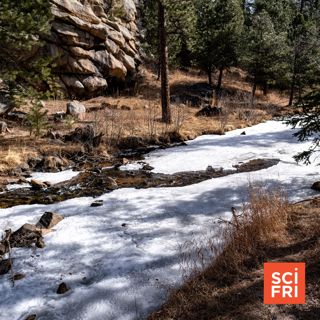
Colorado’s snow drought deals a major blow to recreation

Colorado’s snow drought deals a major blow to recreation

Winter in Colorado looked very different this year. Many parts of the state experienced record-high temperatures and record-low snowpack, which had downstream effects on farming, sports, tourism, and ...

17 Aug 11min
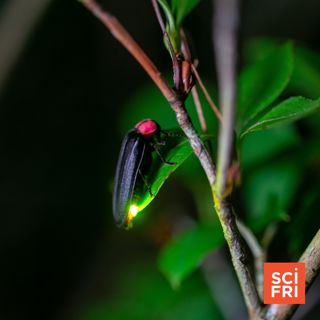
How do you find a ‘lost’ species?

How do you find a ‘lost’ species?

The earth is facing a biodiversity crisis, and there’s a lot of attention on species that are threatened, or at risk of dying out completely. But, there’s another critter category that’s a little more...

14 Aug 18min
What we get wrong about vaccine hesitancy

What we get wrong about vaccine hesitancy

President Trump has signed an executive order calling for a change to the childhood vaccination schedule. Specifically, he wants to separate the MMR vaccine, which protects against measles, mumps, and...

13 Aug 12min

Why this lab studies the speed of bug pee and other curiosities

Why this lab studies the speed of bug pee and other curiosities

In a lab in the Rocky Mountains, a group of scientists is hard at work trying to find answers across biology, physics, and engineering: They’re looking into things like the hydrodynamics of insect pee...

12 Aug 18min

Some primates undergo even more extreme childbirth than humans

Some primates undergo even more extreme childbirth than humans

Human childbirth is often difficult and incredibly painful—just ask anyone who’s been through it. And for a long time, childbirth seemed to be uniquely difficult for humans. But a new study suggests t...

11 Aug 11min
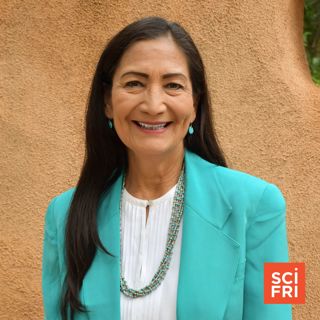
Deb Haaland is a politician, and proud of it

Deb Haaland is a politician, and proud of it

Former Interior Secretary Deb Haaland, a member of the Laguna Pueblo tribe, was the first Native person to hold a cabinet position. Now she’s running to be governor of New Mexico.  Haaland joins Host ...

10 Aug 17min

Populært innen Vitenskap

fastlegen
tingenes-tilstand
rss-nysgjerrige-norge
romkapsel
jss
villmarksliv
rekommandert
liberal-halvtime
rss-paradigmepodden
tomprat-med-gunnar-tjomlid
dekodet-2
sinnsyn
fjellsportpodden
vett-og-vitenskap-med-gaute-einevoll
abels-tarn
rss-rekommandert
rss-overskuddsliv
diagnose
nordnorsk-historie
rss-lundqvist-podden