
Native Biodata, Indigenous Carbon Resistance, COVID Boosters Next Steps. Oct 15, 2021, Part 1
Science Friday15 Okt 2021

Native Biodata, Indigenous Carbon Resistance, COVID Boosters Next Steps. Oct 15, 2021, Part 1

More Boosters, For More People

This week, an FDA advisory committee met to pore over data and debate the role of COVID vaccine boosters. And on Thursday, they voted to recommend Moderna boosters for older Americans, as well as people in certain at-risk groups. This recommendation came just a few weeks after the FDA authorized a Pfizer booster for similar individuals.

The recommendations of the panel regarding boosters for Moderna and Johnson & Johnson vaccines, as well as the idea of mixing and matching different vaccine and booster types, will now go to FDA officials. The CDC will also weigh in.

Amy Nordrum, commissioning editor at MIT Technology Review, joins Ira to talk about the vaccine meeting and other topics from the week in science—including the FDA authorization of an e-cigarette, efforts to map the brain, mysterious radio signals from space, and a mission to explore asteroids near Jupiter.

Indigenous-Led Biology, Designed For Native Communities

Monday was Indigenous Peoples’ Day here in the United States: a holiday to honor Native Americans and their resilience over many centuries of colonialism. Due to a long history of discrimination, Native Americans face stark health disparities, compared to other American populations. Illnesses like chronic liver disease, diabetes, and respiratory diseases are much more common in Native communities.

This is where the Native BioData Consortium (NBDC) comes in. It’s a biobank, a large collection of biological samples for research purposes. What sets this facility apart from others is its purpose—the biological samples are from indigenous people, and the research is led by indigenous scientists.

This is important, say the founders, because for too long, biological samples from Native people have been used for purposes that don’t benefit them.

Joining Ira to talk about the importance of having a biobank run by indigenous scientists are three foundational members of the project: Krystal Tsosie, co-founder and ethics and policy director of the NBDC and PhD candidate in genetics at Vanderbilt University, Joseph Yracheta, executive director and laboratory manager of the NCDC, and Matt Anderson, assistant professor of microbiology at Ohio State University and NCDC board member.

Indigenous Activists Helped Save Almost A Billion Tons Of Carbon Per Year

This summer, Science Friday and other media outlets covered the protests against an oil pipeline project in northern Minnesota, where Canadian company Enbridge Energy was replacing and expanding their existing Line 3 infrastructure. Native American tribes in Minnesota—whose lands the pipeline would pass through and alongside—organized protests, direct action, and other resistance against the project. The pipeline was completed, and began moving tar sands oil at the beginning of October.

But the protests and their non-Native allies drew arrests, news coverage, and social media attention to the debate over continued drilling of fossil fuels.

Before Line 3, there were protests at the Dakota Access Pipeline, which was completed against the wishes of the nearby Standing Rock Sioux Tribe, and the Keystone XL pipeline, which President Biden ultimately cancelled after objections and lawsuits from two Native American communities in Montana and South Dakota. So far, the Arctic National Wildlife Refuge has remained un-drilled, despite multiple attempts, with help from vocal opposition by Alaska’s Gwich’in people.

A new report from two advocacy groups does the math on how much carbon dioxide or other greenhouse gas emissions these cancelled or delayed projects would have emitted in the last 10 years. According to their calculations, Indigenous resistance to pipelines and other fossil fuel projects has saved the U.S. and Canada 12% of their annual emissions, or 0.8 billion tons of CO2 per year.

Ira talks to the co-authors, Dallas Goldtooth of the Indigenous Environmental Network, and Kyle Gracey from Oil Change International, about the value of tallying these emissions in the fight to prevent future oil projects. Plus, why Native American protesters and their allies deserve credit for keeping fossil fuels in the ground—and the bigger environmental justice issue of pipeline projects alongside Native land.

Subscribe to this podcast. Follow our show on Instagram, TikTok, Facebook, and Bluesky @scifri and sign up for our newsletters. Got a science question that’s keeping you up at night? Call us: 877-472-4374


Hosted by Simplecast, an AdsWizz company. See pcm.adswizz.com for information about our collection and use of personal data for advertising.

Denne episoden er hentet fra en åpen RSS-feed og er ikke publisert av Podme. Den kan derfor inneholde annonser.

Episoder(1382)

Creating 'world models' for robots + An AI math shakeup

Creating 'world models' for robots + An AI math shakeup

When you ask an LLM like ChatGPT or Claude a question, the model goes through its massive amount of training data and guesses the answer by mathematically predicting the word most likely to appear nex...

19 Aug 17min

What can moments of lucidity teach us about Alzheimer’s?

What can moments of lucidity teach us about Alzheimer’s?

Watching a loved one with Alzheimer's or dementia slowly lose their cognitive abilities can be heartbreaking. While the person you once knew seems to be slipping away, sometimes people with Alzheimer'...

18 Aug 17min
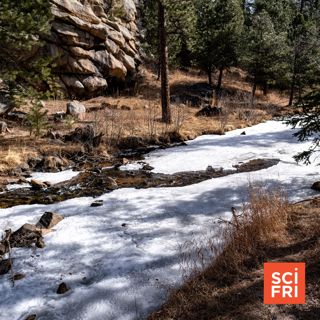
Colorado’s snow drought deals a major blow to recreation

Colorado’s snow drought deals a major blow to recreation

Winter in Colorado looked very different this year. Many parts of the state experienced record-high temperatures and record-low snowpack, which had downstream effects on farming, sports, tourism, and ...

17 Aug 11min

How do you find a ‘lost’ species?

How do you find a ‘lost’ species?

The earth is facing a biodiversity crisis, and there’s a lot of attention on species that are threatened, or at risk of dying out completely. But, there’s another critter category that’s a little more...

14 Aug 18min

What we get wrong about vaccine hesitancy

What we get wrong about vaccine hesitancy

President Trump has signed an executive order calling for a change to the childhood vaccination schedule. Specifically, he wants to separate the MMR vaccine, which protects against measles, mumps, and...

13 Aug 12min

Why this lab studies the speed of bug pee and other curiosities

Why this lab studies the speed of bug pee and other curiosities

In a lab in the Rocky Mountains, a group of scientists is hard at work trying to find answers across biology, physics, and engineering: They’re looking into things like the hydrodynamics of insect pee...

12 Aug 18min

Some primates undergo even more extreme childbirth than humans

Some primates undergo even more extreme childbirth than humans

Human childbirth is often difficult and incredibly painful—just ask anyone who’s been through it. And for a long time, childbirth seemed to be uniquely difficult for humans. But a new study suggests t...

11 Aug 11min
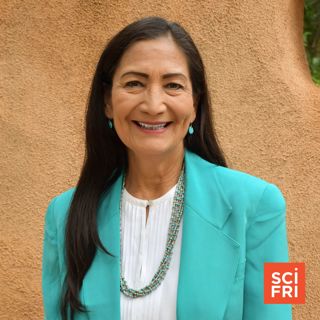
Deb Haaland is a politician, and proud of it

Deb Haaland is a politician, and proud of it

Former Interior Secretary Deb Haaland, a member of the Laguna Pueblo tribe, was the first Native person to hold a cabinet position. Now she’s running to be governor of New Mexico.  Haaland joins Host ...

10 Aug 17min

Populært innen Vitenskap

fastlegen
tingenes-tilstand
rss-nysgjerrige-norge
romkapsel
jss
villmarksliv
rekommandert
liberal-halvtime
rss-paradigmepodden
tomprat-med-gunnar-tjomlid
dekodet-2
sinnsyn
fjellsportpodden
vett-og-vitenskap-med-gaute-einevoll
abels-tarn
rss-rekommandert
rss-overskuddsliv
diagnose
nordnorsk-historie
rss-lundqvist-podden