
Shinnecock Nation, Marsh Science, Weekend Stargazing. Oct 15, 2021, Part 2
Science Friday15 Okt 2021

Shinnecock Nation, Marsh Science, Weekend Stargazing. Oct 15, 2021, Part 2

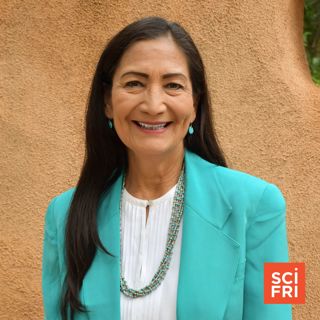
On Long Island, A Tribal Nation Faces Growing Pressures

The Hamptons on Long Island are known as a mansion-lined escape for wealthy New Yorkers. But the area is also home to the Native residents of the Shinnecock Tribal Nation. An estimated 1,500 Shinnecock members are left in the U.S., and about half live on the Nation’s territory on Long Island.

As with the rest of the island, Shinnecock Nation is extremely vulnerable to climate change. Receding shorelines threaten to eat up three-quarters of its territory by 2050, adding to the existing threat of development from the Hamptons. This issue of climate change and its impacts around Long Island is the subject of the new podcast, “Higher Ground,” from WSHU Public Radio in Fairfield, Connecticut. One of the stories told in the podcast is that of Tela Troge, Shinnecock tribal sovereignty attorney and kelp farmer, who lives on Shinnecock territory in Long Island.

Tela talks to Ira about seeing climate change and development affect Shinnecock land with her own eyes, and her venture into kelp farming as a tool for nitrogen sequestration.

The World According To Sound: Listening To Lightning

There is more than one way to listen to a bolt of lightning. While you can pick up the boom and rumble of thunder with your ears, if you tune in with a radio receiver, you can hear an entirely different sound: an earth whistler.

When lightning strikes, it releases electromagnetic radiation in the VLF or Very Low Frequency band, which runs from 3 Hz to 30 kHz. This falls within the human range of hearing, which spans from 20 Hz to 20 kHz. However, we can not hear whistlers with our own ears because the radiation is electromagnetic, not physical vibrations in the air.

We can, though, capture the electromagnetic radiation with a radio receiver. Radio operators have been picking up the strange twanging of lightning ever since they started trying to tune into man-made signals. They dubbed the eerie electro-magnetic disturbances in their headphones “earth whistlers.”

People first heard earth whistlers back in the 19th century. The electromagnetic radiation from lightning interfered with telephone lines and crept into phone conversations. You’d be talking with someone and hear these bursts of energy, like little phone ghosts.

Today, we know earth whistlers are made by the interaction of lightning with the planet’s magnetic field. There are over a million lightning strikes in the atmosphere, which means there is a nearly constant chorus around earth.

The whistlers in this piece were provided courtesy of NASA and The University of Iowa.

The World According to Sound is a live audio show, online listening series, and miniature podcast that focuses on sound, not story. Producers Chris Hoff and Sam Harnett create intentional, communal listening experiences as a way to “reclaim autonomy in a visually dominated world that is increasingly fracturing our attention.”

This recording is part of their next listening series, an immersive listening party where audiences from all over the globe will be invited to experience a world of sound together, beginning in January 2022. You can get a ticket to the series here.

Save The Wetlands, Save The World

In Rising, the Science Friday Book Club pick for this fall, author Elizabeth Rush writes frequently of marshes. Rush explores the disappearing wetlands of Louisiana’s hurricane-battered coast, the San Francisco Bay Estuary, Staten Island’s newly abandoned flood zones, and other marshes around the country. But why, scientifically speaking, are wetlands such a feature of the conversation around coastal resilience to climate change and rising seas.

In a recording with a ‘live’ Zoom audience, SciFri producer Christie Taylor speaks with wetland ecologists Marcelo Ardón and Letitia Grenier about the resilience and adaptability of marshland, how climate change and sea level rise threatens them, and why protecting and restoring tidelands is good for everyone.

Widening The Lens On A More Inclusive Science

In 2012, the Obama administration projected that the United States would need to add an additional 1 million college graduates in STEM fields per year for the next ten years to keep up with projected growth in the need for science and technology expertise. At the same time, though, native Americans and other Indigenous groups are underrepresented in the sciences, making up only 0.2% of the STEM workforce in 2014, despite being 2% of the total population of the United States. Why are Indigenous people still underrepresented in science?

In this re-broadcast of the 2019 conversation, Ira speaks with astrophysicist Annette Lee and anthropologist Kim TallBear about the historical role of science and observation in Indigenous communities, and how Western scientific culture can leave out other voices. They also discuss the solutions: What does an inclusive scientific enterprise look like, and how could we get there?

This Weekend, Take Time For The Moon

This Saturday marks International Observe the Moon Night, a worldwide astronomy education event encouraging people to take time to look at the moon—through a telescope, if possible. Around the world, astronomers will be setting up public telescopes and encouraging passers-by to take a look.

Dean Regas, astronomer at the Cincinnati Observatory, joins Ira to explain how to get in on the lunar-observation action. They also talk about other astronomical events, including the ongoing Orionid meteor shower and an upcoming partial lunar eclipse on November 19.

Subscribe to this podcast. Follow our show on Instagram, TikTok, Facebook, and Bluesky @scifri and sign up for our newsletters. Got a science question that’s keeping you up at night? Call us: 877-472-4374


Hosted by Simplecast, an AdsWizz company. See pcm.adswizz.com for information about our collection and use of personal data for advertising.

Denne episoden er hentet fra en åpen RSS-feed og er ikke publisert av Podme. Den kan derfor inneholde annonser.

Episoder(1339)

FDA approves a well-known sunscreen ingredient—finally

FDA approves a well-known sunscreen ingredient—finally

The FDA recently approved a sunscreen ingredient called bemotrizinol, or BEMT, that’s been used in Europe and Asia for years. This is the first new sunscreen ingredient approved in the United States i...

22 Jun 12min

Why do sports announcers talk like that?

Why do sports announcers talk like that?

If you watch sports, whether the recent NBA finals or the ongoing World Cup matches, you may have noticed that the athletes aren’t the only ones putting on a show. The announcers seem to be playing a ...

19 Jun 13min

Swords, cannibalism, poison: inside the world of killer microbes

Swords, cannibalism, poison: inside the world of killer microbes

There is a murderous crime spree happening right under—and perhaps inside—our noses. Killer microbes armed with weapons are eviscerating, assassinating, and detonating their fellow microbes. And the n...

18 Jun 21min

When music transports you to a different place

When music transports you to a different place

Do you ever hear a song that transports you to a specific place and time? This auditory wormhole has a name: musical daydreams. Music cognition expert Elizabeth Margulis studies why they happen, and w...

17 Jun 18min

A vast whale graveyard + Zombie sea cucumbers

A vast whale graveyard + Zombie sea cucumbers

Researchers just published details of a massive undersea graveyard of whales deep in the Indian Ocean. Spanning about 1,200 kilometers (745 miles), it contains whale remains dating back more than 5 mi...

16 Jun 18min

Should we bring mountain lions back to the Northeast?

Should we bring mountain lions back to the Northeast?

Big cats used to roam the entire United States. You might know them as mountain lions, pumas, cougars, or catamounts. Though they go by many names, they're actually all the same species.  Their curren...

15 Jun 12min

Blue Origin explosion hits NASA timeline + Artemis III crew

Blue Origin explosion hits NASA timeline + Artemis III crew

When Blue Origin’s New Glenn spacecraft exploded in an enormous fireball during a ground test a couple weeks ago, it sent shockwaves not only through the air, but through NASA’s timeline for the upcom...

12 Jun 12min

Why can I handle tequila but not rum?

Why can I handle tequila but not rum?

‘Tis the season for porch beers and happy hours, and we’re taking on listener questions about how alcohol affects us. Like, is a glass of wine at dinner really good for you? And why do sugary drinks g...

11 Jun 21min

Populært innen Vitenskap

fastlegen
tingenes-tilstand
jss
rss-nysgjerrige-norge
forskningno
liberal-halvtime
rekommandert
villmarksliv
sinnsyn
dekodet-2
rss-paradigmepodden
rss-overskuddsliv
rss-inn-til-kjernen-med-sunniva-rose
tomprat-med-gunnar-tjomlid
nevropodden
rss-rekommandert
rss-ingeniorpodden
hva-er-greia-med
fjellsportpodden
rss-bondevennen