
Mammoth Pool Fire, Fun Squirrel Facts, Soil Importance. Nov 12 2021, Part 2
Science Friday12 Nov 2021

Mammoth Pool Fire, Fun Squirrel Facts, Soil Importance. Nov 12 2021, Part 2

As Wildfire Intensity Rises, So Does The Human Toll Of Blazes

It was Labor Day 2020, and Mammoth Pool Reservoir, in California’s Sierra Nevada, was buzzing with campers. Karla Carcamo and her parents, siblings, cousins, and countless others, mostly from the Los Angeles area, have been coming here every Labor Day for 17 years. “Most of it is my family, and family that’s invited family, and those family friends have invited friends of theirs,” she says. “I’m telling you, we have over 200 people.”

Alex Tettamanti and her husband Raul Reyes are also Labor Day regulars. Every year, they drive in from Las Vegas to meet up with an off-roading club made up of a few dozen families from across the West. They fill their weekend with jet-skiing, ATVing and hiking. “It’s beautiful,” says Tettamanti. “The smell of all the pine trees and stuff, and the trees are so big, it’s really cool.

The campground and reservoir are nestled at an elevation of about 3,000 feet in the Central California foothills a few hours northeast of Fresno. The attraction is unfiltered Sierra Nevada: Sparkling blue water surrounded by a thick forest of stately ponderosa pines and black oaks. Plus, it’s isolated. There’s only one road in and out, which dead ends at the lake. “Being there, let me tell you, it’s like a little piece of paradise,” says Carcamo.

That Friday passed like any other. Groups split up to go hiking, swimming and grilling, and Carcamo’s family prepared for their annual pupusa night later in the weekend.

By Saturday morning, however, the atmosphere had changed. “When I woke up, I did notice it was kind of cloudy,” says Reyes. “The sky was orange and there was ash, like big pieces of ash falling,” says Reyes’ friend Vicky Castro.

Read the rest at sciencefriday.com.

Squirrel-Nut Economics And Other Agility Tricks

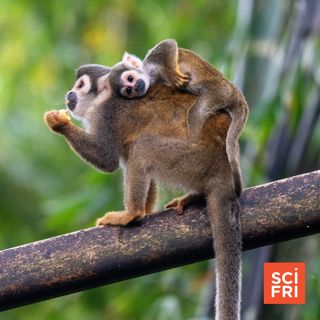
In many parts of the country, the lead-up to winter is a busy time for squirrels, furiously collecting and hiding acorns and nuts for the cold months ahead. But how can squirrels recall where it has stashed all its stores? And what can studying squirrels tell researchers about memory, learning, and economic decision-making in other species?

Ira talks with Lucia Jacobs, a professor in the department of psychology and the Institute of Neuroscience at UC Berkeley, about her studies of the campus squirrels—from learning about their cognition, learning, and memory to recording the acrobatic movements of a squirrel on the ground and in the treetops. Jacobs co-leads a "squirrel school," observing rescued and orphaned juvenile squirrels as they learn normal squirrel behavior, and is contributing to a project seeking to develop robots using agility tricks learned from the rodents.

What Will We Reap Without Topsoil?

You may have missed the research when it came out this February: a paper in the Proceedings of the National Academies of Science reporting on satellite studies of farmland topsoil in the nation’s corn belt, states like Iowa, Indiana, and Illinois. And the news was not good. The team estimated that more than one-third of the topsoil in this region is gone, eroded mostly from hilltops and ridgelines, thanks to the plowing and tilling processes used to perform industrial agriculture. That topsoil, some of the richest in the world, is carbon-rich and crucial to our food supply. And yet it’s continuing to wash away, a hundred years after scientists like Aldo Leopold first called out the threat of erosion.

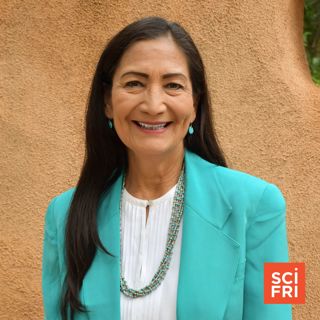
This erosion, as well as other degradation of soil’s complex structure and microbiome, continues at a fast clip around the globe, hurting food production and ecosystems health. In addition, soil could be helping us contain more than 100 billion additional tons of carbon dioxide from the atmosphere—if we let it. But the good news, according to University of Wisconsin soil scientist Jo Handelsman, is that the solutions like cover crops and no-till farming are simple, well-understood, and easy to implement—as long as we give farmers incentives to make the leap. She talks to Ira about her forthcoming book, A World Without Soil: The Past, Present, and Precarious Future of the Earth Beneath Our Feet.

Subscribe to this podcast. Follow our show on Instagram, TikTok, Facebook, and Bluesky @scifri and sign up for our newsletters. Got a science question that’s keeping you up at night? Call us: 877-472-4374


Hosted by Simplecast, an AdsWizz company. See pcm.adswizz.com for information about our collection and use of personal data for advertising.

Denne episoden er hentet fra en åpen RSS-feed og er ikke publisert av Podme. Den kan derfor inneholde annonser.

Episoder(1339)

FDA approves a well-known sunscreen ingredient—finally

FDA approves a well-known sunscreen ingredient—finally

The FDA recently approved a sunscreen ingredient called bemotrizinol, or BEMT, that’s been used in Europe and Asia for years. This is the first new sunscreen ingredient approved in the United States i...

22 Jun 12min

Why do sports announcers talk like that?

Why do sports announcers talk like that?

If you watch sports, whether the recent NBA finals or the ongoing World Cup matches, you may have noticed that the athletes aren’t the only ones putting on a show. The announcers seem to be playing a ...

19 Jun 13min

Swords, cannibalism, poison: inside the world of killer microbes

Swords, cannibalism, poison: inside the world of killer microbes

There is a murderous crime spree happening right under—and perhaps inside—our noses. Killer microbes armed with weapons are eviscerating, assassinating, and detonating their fellow microbes. And the n...

18 Jun 21min

When music transports you to a different place

When music transports you to a different place

Do you ever hear a song that transports you to a specific place and time? This auditory wormhole has a name: musical daydreams. Music cognition expert Elizabeth Margulis studies why they happen, and w...

17 Jun 18min

A vast whale graveyard + Zombie sea cucumbers

A vast whale graveyard + Zombie sea cucumbers

Researchers just published details of a massive undersea graveyard of whales deep in the Indian Ocean. Spanning about 1,200 kilometers (745 miles), it contains whale remains dating back more than 5 mi...

16 Jun 18min

Should we bring mountain lions back to the Northeast?

Should we bring mountain lions back to the Northeast?

Big cats used to roam the entire United States. You might know them as mountain lions, pumas, cougars, or catamounts. Though they go by many names, they're actually all the same species.  Their curren...

15 Jun 12min

Blue Origin explosion hits NASA timeline + Artemis III crew

Blue Origin explosion hits NASA timeline + Artemis III crew

When Blue Origin’s New Glenn spacecraft exploded in an enormous fireball during a ground test a couple weeks ago, it sent shockwaves not only through the air, but through NASA’s timeline for the upcom...

12 Jun 12min

Why can I handle tequila but not rum?

Why can I handle tequila but not rum?

‘Tis the season for porch beers and happy hours, and we’re taking on listener questions about how alcohol affects us. Like, is a glass of wine at dinner really good for you? And why do sugary drinks g...

11 Jun 21min

Populært innen Vitenskap

fastlegen
jss
tingenes-tilstand
forskningno
liberal-halvtime
rss-nysgjerrige-norge
rekommandert
sinnsyn
tomprat-med-gunnar-tjomlid
villmarksliv
rss-paradigmepodden
dekodet-2
rss-overskuddsliv
rss-inn-til-kjernen-med-sunniva-rose
rss-ingeniorpodden
hva-er-greia-med
fjellsportpodden
nevropodden
rss-rekommandert
rss-lundqvist-podden