

Abortion Medication, Rat Island, Access To Parks, Climate And Seafood. May 13, 2022, Part 2
Science Friday13 Mai 2022

Abortion Medication, Rat Island, Access To Parks, Climate And Seafood. May 13, 2022, Part 2

Abortion Pills Are Used For Most U.S. Abortions. What Are They?

The draft Supreme Court decision overturning Roe v. Wade means abortion access is once again in jeopardy. Nearly half of U.S. states will immediately ban abortion upon a Roe v. Wade overturn.

Medication abortion, or abortion by pill, is currently the most common method of abortion in the United States. In 2020, 54% of abortions in the United States were medication abortions, according to research from the Guttmacher Institute.

If the Supreme Court decision is overturned, it’s expected that the ease and convenience of an abortion pill may make medication abortion an even larger share of all abortions nationwide.

Ira talks with Ushma Upadhyay, associate professor of obstetrics, gynecology and reproductive sciences at Advancing New Standards in Reproductive Health at UC San Francisco. Upadhyay explains how medication abortion works, how its regulated, and its role in a possible post Roe v. Wade era.

One Alaskan Island’s Fight For A Rodent-Free Future

For millions of years, birds lived nearly predator free in the Aleutian Islands. The volcanic archipelago stretches westward for 1,200 miles from the Alaska Peninsula, dotting a border between the North Pacific Ocean and Bering Sea. Hundreds of bird species thrived here.

But then came the rats. When a Japanese boat sank in the Western Aleutians around 1780, stowaway rats jumped ship and made it to one of the islands, wreaking havoc on the ecosystem. The rodents proliferated during World War II, when American Navy ships traveled along the chain, expanding the rats’ domain. “The rats are like an oil spill that keeps on spilling, year after year,” said Steve Delehanty, the refuge manager for the Alaska Maritime National Wildlife Refuge. “We would never allow an oil spill to go on for decades or centuries, nor should we allow rats to be a forever-presence on these islands.”

Read the rest at sciencefriday.com.

Campsites At National Parks ‘Harder Than Getting Beyonce Tickets’

Access to the outdoors has long had an equity problem. Whether it’s the expense of equipment or hostility from fellow hikers, marginalized groups have had more barriers to enjoying recreation in nature.

Now, new research in the Journal of Park and Recreation Administration has data on one tool that was supposed to improve access for more people: the online system of reserving campgrounds at national parks. Compared to people camping at first-come first-serve campsites in the same parks, the people who successfully use the reservation systems are wealthier, better-educated, and more likely to be white.

Ira talks to research co-author Will Rice about the factors that make reservations harder to access, how wealthier people succeed in working the system to their advantage, and how publicly-funded campgrounds like the national parks could more fairly manage rising demand.

How Restaurant Menus Mirror Our Warming Ocean

Before the 1980’s, you probably wouldn’t have found Humboldt squid on a restaurant menu in Vancouver. But now, the warm water-loving critter has expanded towards the poles as ocean temperatures rise, and you can see that change on restaurant menus.

In a new study in the journal Environmental Biology of Fishes, researchers from the University of British Columbia looked at more than 360 menus, dating back to 1880. They found a connection between climate change and which seafood types rose to fame on restaurant menus over the years… and which ones flopped off.

Ira speaks with study co-author Dr. William Cheung about how our menus mirror what’s happening to our oceans. Plus, a conversation with Chef Ned Bell about why it’s important that our plates adapt to changes in our local ecosystems.

Transcripts for each segment will be available the week after the show airs on sciencefriday.com.

Subscribe to this podcast. Follow our show on Instagram, TikTok, Facebook, and Bluesky @scifri and sign up for our newsletters. Got a science question that’s keeping you up at night? Call us: 877-472-4374


Hosted by Simplecast, an AdsWizz company. See pcm.adswizz.com for information about our collection and use of personal data for advertising.

Denne episoden er hentet fra en åpen RSS-feed og er ikke publisert av Podme. Den kan derfor inneholde annonser.

Episoder(1383)

Making a case for physicists to join climate research

Making a case for physicists to join climate research

When you think of physics, your mind might go to forces—like gravity, friction, and magnetism—or to astrophysics, like galaxies and exoplanets. But many of the same principles used to understand how t...

20 Aug 12min

Creating 'world models' for robots + An AI math shakeup

Creating 'world models' for robots + An AI math shakeup

When you ask an LLM like ChatGPT or Claude a question, the model goes through its massive amount of training data and guesses the answer by mathematically predicting the word most likely to appear nex...

19 Aug 17min

What can moments of lucidity teach us about Alzheimer’s?

What can moments of lucidity teach us about Alzheimer’s?

Watching a loved one with Alzheimer's or dementia slowly lose their cognitive abilities can be heartbreaking. While the person you once knew seems to be slipping away, sometimes people with Alzheimer'...

18 Aug 17min

Colorado’s snow drought deals a major blow to recreation

Colorado’s snow drought deals a major blow to recreation

Winter in Colorado looked very different this year. Many parts of the state experienced record-high temperatures and record-low snowpack, which had downstream effects on farming, sports, tourism, and ...

17 Aug 11min
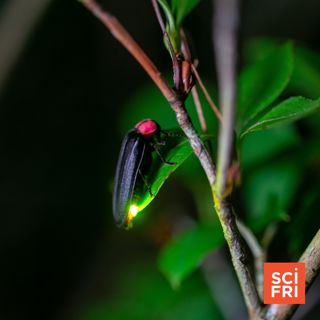
How do you find a ‘lost’ species?

How do you find a ‘lost’ species?

The earth is facing a biodiversity crisis, and there’s a lot of attention on species that are threatened, or at risk of dying out completely. But, there’s another critter category that’s a little more...

14 Aug 18min
What we get wrong about vaccine hesitancy

What we get wrong about vaccine hesitancy

President Trump has signed an executive order calling for a change to the childhood vaccination schedule. Specifically, he wants to separate the MMR vaccine, which protects against measles, mumps, and...

13 Aug 12min

Why this lab studies the speed of bug pee and other curiosities

Why this lab studies the speed of bug pee and other curiosities

In a lab in the Rocky Mountains, a group of scientists is hard at work trying to find answers across biology, physics, and engineering: They’re looking into things like the hydrodynamics of insect pee...

12 Aug 18min
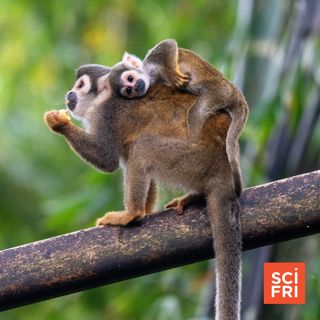
Some primates undergo even more extreme childbirth than humans

Some primates undergo even more extreme childbirth than humans

Human childbirth is often difficult and incredibly painful—just ask anyone who’s been through it. And for a long time, childbirth seemed to be uniquely difficult for humans. But a new study suggests t...

11 Aug 11min

Populært innen Vitenskap

fastlegen
tingenes-tilstand
rss-nysgjerrige-norge
romkapsel
jss
liberal-halvtime
rekommandert
tomprat-med-gunnar-tjomlid
rss-paradigmepodden
villmarksliv
sinnsyn
dekodet-2
vett-og-vitenskap-med-gaute-einevoll
fjellsportpodden
smart-forklart
rss-rekommandert
abels-tarn
rss-overskuddsliv
diagnose
nordnorsk-historie