Kahneman on ‘Noise,’ CHIPS Act, Great Salt Lake Dryness, Hybrid Toads. July 22, 2022, Part 2
Science Friday22 Jul 2022

Kahneman on ‘Noise,’ CHIPS Act, Great Salt Lake Dryness, Hybrid Toads. July 22, 2022, Part 2

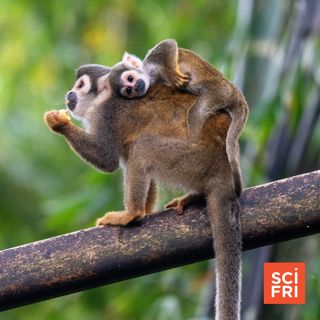
When Times Get Tough, These Toads Make Hybrid Babies

Scientists have long thought that when two animals from two different species mate, it’s a colossal error and the end of the road for the mismatched couple. It’s called interspecies breeding, and many hybrid offspring often end up sterile, such as zonkeys —a cross between a zebra and donkey. Or they can develop serious health problems, like ligers and tigons.

One biologist even went as far to call interspecies breeding “the grossest blunder in sexual preference.” But is breeding across species lines always a dead end? One critter —the plains spadefoot toad—shows us that maybe it isn’t. In fact, it can give them a leg up in survival.

Katherine Wu, staff writer for The Atlantic, talks with Ira about the complicated sex lives of the female plains spadefoot toads, the trade-offs females make when choosing a mate, and why hybridizing critters may not be such a biological abomination after all.

Major Semiconductor Support Bill Passes First Hurdle

Earlier this week, the Senate voted in favor of the Creating Helpful Incentives to Produce Semiconductors (CHIPS) for America Act. If passed, the bill would provide more than $50 billion to companies that will build semiconductor factories here in the United States. Semiconductors are versatile materials—such as silicon—often used in electronics and in microchips. But the bulk of semiconductors, known as “chips,” are produced in other countries, mostly Taiwan. If the CHIPS Act is passed, the government will fund tech companies to build factories at home instead. Although the bill still has to go through the House and be signed by President Biden, this Senate vote is still a monumental moment in the tech world.

Jesús del Alamo, a professor of electrical engineering at MIT, joins Ira to talk about why this bill is such a big deal, and what’s at stake.

Drought Could Raise Toxic Dust Around Utah’s Great Salt Lake

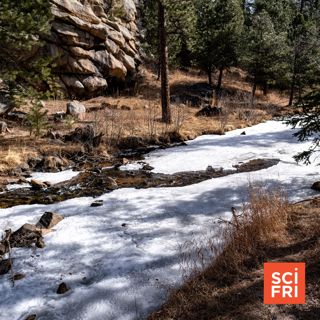
Utah’s Great Salt Lake holds a unique ecological niche as the western hemisphere’s largest saltwater lake. The body of water is three to five times saltier than the ocean, with salinity ranging between 12 and 28 percent. According to the Great Salt Lake Institute, millions of birds from more than 250 species rely on the lake yearly, alongside a diverse variety of plants and animals.

Like many bodies of water in the U.S., climate change is affecting the status quo in the Great Salt Lake. The water is drying up at an alarming rate, reaching its lowest level in recorded history this month. Now, researchers warn that toxic dust could increase as water levels continue to drop.

Joining Ira to discuss the Great Salt Lake’s ecosystem and future is Bonnie Baxter, director of the Great Salt Lake Institute and biology professor at Westminster College in Salt Lake City, Utah.

A Flaw in Human Judgment: How Making Decisions Isn’t As Objective As You Think

If two people are presented with the same set of facts, they will often draw different conclusions. For example, judges often dole out different sentences for the same case, which can lead to an unjust system. This unwanted variability in judgments in which we expect uniformity is what psychologist Daniel Kahneman calls “noise.”

The importance of thoughtful decision-making has come in stark relief during the pandemic and in the events leading up to the January 6th insurrection.

Ira talks with Nobel Prize-winning psychologist Daniel Kahneman about the role of ‘noise’ in human judgment, his long career studying cognitive biases, and how systematic decision-making can result in fewer errors.

Kahneman is the co-author of “Noise: A Flaw in Human Judgment,” along with Oliver Sibony and Cass R. Sunstein, now available in paperback.

Transcripts for each segment will be available the week after the show airs on sciencefriday.com.

Subscribe to this podcast. Follow our show on Instagram, TikTok, Facebook, and Bluesky @scifri and sign up for our newsletters. Got a science question that’s keeping you up at night? Call us: 877-472-4374


Hosted by Simplecast, an AdsWizz company. See pcm.adswizz.com for information about our collection and use of personal data for advertising.

Denne episoden er hentet fra en åpen RSS-feed og er ikke publisert av Podme. Den kan derfor inneholde annonser.

Episoder(1340)

Can you learn to love the scorpion?

Can you learn to love the scorpion?

If you have arachnophobia, consider this your opportunity to try exposure therapy: A new study suggests that 415 million years ago, in modern-day England and Wales, a scorpion the length of a golden r...

23 Jun 18min

FDA approves a well-known sunscreen ingredient—finally

FDA approves a well-known sunscreen ingredient—finally

The FDA recently approved a sunscreen ingredient called bemotrizinol, or BEMT, that’s been used in Europe and Asia for years. This is the first new sunscreen ingredient approved in the United States i...

22 Jun 12min

Why do sports announcers talk like that?

Why do sports announcers talk like that?

If you watch sports, whether the recent NBA finals or the ongoing World Cup matches, you may have noticed that the athletes aren’t the only ones putting on a show. The announcers seem to be playing a ...

19 Jun 13min

Swords, cannibalism, poison: inside the world of killer microbes

Swords, cannibalism, poison: inside the world of killer microbes

There is a murderous crime spree happening right under—and perhaps inside—our noses. Killer microbes armed with weapons are eviscerating, assassinating, and detonating their fellow microbes. And the n...

18 Jun 21min

When music transports you to a different place

When music transports you to a different place

Do you ever hear a song that transports you to a specific place and time? This auditory wormhole has a name: musical daydreams. Music cognition expert Elizabeth Margulis studies why they happen, and w...

17 Jun 18min

A vast whale graveyard + Zombie sea cucumbers

A vast whale graveyard + Zombie sea cucumbers

Researchers just published details of a massive undersea graveyard of whales deep in the Indian Ocean. Spanning about 1,200 kilometers (745 miles), it contains whale remains dating back more than 5 mi...

16 Jun 18min

Should we bring mountain lions back to the Northeast?

Should we bring mountain lions back to the Northeast?

Big cats used to roam the entire United States. You might know them as mountain lions, pumas, cougars, or catamounts. Though they go by many names, they're actually all the same species.  Their curren...

15 Jun 12min

Blue Origin explosion hits NASA timeline + Artemis III crew

Blue Origin explosion hits NASA timeline + Artemis III crew

When Blue Origin’s New Glenn spacecraft exploded in an enormous fireball during a ground test a couple weeks ago, it sent shockwaves not only through the air, but through NASA’s timeline for the upcom...

12 Jun 12min

Populært innen Vitenskap

fastlegen
jss
tingenes-tilstand
forskningno
liberal-halvtime
rss-nysgjerrige-norge
rekommandert
sinnsyn
tomprat-med-gunnar-tjomlid
villmarksliv
rss-paradigmepodden
dekodet-2
rss-overskuddsliv
rss-inn-til-kjernen-med-sunniva-rose
rss-ingeniorpodden
hva-er-greia-med
fjellsportpodden
nevropodden
rss-rekommandert
rss-lundqvist-podden