When Life Begins, Open Access Research, Wasps. Sep 2, 2022, Part 2
Science Friday2 Sep 2022

When Life Begins, Open Access Research, Wasps. Sep 2, 2022, Part 2

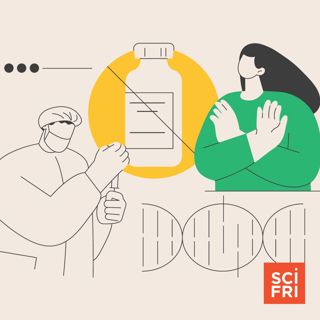
Why Is It So Hard To Agree On When Human Life Starts?

After decades of deliberations involving physicians, bioethicists, attorneys, and theologians, a U.S. presidential commission in 1981 settled on a scientifically derived dividing line between life and death that has endured, more or less, ever since: A person was considered dead when the entire brain—including the brainstem, its most primitive portion—was no longer functioning, even if other vital functions could be maintained indefinitely through artificial life support.

In the decades since, the committee’s criteria have served as a foundation for laws in most states adopting brain death as a standard for legal death.

Now, with the overturning of Roe v. Wade and dozens of states rushing to impose abortion restrictions, American society is engaged in a chaotic race to define the other pole of human existence: When exactly does human life begin? At conception, the hint of a heartbeat, a first breath, the ability to survive outside the womb with the help of the latest technology?

To read the full article, visit sciencefriday.com.

Taxpayer-Funded Science Is Finally Becoming Public

Last week, the White House Office of Science and Technology Policy announced a new directive requiring federally-funded science be made available to the public for free, and faster.

Set to take effect by the end of 2025, the new rule would do away with the Obama-era policy that journals can keep research with taxpayer funding behind paywalls for up to one year. In addition, more kinds of research would qualify than previous policies have required.

So how does freely accessible research benefit the people who pay for it—or the scientists who do the work itself? Nobel Prize-winning medical researcher and open science advocate Harold Varmus joins Ira to discuss.

Why You Should Thank Your Local Wasp

It’s late in the summer, meaning any outdoor gathering with food and drink has a good chance of being visited by a pesky, buzzing wasp. But don’t reach for that rolled-up newspaper or can of bug spray. The wasps in your world play an important role that’s often overlooked.

Far beyond the social hornets and yellowjackets people think about when they picture a wasp, the wasp world includes thousands of species. Some are parasitic, injecting their eggs into unwilling prey. Others hunt, either paralyzing prey for their young to feed on, or by bringing bits of meat back to a nest for their young. Some are strictly vegetarian, and live on pollen. Some are needed for the pollination of figs and certain species of orchids.

Dr. Seirian Sumner, a behavioral biologist at University College London, says that if people understood the services provided by wasps the same way that they understand the need for bees, they might be more willing to overlook an occasional wasp annoyance—and might even be thankful for the wasps in their lives. In her book Endless Forms: The Secret World of Wasps, Sumner makes the case for wasps as nature’s pest control agents, as important pollinators that should be celebrated.

Transcripts for each segment will be available the week after the show airs on sciencefriday.com.

Subscribe to this podcast. Follow our show on Instagram, TikTok, Facebook, and Bluesky @scifri and sign up for our newsletters. Got a science question that’s keeping you up at night? Call us: 877-472-4374


Hosted by Simplecast, an AdsWizz company. See pcm.adswizz.com for information about our collection and use of personal data for advertising.

Denne episoden er hentet fra en åpen RSS-feed og er ikke publisert av Podme. Den kan derfor inneholde annonser.

Episoder(1340)

Can you learn to love the scorpion?

Can you learn to love the scorpion?

If you have arachnophobia, consider this your opportunity to try exposure therapy: A new study suggests that 415 million years ago, in modern-day England and Wales, a scorpion the length of a golden r...

23 Jun 18min

FDA approves a well-known sunscreen ingredient—finally

FDA approves a well-known sunscreen ingredient—finally

The FDA recently approved a sunscreen ingredient called bemotrizinol, or BEMT, that’s been used in Europe and Asia for years. This is the first new sunscreen ingredient approved in the United States i...

22 Jun 12min

Why do sports announcers talk like that?

Why do sports announcers talk like that?

If you watch sports, whether the recent NBA finals or the ongoing World Cup matches, you may have noticed that the athletes aren’t the only ones putting on a show. The announcers seem to be playing a ...

19 Jun 13min

Swords, cannibalism, poison: inside the world of killer microbes

Swords, cannibalism, poison: inside the world of killer microbes

There is a murderous crime spree happening right under—and perhaps inside—our noses. Killer microbes armed with weapons are eviscerating, assassinating, and detonating their fellow microbes. And the n...

18 Jun 21min

When music transports you to a different place

When music transports you to a different place

Do you ever hear a song that transports you to a specific place and time? This auditory wormhole has a name: musical daydreams. Music cognition expert Elizabeth Margulis studies why they happen, and w...

17 Jun 18min

A vast whale graveyard + Zombie sea cucumbers

A vast whale graveyard + Zombie sea cucumbers

Researchers just published details of a massive undersea graveyard of whales deep in the Indian Ocean. Spanning about 1,200 kilometers (745 miles), it contains whale remains dating back more than 5 mi...

16 Jun 18min

Should we bring mountain lions back to the Northeast?

Should we bring mountain lions back to the Northeast?

Big cats used to roam the entire United States. You might know them as mountain lions, pumas, cougars, or catamounts. Though they go by many names, they're actually all the same species.  Their curren...

15 Jun 12min

Blue Origin explosion hits NASA timeline + Artemis III crew

Blue Origin explosion hits NASA timeline + Artemis III crew

When Blue Origin’s New Glenn spacecraft exploded in an enormous fireball during a ground test a couple weeks ago, it sent shockwaves not only through the air, but through NASA’s timeline for the upcom...

12 Jun 12min

Populært innen Vitenskap

fastlegen
jss
tingenes-tilstand
forskningno
liberal-halvtime
rss-nysgjerrige-norge
rekommandert
sinnsyn
tomprat-med-gunnar-tjomlid
villmarksliv
rss-paradigmepodden
dekodet-2
rss-overskuddsliv
rss-inn-til-kjernen-med-sunniva-rose
rss-ingeniorpodden
hva-er-greia-med
fjellsportpodden
nevropodden
rss-rekommandert
rss-lundqvist-podden