Living Underwater For 100 Days, Refineries’ Excess Emissions, Owl Facts. June 9, 2023, Part 2
Science Friday9 Jun 2023

Living Underwater For 100 Days, Refineries’ Excess Emissions, Owl Facts. June 9, 2023, Part 2

Exposing Texas’ Excess Emissions Problems

In the early hours of August 22, 2020, Hurricane Laura was still just a tropical storm off the coast of the Leeward Islands in the Caribbean. But effects from the monstrous storm, which would ultimately take at least 81 lives, were already being felt on the U.S. Gulf Coast.

As rain poured down on the Sweeney refinery in Old Ocean, Texas, that afternoon, two processing units failed, releasing nearly 1,400 pounds of sulfur dioxide, which can cause trouble breathing, and other chemicals.

Over the next few days, Laura siphoned up moisture from the warm waters of the Gulf of Mexico and transformed into a Category 1 hurricane.

In Texas, chemical plants began shutting down, hurriedly burning off unprocessed chemicals and releasing vast amounts of pollution in anticipation of the storm making landfall. On August 24, Motiva’s Port Arthur refinery released 36,000 pounds of sulfur dioxide, hydrogen sulfide, and other noxious pollutants.

The next morning, Motiva began purging chemicals its plant had been processing, emitting nearly 48,000 pounds of carbon monoxide and propylene, among other pollutants. The following day, a Phillips 66 refinery in southwest Louisiana shut down, releasing more than 1,900 pounds of sulfur dioxide.

Then, as gale-force winds swept through coastal communities and the relentless rain poured down, the chemical facilities increasingly malfunctioned.

To read the rest, visit sciencefriday.com.

A Scientist’s Catalog Of 100 Days Under The Sea

In February, Dr. Joe Dituri put on his scuba gear, dove 30 feet below the surface, and entered a 100-square-foot underwater lodge. This former US Navy diving officer didn’t come up again for air until June 9, spending 100 days underwater. And even before the end of his stay, he broke the record for living underwater.

He did all of this in the name of science—to understand how the human body handles long-term exposure to pressure. This mission is called Project Neptune 100, and because those 100 days are finally up, we’re taking a deep dive into the underwater habitat to hear what is to be learned from so many days below the waves. We recorded this interview with Dituri on Day #94 with a live virtual audience, whom you’ll hear from later.

Ira talks with Dr. Deep Sea, aka Dr. Joe Dituri, a biomedical engineer and associate professor at the University of South Florida, and Dr. Sarah Spelsberg, wilderness emergency specialist and the medical lead for Project Neptune 100 coming to us from the Maldives.

To see some photos of Dr. Dituri's undersea life, visit sciencefriday.com.

Unmasking Owls’ Mysteries

Don’t let owls’ cute faces fool you—they’re deadly predators. This duality is part of what makes them so mysterious to humans. And their contradictions don’t end there: Their hoots are among the most distinctive bird sounds, yet owls are nearly silent when gliding through the air to catch their prey.

Scientists are learning more about why owls are such good predators—how their hearing and night vision are so sharp, and their flight so silent. With new technology, researchers are also decoding owl communications, increasing our understanding of their social structures and mating habits.

John Dankosky talks about all things owls with Jennifer Ackerman, author of the new book, What An Owl Knows: The New Science of the World’s Most Enigmatic Birds.

To stay updated on all-things-science, sign up for Science Friday's newsletters.

Transcripts for each segment will be available the week after the show airs on sciencefriday.com.

Subscribe to this podcast. Follow our show on Instagram, TikTok, Facebook, and Bluesky @scifri and sign up for our newsletters. Got a science question that’s keeping you up at night? Call us: 877-472-4374


Hosted by Simplecast, an AdsWizz company. See pcm.adswizz.com for information about our collection and use of personal data for advertising.

Denne episoden er hentet fra en åpen RSS-feed og er ikke publisert av Podme. Den kan derfor inneholde annonser.

Episoder(1384)

Do microplastics in the body affect pregnancy?

Do microplastics in the body affect pregnancy?

Microplastics have been documented throughout the human body, including the reproductive system. But the field of microplastics research is very new, and it’s not yet clear if, or how, these tiny part...

21 Aug 12min
Making a case for physicists to join climate research

Making a case for physicists to join climate research

When you think of physics, your mind might go to forces—like gravity, friction, and magnetism—or to astrophysics, like galaxies and exoplanets. But many of the same principles used to understand how t...

20 Aug 12min

Creating 'world models' for robots + An AI math shakeup

Creating 'world models' for robots + An AI math shakeup

When you ask an LLM like ChatGPT or Claude a question, the model goes through its massive amount of training data and guesses the answer by mathematically predicting the word most likely to appear nex...

19 Aug 17min

What can moments of lucidity teach us about Alzheimer’s?

What can moments of lucidity teach us about Alzheimer’s?

Watching a loved one with Alzheimer's or dementia slowly lose their cognitive abilities can be heartbreaking. While the person you once knew seems to be slipping away, sometimes people with Alzheimer'...

18 Aug 17min
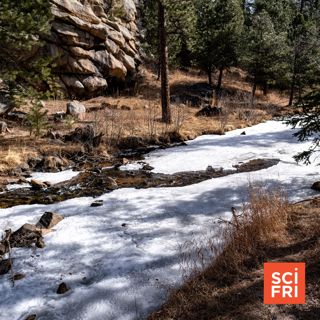
Colorado’s snow drought deals a major blow to recreation

Colorado’s snow drought deals a major blow to recreation

Winter in Colorado looked very different this year. Many parts of the state experienced record-high temperatures and record-low snowpack, which had downstream effects on farming, sports, tourism, and ...

17 Aug 11min
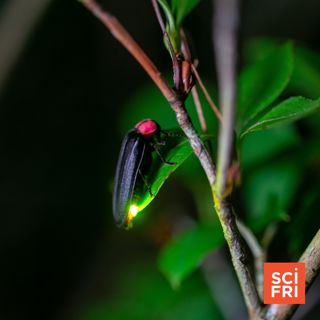
How do you find a ‘lost’ species?

How do you find a ‘lost’ species?

The earth is facing a biodiversity crisis, and there’s a lot of attention on species that are threatened, or at risk of dying out completely. But, there’s another critter category that’s a little more...

14 Aug 18min
What we get wrong about vaccine hesitancy

What we get wrong about vaccine hesitancy

President Trump has signed an executive order calling for a change to the childhood vaccination schedule. Specifically, he wants to separate the MMR vaccine, which protects against measles, mumps, and...

13 Aug 12min
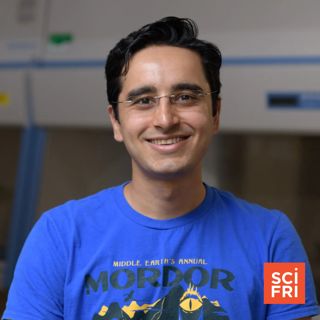
Why this lab studies the speed of bug pee and other curiosities

Why this lab studies the speed of bug pee and other curiosities

In a lab in the Rocky Mountains, a group of scientists is hard at work trying to find answers across biology, physics, and engineering: They’re looking into things like the hydrodynamics of insect pee...

12 Aug 18min

Populært innen Vitenskap

fastlegen
tingenes-tilstand
rss-nysgjerrige-norge
romkapsel
liberal-halvtime
rekommandert
rss-paradigmepodden
tomprat-med-gunnar-tjomlid
jss
sinnsyn
smart-forklart
fjellsportpodden
villmarksliv
forskningno
vett-og-vitenskap-med-gaute-einevoll
rss-rekommandert
diagnose
rss-inn-til-kjernen-med-sunniva-rose
abels-tarn
dekodet-2