High Energy Cosmic Ray Detected | These Penguins Are The Masters Of Microsleeping
Science Friday18 Des 2023

High Energy Cosmic Ray Detected | These Penguins Are The Masters Of Microsleeping

Scientists Report Second Highest-Energy Cosmic Ray Ever Detected

Around 30 years ago, scientists in Utah were monitoring the skies for cosmic rays when they detected a surprising particle. It struck the atmosphere with much more energy than they had previously seen—enough energy to cause the researchers to dub it the “Oh My God Particle.”

Over the years, a collaboration of researchers in Utah and Japan has detected other powerful rays—about 30 a year—but none that rival the OMG. In 2021, however, a second particle was detected. It was only slightly less powerful than OMG, but still many times more powerful than can be created on Earth. That 2021 particle was named “Amaterasu,” after a sun goddess from the Japanese Shinto religion. The researchers described their observations in a recent issue of the journal Science.

The researchers believe the particle must have come from relatively nearby, cosmically speaking, as otherwise it would likely have collided with something in space and lost its energy. However, when they tried to trace the particle back to its origin in space, they were unsuccessful. Both the OMG particle and the new Amaterasu particle seem to have come from empty regions of space, with no violent events or massive structures to create them.

Dr. John Matthews, a research professor in physics and astronomy and manager of the Cosmic Ray Physics Program at the University of Utah, joins Ira to talk about cosmic rays, how they’re detected, and the challenges of finding the origin of particles like Amaterasu.

These Penguins Are The Masters Of Microsleeping

Do you know that feeling when you’re just so tired that your head starts to droop? Your eyes feel heavy? And you drift off for just a moment … before snapping back to alertness, wondering what just happened.

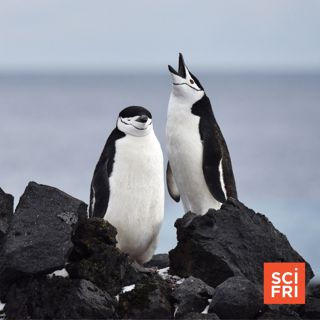
Sleep comes in a variety of snoozes and sizes. We humans are not going to get a full night’s rest by nodding off here and there, but that’s pretty much what some chinstrap penguins do: They doze off more than 10,000 times a day, for just a few seconds at a time. And when you do the math, it can add up to 11 hours of sleep each day, according to a recent study in the journal Science.

Ira talks with study author Dr. Paul-Antoine Libourel, a sleep biologist at the Neurosciences Research Center of Lyon in France, about how the penguins do this and the advantages of microsleeps.

Transcripts for each segment will be available the week after the show airs on sciencefriday.com.

Subscribe to this podcast. Follow our show on Instagram, TikTok, Facebook, and Bluesky @scifri and sign up for our newsletters. Got a science question that’s keeping you up at night? Call us: 877-472-4374


Hosted by Simplecast, an AdsWizz company. See pcm.adswizz.com for information about our collection and use of personal data for advertising.

Denne episoden er hentet fra en åpen RSS-feed og er ikke publisert av Podme. Den kan derfor inneholde annonser.

Episoder(1384)

Do microplastics in the body affect pregnancy?

Do microplastics in the body affect pregnancy?

Microplastics have been documented throughout the human body, including the reproductive system. But the field of microplastics research is very new, and it’s not yet clear if, or how, these tiny part...

21 Aug 12min
Making a case for physicists to join climate research

Making a case for physicists to join climate research

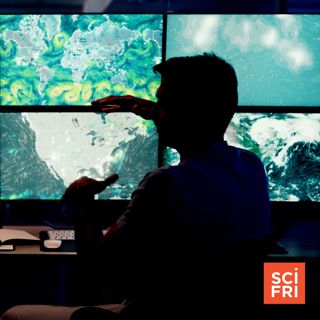
When you think of physics, your mind might go to forces—like gravity, friction, and magnetism—or to astrophysics, like galaxies and exoplanets. But many of the same principles used to understand how t...

20 Aug 12min

Creating 'world models' for robots + An AI math shakeup

Creating 'world models' for robots + An AI math shakeup

When you ask an LLM like ChatGPT or Claude a question, the model goes through its massive amount of training data and guesses the answer by mathematically predicting the word most likely to appear nex...

19 Aug 17min

What can moments of lucidity teach us about Alzheimer’s?

What can moments of lucidity teach us about Alzheimer’s?

Watching a loved one with Alzheimer's or dementia slowly lose their cognitive abilities can be heartbreaking. While the person you once knew seems to be slipping away, sometimes people with Alzheimer'...

18 Aug 17min

Colorado’s snow drought deals a major blow to recreation

Colorado’s snow drought deals a major blow to recreation

Winter in Colorado looked very different this year. Many parts of the state experienced record-high temperatures and record-low snowpack, which had downstream effects on farming, sports, tourism, and ...

17 Aug 11min
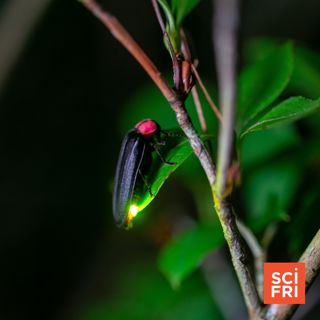
How do you find a ‘lost’ species?

How do you find a ‘lost’ species?

The earth is facing a biodiversity crisis, and there’s a lot of attention on species that are threatened, or at risk of dying out completely. But, there’s another critter category that’s a little more...

14 Aug 18min
What we get wrong about vaccine hesitancy

What we get wrong about vaccine hesitancy

President Trump has signed an executive order calling for a change to the childhood vaccination schedule. Specifically, he wants to separate the MMR vaccine, which protects against measles, mumps, and...

13 Aug 12min

Why this lab studies the speed of bug pee and other curiosities

Why this lab studies the speed of bug pee and other curiosities

In a lab in the Rocky Mountains, a group of scientists is hard at work trying to find answers across biology, physics, and engineering: They’re looking into things like the hydrodynamics of insect pee...

12 Aug 18min

Populært innen Vitenskap

fastlegen
tingenes-tilstand
rss-nysgjerrige-norge
romkapsel
liberal-halvtime
jss
rekommandert
rss-paradigmepodden
tomprat-med-gunnar-tjomlid
sinnsyn
villmarksliv
fjellsportpodden
smart-forklart
vett-og-vitenskap-med-gaute-einevoll
dekodet-2
rss-rekommandert
diagnose
rss-overskuddsliv
abels-tarn
kvinnehelsepodden