Triple Feature: Dune, Mars, And An Alien On Earth
Science Friday11 Mar 2024

Triple Feature: Dune, Mars, And An Alien On Earth

Could A Planet Like Arrakis From ‘Dune’ Exist?

“Dune: Part II” is one of the year’s most highly anticipated films, and it picks up where the first film left off: with Paul Atreides escaping into the desert on the planet Arrakis. It’s a scorching-hot world that’s covered in dunes, and home to giant, deadly sandworms.

Obviously “Dune” and its setting are fictional, but could there be a real planet that resembles Arrakis? And if so, could it sustain life?

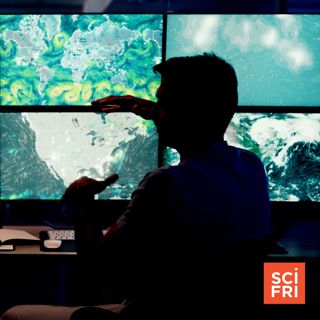
Ira talks with Dr. Mike Wong, astrobiologist and planetary scientist at the Carnegie Institution for Science, about what Arrakis’ atmosphere is like, the search for life in the universe, and what sci-fi films get wrong—and right—about alien planets.

Preparing Astronauts For The Loneliness Of A Mars Mission

NASA is preparing to send humans to Mars. Although the launch date has been pushed back over the years, the agency says it wants to get there in the 2030s. And it has a lot on its to-do list. NASA needs to build new rockets, new habitable living spaces, new spacesuits, and new radiation shielding, just to name a few items.

But what if the one of the biggest challenges of these missions is not the engineering, but the mental health of the astronauts? Can all of the crew members get along with each other and stay alive over the course of three years in tight quarters and unforgiving environments? How will they cope with being separated from their families and friends for so long? And what lessons can they learn from astronauts who’ve lived on the International Space Station—and from our collective experience of isolation during the pandemic?

A new documentary, out March 8, explores all these questions and more. It’s called "The Longest Goodbye," and it dives into NASA’s Human Factors program, which includes a group of psychologists who are trying to figure out the best way to preserve astronauts’ mental health on a long and demanding mission.

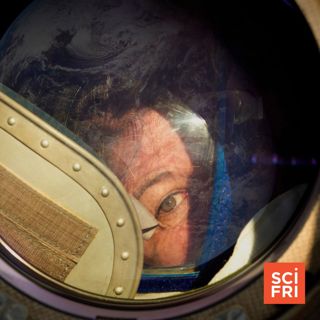
SciFri producer and host of Universe Of Art, D. Peterschmidt, spoke to the film’s director, Ido Mizrahy, and one of its featured astronauts, Dr. Cady Coleman, about how NASA is thinking about tackling loneliness in space and what we can learn from astronauts who’ve already lived on the space station.

Should The Aliens In “65” Have Known About Earth’s Dinos?

Some science fiction movies, like “Alien,” are instant classics. A good sci-fi movie weaves together themes of science and technology with a gripping narrative structure to create a memorable story that leaves the viewer with something to think about. But some (many) sci-fi movies leave the viewer with one thought: “Huh?”

The 2023 movie “65” is in some ways a reversal of “Alien.” Instead of humans coming to an alien world and getting attacked by aliens, in “65,” an alien that existed 65 million years ago crash lands on Earth and gets attacked by dinosaurs. Oh, and the alien is Adam Driver. What’s not to get?

Sometimes, calling in a real-life scientist is the best way to wrap your head around science fiction. Dr. Lisa Kaltenegger, an astrobiologist at Cornell University, says that if there were advanced extraterrestrials near Earth during the age of the dinosaurs, our planet’s life should have been no mystery to them. That’s because around 300 million years ago, Earth’s atmosphere had abundant oxygen and methane, two of the building blocks of life. Kaltenegger’s own research has shown how Earth’s atmosphere during that period would have been visible through a telescope—and indicated an even stronger potential for life than Earth’s atmosphere today. She also saw “65” on a plane.

Based on Kaltenegger’s research, should Adam Driver have seen those dinosaurs coming? In an interview with Digital Producer Emma Gometz, she shares how telescopes can spot exoplanet atmospheres, why Jurassic Earth’s atmosphere was special, and a few of her thoughts on “65.”

Transcripts for each segment will be available after the show airs on sciencefriday.com.

Subscribe to this podcast. Follow our show on Instagram, TikTok, Facebook, and Bluesky @scifri and sign up for our newsletters. Got a science question that’s keeping you up at night? Call us: 877-472-4374


Hosted by Simplecast, an AdsWizz company. See pcm.adswizz.com for information about our collection and use of personal data for advertising.

Denne episoden er hentet fra en åpen RSS-feed og er ikke publisert av Podme. Den kan derfor inneholde annonser.

Episoder(1383)

Making a case for physicists to join climate research

Making a case for physicists to join climate research

When you think of physics, your mind might go to forces—like gravity, friction, and magnetism—or to astrophysics, like galaxies and exoplanets. But many of the same principles used to understand how t...

20 Aug 12min

Creating 'world models' for robots + An AI math shakeup

Creating 'world models' for robots + An AI math shakeup

When you ask an LLM like ChatGPT or Claude a question, the model goes through its massive amount of training data and guesses the answer by mathematically predicting the word most likely to appear nex...

19 Aug 17min

What can moments of lucidity teach us about Alzheimer’s?

What can moments of lucidity teach us about Alzheimer’s?

Watching a loved one with Alzheimer's or dementia slowly lose their cognitive abilities can be heartbreaking. While the person you once knew seems to be slipping away, sometimes people with Alzheimer'...

18 Aug 17min

Colorado’s snow drought deals a major blow to recreation

Colorado’s snow drought deals a major blow to recreation

Winter in Colorado looked very different this year. Many parts of the state experienced record-high temperatures and record-low snowpack, which had downstream effects on farming, sports, tourism, and ...

17 Aug 11min

How do you find a ‘lost’ species?

How do you find a ‘lost’ species?

The earth is facing a biodiversity crisis, and there’s a lot of attention on species that are threatened, or at risk of dying out completely. But, there’s another critter category that’s a little more...

14 Aug 18min
What we get wrong about vaccine hesitancy

What we get wrong about vaccine hesitancy

President Trump has signed an executive order calling for a change to the childhood vaccination schedule. Specifically, he wants to separate the MMR vaccine, which protects against measles, mumps, and...

13 Aug 12min

Why this lab studies the speed of bug pee and other curiosities

Why this lab studies the speed of bug pee and other curiosities

In a lab in the Rocky Mountains, a group of scientists is hard at work trying to find answers across biology, physics, and engineering: They’re looking into things like the hydrodynamics of insect pee...

12 Aug 18min

Some primates undergo even more extreme childbirth than humans

Some primates undergo even more extreme childbirth than humans

Human childbirth is often difficult and incredibly painful—just ask anyone who’s been through it. And for a long time, childbirth seemed to be uniquely difficult for humans. But a new study suggests t...

11 Aug 11min

Populært innen Vitenskap

fastlegen
tingenes-tilstand
rss-nysgjerrige-norge
romkapsel
liberal-halvtime
jss
rekommandert
rss-paradigmepodden
tomprat-med-gunnar-tjomlid
sinnsyn
villmarksliv
fjellsportpodden
smart-forklart
vett-og-vitenskap-med-gaute-einevoll
dekodet-2
rss-rekommandert
diagnose
rss-overskuddsliv
abels-tarn
kvinnehelsepodden