It’s Hot. But How Hot? | Canine Cancer Vaccine Shows Promising Results
Science Friday21 Jun 2024

It’s Hot. But How Hot? | Canine Cancer Vaccine Shows Promising Results

Researchers say the Wet Bulb Globe Temperature is a better indicator of heat stress. Also, cancer is the leading cause of death in dogs. A new vaccine has increased survival rates in clinical trials, offering hope for dogs and humans.

Yes, It’s Hot. But How Hot?

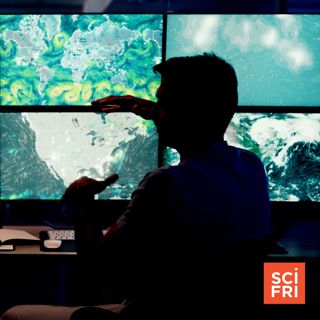
Much of the country has been enduring a heat wave this week, with millions sweating from Maine to the Midwest. But describing exactly how hot it is—and when temperatures become hazardous—can be challenging. Beyond the basic temperature, there’s the heat index, invented in 1978, which incorporates humidity measurements and is supposed to give a better indication of how a person might feel outside. Some health researchers are calling for more attention to a different type of temperature measurement known as the wet bulb globe temperature. It tracks temperature, humidity, and sunlight, and improves upon the heat index standard.

Umair Irfan, senior correspondent at Vox, joins SciFri’s Kathleen Davis to talk about measuring temperatures and protecting yourself from extreme heat. Plus, they discuss other stories from the week in science, including advances in tornado prediction, a delay in a return flight from the International Space Station, and a newly-described horned dinosaur that once roamed the US.

A Canine Cancer Vaccine Shows Promising Results

Dogs are by far the most popular pet in the United States: 62 million households have at least one. They are humans’ best friends, after all. Sadly, cancer is the leading cause of death in domestic dogs. And when a pet gets sick, it can be devastating for the entire family.

Lucky for dogs (and their people), there may soon be a breakthrough in treating canine cancer: a vaccine that can slow and even stop the spread of tumors. Clinical trial results are quite promising so far, increasing 12-month survival rates in dogs with some cancers from 35% to 60%. The research team also reports that in many dogs the vaccine shrinks tumors.

Joining guest host Kathleen Davis to talk about this novel therapy is Dr. Mark Mamula, professor of medicine at the Yale School of Medicine in New Haven, Connecticut. Mamula discusses this important breakthrough, and possible future applications for human cancer therapies.

Transcripts for each segment will be available after the show airs on sciencefriday.com.

Subscribe to this podcast. Follow our show on Instagram, TikTok, Facebook, and Bluesky @scifri and sign up for our newsletters. Got a science question that’s keeping you up at night? Call us: 877-472-4374


Hosted by Simplecast, an AdsWizz company. See pcm.adswizz.com for information about our collection and use of personal data for advertising.

Denne episoden er hentet fra en åpen RSS-feed og er ikke publisert av Podme. Den kan derfor inneholde annonser.

Episoder(1339)

FDA approves a well-known sunscreen ingredient—finally

FDA approves a well-known sunscreen ingredient—finally

The FDA recently approved a sunscreen ingredient called bemotrizinol, or BEMT, that’s been used in Europe and Asia for years. This is the first new sunscreen ingredient approved in the United States i...

22 Jun 12min

Why do sports announcers talk like that?

Why do sports announcers talk like that?

If you watch sports, whether the recent NBA finals or the ongoing World Cup matches, you may have noticed that the athletes aren’t the only ones putting on a show. The announcers seem to be playing a ...

19 Jun 13min

Swords, cannibalism, poison: inside the world of killer microbes

Swords, cannibalism, poison: inside the world of killer microbes

There is a murderous crime spree happening right under—and perhaps inside—our noses. Killer microbes armed with weapons are eviscerating, assassinating, and detonating their fellow microbes. And the n...

18 Jun 21min

When music transports you to a different place

When music transports you to a different place

Do you ever hear a song that transports you to a specific place and time? This auditory wormhole has a name: musical daydreams. Music cognition expert Elizabeth Margulis studies why they happen, and w...

17 Jun 18min

A vast whale graveyard + Zombie sea cucumbers

A vast whale graveyard + Zombie sea cucumbers

Researchers just published details of a massive undersea graveyard of whales deep in the Indian Ocean. Spanning about 1,200 kilometers (745 miles), it contains whale remains dating back more than 5 mi...

16 Jun 18min

Should we bring mountain lions back to the Northeast?

Should we bring mountain lions back to the Northeast?

Big cats used to roam the entire United States. You might know them as mountain lions, pumas, cougars, or catamounts. Though they go by many names, they're actually all the same species.  Their curren...

15 Jun 12min

Blue Origin explosion hits NASA timeline + Artemis III crew

Blue Origin explosion hits NASA timeline + Artemis III crew

When Blue Origin’s New Glenn spacecraft exploded in an enormous fireball during a ground test a couple weeks ago, it sent shockwaves not only through the air, but through NASA’s timeline for the upcom...

12 Jun 12min

Why can I handle tequila but not rum?

Why can I handle tequila but not rum?

‘Tis the season for porch beers and happy hours, and we’re taking on listener questions about how alcohol affects us. Like, is a glass of wine at dinner really good for you? And why do sugary drinks g...

11 Jun 21min

Populært innen Vitenskap

fastlegen
tingenes-tilstand
jss
rss-nysgjerrige-norge
forskningno
liberal-halvtime
rekommandert
villmarksliv
sinnsyn
dekodet-2
rss-paradigmepodden
rss-overskuddsliv
rss-inn-til-kjernen-med-sunniva-rose
tomprat-med-gunnar-tjomlid
nevropodden
rss-rekommandert
rss-ingeniorpodden
hva-er-greia-med
fjellsportpodden
rss-bondevennen