The Sample From The Far Side Of The Moon | Will The Seine Be Clean Enough For The Olympics?
Science Friday28 Jun 2024

The Sample From The Far Side Of The Moon | Will The Seine Be Clean Enough For The Olympics?

China’s Chang’e 6 return capsule landed in Mongolia, carrying samples from the far side of the moon. Also, Paris has invested $1.5B in cleaning up the Seine for open-water swimming events, but recent tests indicate it’s not yet safe.

A Sample From The Far Side Of The Moon Lands On Earth

This week, the return capsule from China’s Chang’e 6 lunar mission returned to Earth, touching down in a remote part of Inner Mongolia. Inside were dust and rock samples collected from the far side of the moon. Researchers hope that the samples could shed light on both the moon’s formation, and conditions in the ancient solar system.

Rachel Feltman, host of the podcast “The Weirdest Thing I Learned This Week,” joins guest host Anna Rothschild to talk about the mission and other stories form the week in science, including a CDC warning about dengue fever, a trans-oceanic butterfly flight, and the possibility of seeing a stellar nova in the coming weeks.

Will The Seine Be Clean Enough For Olympic Swimmers?

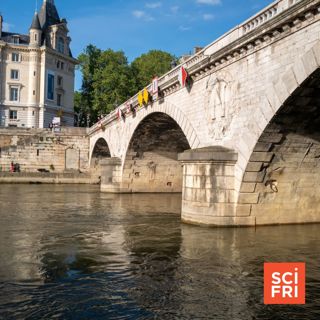
The Paris Summer Olympics are fast approaching. Opening ceremonies for the games kick off on July 26. And all eyes are on the notoriously polluted River Seine. Due to aging infrastructure, sewage has sometimes flowed directly into it. For the past 100 years swimming in the river was banned. Now, the French government has spent roughly $1.5 billion to upgrade sewage treatment in Paris in order for athletes to be able to swim in the Seine.

Earlier this week, Paris mayor Anne Hidalgo was set to take a dip in the river to prove its cleanliness. In protest some Parisians threatened to poop in the Seine to show their dislike of the disruptions and high price tag of the Games.

The dip was postponed until after upcoming elections, but recent water quality tests indicate that the river is not yet safe to swim in.

Guest host Anna Rothschild talks about the current state of the river with Dr. Dan Angelescu, founder and CEO of Fluidion, a water testing company based in Paris, France.

Transcripts for each segment will be available after the show airs on sciencefriday.com.

Subscribe to this podcast. Follow our show on Instagram, TikTok, Facebook, and Bluesky @scifri and sign up for our newsletters. Got a science question that’s keeping you up at night? Call us: 877-472-4374


Hosted by Simplecast, an AdsWizz company. See pcm.adswizz.com for information about our collection and use of personal data for advertising.

Denne episoden er hentet fra en åpen RSS-feed og er ikke publisert av Podme. Den kan derfor inneholde annonser.

Episoder(1383)

Making a case for physicists to join climate research

Making a case for physicists to join climate research

When you think of physics, your mind might go to forces—like gravity, friction, and magnetism—or to astrophysics, like galaxies and exoplanets. But many of the same principles used to understand how t...

20 Aug 12min

Creating 'world models' for robots + An AI math shakeup

Creating 'world models' for robots + An AI math shakeup

When you ask an LLM like ChatGPT or Claude a question, the model goes through its massive amount of training data and guesses the answer by mathematically predicting the word most likely to appear nex...

19 Aug 17min

What can moments of lucidity teach us about Alzheimer’s?

What can moments of lucidity teach us about Alzheimer’s?

Watching a loved one with Alzheimer's or dementia slowly lose their cognitive abilities can be heartbreaking. While the person you once knew seems to be slipping away, sometimes people with Alzheimer'...

18 Aug 17min
Colorado’s snow drought deals a major blow to recreation

Colorado’s snow drought deals a major blow to recreation

Winter in Colorado looked very different this year. Many parts of the state experienced record-high temperatures and record-low snowpack, which had downstream effects on farming, sports, tourism, and ...

17 Aug 11min
How do you find a ‘lost’ species?

How do you find a ‘lost’ species?

The earth is facing a biodiversity crisis, and there’s a lot of attention on species that are threatened, or at risk of dying out completely. But, there’s another critter category that’s a little more...

14 Aug 18min
What we get wrong about vaccine hesitancy

What we get wrong about vaccine hesitancy

President Trump has signed an executive order calling for a change to the childhood vaccination schedule. Specifically, he wants to separate the MMR vaccine, which protects against measles, mumps, and...

13 Aug 12min

Why this lab studies the speed of bug pee and other curiosities

Why this lab studies the speed of bug pee and other curiosities

In a lab in the Rocky Mountains, a group of scientists is hard at work trying to find answers across biology, physics, and engineering: They’re looking into things like the hydrodynamics of insect pee...

12 Aug 18min
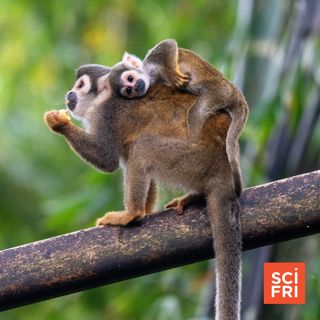
Some primates undergo even more extreme childbirth than humans

Some primates undergo even more extreme childbirth than humans

Human childbirth is often difficult and incredibly painful—just ask anyone who’s been through it. And for a long time, childbirth seemed to be uniquely difficult for humans. But a new study suggests t...

11 Aug 11min

Populært innen Vitenskap

fastlegen
tingenes-tilstand
rss-nysgjerrige-norge
romkapsel
jss
liberal-halvtime
rekommandert
tomprat-med-gunnar-tjomlid
rss-paradigmepodden
villmarksliv
sinnsyn
dekodet-2
vett-og-vitenskap-med-gaute-einevoll
fjellsportpodden
smart-forklart
rss-rekommandert
abels-tarn
rss-overskuddsliv
diagnose
nordnorsk-historie