
The Science Behind Hurricane Milton | ‘Unsettling’ Warm Water In Lake Michigan
Science Friday11 Okt 2024

The Science Behind Hurricane Milton | ‘Unsettling’ Warm Water In Lake Michigan

Hurricane Milton caused a major storm surge, but also a reverse one. And, Lake Michigan's surface temperature has been above average nearly every day this year so far. All five Great Lakes are heating up.

The Science Behind Hurricane Milton

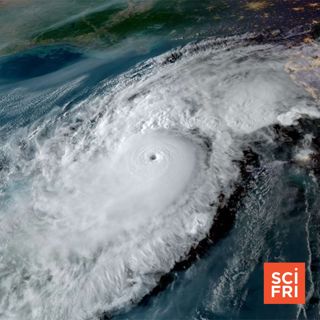
On October 9, Hurricane Milton made landfall in Siesta Key, Florida, then barrelled across the state. This comes just a couple of weeks after Hurricane Helene devastated parts of the southeastern US. Hurricane Milton dumped up to 18 inches of rain in some places, flooding cars, homes, and other buildings. Several people are confirmed dead. Around 3 million are without power.

Hurricane Milton was expected to cause a 15-foot storm surge, but it appears that the storm surge maxed out at five to six feet. And there wasn’t just a storm surge, but a reverse one.

Ira talks with Maggie Koerth, science writer and editorial lead for Carbon Plan, about some of the science of Hurricane Milton. They also discuss other science stories from the week, including President Biden’s new rule for replacing lead pipes, concerns about the security of genetic data with 23andMe, and how to tell if an elephant is left or right-trunked.

Lake Michigan Swimmers Enjoy ‘Unsettling’ Warm Water

On a sunny, mid-September afternoon, Olu Demuren took a running start off the concrete ledge just south of Belmont Harbor and leapt into Lake Michigan for the first time.

“I was preparing myself for cold water,” Demuren said. “And this immediately felt very nice.”

The water along Chicago’s lakeshore averaged an unseasonable 71 degrees that day. The weather was picturesque too: clear blue skies and temperatures in the mid-80s. Annelise Rittberg watched their friends from the concrete ledge and said the weather felt “deeply abnormal.”

“While it’s fun to be out here, it’s also unsettling,” Rittberg said.

Lake Michigan is heating up. The lake’s surface temperature has surpassed the running average dating back to 1995 nearly every day this year, according to National Oceanic and Atmospheric Administration (NOAA) data. And it’s not just one Great Lake. All five are warming. The massive bodies of water, which provide drinking water to more than 30 million people, are among the fastest-warming lakes worldwide, according to the federal government’s Fifth National Climate Assessment.

Read the full story at sciencefriday.com.

Transcripts for each segment will be available after the show airs on sciencefriday.com.

Subscribe to this podcast. Follow our show on Instagram, TikTok, Facebook, and Bluesky @scifri and sign up for our newsletters. Got a science question that’s keeping you up at night? Call us: 877-472-4374


Hosted by Simplecast, an AdsWizz company. See pcm.adswizz.com for information about our collection and use of personal data for advertising.

Denne episoden er hentet fra en åpen RSS-feed og er ikke publisert av Podme. Den kan derfor inneholde annonser.

Episoder(1338)

Why do sports announcers talk like that?

Why do sports announcers talk like that?

If you watch sports, whether the recent NBA finals or the ongoing World Cup matches, you may have noticed that the athletes aren’t the only ones putting on a show. The announcers seem to be playing a ...

19 Jun 13min

Swords, cannibalism, poison: inside the world of killer microbes

Swords, cannibalism, poison: inside the world of killer microbes

There is a murderous crime spree happening right under—and perhaps inside—our noses. Killer microbes armed with weapons are eviscerating, assassinating, and detonating their fellow microbes. And the n...

18 Jun 21min

When music transports you to a different place

When music transports you to a different place

Do you ever hear a song that transports you to a specific place and time? This auditory wormhole has a name: musical daydreams. Music cognition expert Elizabeth Margulis studies why they happen, and w...

17 Jun 18min

A vast whale graveyard + Zombie sea cucumbers

A vast whale graveyard + Zombie sea cucumbers

Researchers just published details of a massive undersea graveyard of whales deep in the Indian Ocean. Spanning about 1,200 kilometers (745 miles), it contains whale remains dating back more than 5 mi...

16 Jun 18min

Should we bring mountain lions back to the Northeast?

Should we bring mountain lions back to the Northeast?

Big cats used to roam the entire United States. You might know them as mountain lions, pumas, cougars, or catamounts. Though they go by many names, they're actually all the same species.  Their curren...

15 Jun 12min

Blue Origin explosion hits NASA timeline + Artemis III crew

Blue Origin explosion hits NASA timeline + Artemis III crew

When Blue Origin’s New Glenn spacecraft exploded in an enormous fireball during a ground test a couple weeks ago, it sent shockwaves not only through the air, but through NASA’s timeline for the upcom...

12 Jun 12min

Why can I handle tequila but not rum?

Why can I handle tequila but not rum?

‘Tis the season for porch beers and happy hours, and we’re taking on listener questions about how alcohol affects us. Like, is a glass of wine at dinner really good for you? And why do sugary drinks g...

11 Jun 21min

AI + turfgrass science in the most high-tech World Cup yet

AI + turfgrass science in the most high-tech World Cup yet

The 2026 World Cup will be the largest one yet, and FIFA is trying to make it the most high-tech, too. The federation has partnered with tech giant Lenovo to launch Football AI Pro, which is designed ...

10 Jun 19min

Populært innen Vitenskap

fastlegen
tingenes-tilstand
jss
rss-nysgjerrige-norge
forskningno
liberal-halvtime
rekommandert
villmarksliv
dekodet-2
tomprat-med-gunnar-tjomlid
sinnsyn
rss-paradigmepodden
rss-inn-til-kjernen-med-sunniva-rose
rss-overskuddsliv
hva-er-greia-med
nevropodden
rss-rekommandert
rss-ingeniorpodden
rss-bondevennen
fjellsportpodden