
Strain Of Bird Flu Discovered In California | Understanding Bipolar Disorder Through The Genome
Science Friday31 Jan 2025

Strain Of Bird Flu Discovered In California | Understanding Bipolar Disorder Through The Genome

The outbreak of H5N9 avian influenza occurred at a California duck farm in November 2024. Also, new research pinpoints 298 parts of the genome associated with higher risk of bipolar disorder. This could lead to better treatments.

Another Strain Of Bird Flu Discovered In California

This week, the World Organization for Animal Health reported that it had been notified by the USDA that a November outbreak of highly pathogenic avian influenza on a California duck farm was caused by a strain not before seen in the United States: H5N9. The dominant bird flu strain circulating currently, H5N1, has led to massive culling of bird flocks, has infected dairy cattle, and has killed almost 500 people around the world since 2003. The US reported its first human death from bird flu earlier this month.

Experts stressed that the new strain did not itself appear to be an immediate human threat. But the rise of a new strain is troubling and points to the risk of a viral phenomenon known as “reassortment,” in which different viruses mingled in a host can sometimes exchange bits of viral code, forming new strains.

SciFri’s Charles Bergquist joins Flora Lichtman to talk about H5N9 and other stories from the week in science, including a spacewalk that was meant to include a search for microbes on the outside of the International Space Station, a possible positive side effect of scratching an itch, and the discovery of 66 million-year-old fossilized vomit.

Understanding Bipolar Disorder Through The Genome

Bipolar disorder is one of the most common mental illnesses—it affects an estimated 40 million people worldwide, about 2.8% of the population. Bipolar disorder can cause extreme mood swings, and be debilitating without treatment.

In an effort to untangle the mysteries of where bipolar disorder originates, researchers studied the genomes of more than 40,000 people with the condition. When comparing these genomes to those of people without bipolar disorder, the researchers were able to pinpoint 298 different parts of the genome associated with the mental illness. With this better understanding of the genome, better, more targeted treatments for bipolar disorder may be possible.

Joining Flora to talk about this research is Dr. Niamh Mullins, assistant professor of psychiatric genomics at the Icahn School of Medicine at Mount Sinai in New York.

Transcripts for each segment will be available after the show airs on sciencefriday.com.

Subscribe to this podcast. Follow our show on Instagram, TikTok, Facebook, and Bluesky @scifri and sign up for our newsletters. Got a science question that’s keeping you up at night? Call us: 877-472-4374


Hosted by Simplecast, an AdsWizz company. See pcm.adswizz.com for information about our collection and use of personal data for advertising.

Denne episoden er hentet fra en åpen RSS-feed og er ikke publisert av Podme. Den kan derfor inneholde annonser.

Episoder(1381)

What can moments of lucidity teach us about Alzheimer’s?

What can moments of lucidity teach us about Alzheimer’s?

Watching a loved one with Alzheimer's or dementia slowly lose their cognitive abilities can be heartbreaking. While the person you once knew seems to be slipping away, sometimes people with Alzheimer'...

18 Aug 17min

Colorado’s snow drought deals a major blow to recreation

Colorado’s snow drought deals a major blow to recreation

Winter in Colorado looked very different this year. Many parts of the state experienced record-high temperatures and record-low snowpack, which had downstream effects on farming, sports, tourism, and ...

17 Aug 11min
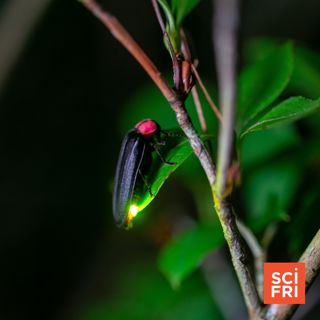
How do you find a ‘lost’ species?

How do you find a ‘lost’ species?

The earth is facing a biodiversity crisis, and there’s a lot of attention on species that are threatened, or at risk of dying out completely. But, there’s another critter category that’s a little more...

14 Aug 18min
What we get wrong about vaccine hesitancy

What we get wrong about vaccine hesitancy

President Trump has signed an executive order calling for a change to the childhood vaccination schedule. Specifically, he wants to separate the MMR vaccine, which protects against measles, mumps, and...

13 Aug 12min

Why this lab studies the speed of bug pee and other curiosities

Why this lab studies the speed of bug pee and other curiosities

In a lab in the Rocky Mountains, a group of scientists is hard at work trying to find answers across biology, physics, and engineering: They’re looking into things like the hydrodynamics of insect pee...

12 Aug 18min

Some primates undergo even more extreme childbirth than humans

Some primates undergo even more extreme childbirth than humans

Human childbirth is often difficult and incredibly painful—just ask anyone who’s been through it. And for a long time, childbirth seemed to be uniquely difficult for humans. But a new study suggests t...

11 Aug 11min
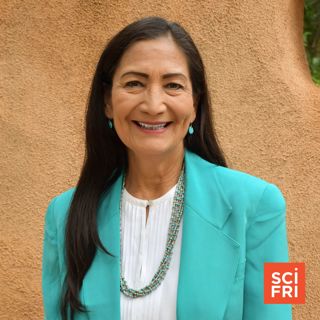
Deb Haaland is a politician, and proud of it

Deb Haaland is a politician, and proud of it

Former Interior Secretary Deb Haaland, a member of the Laguna Pueblo tribe, was the first Native person to hold a cabinet position. Now she’s running to be governor of New Mexico.  Haaland joins Host ...

10 Aug 17min

Sitting all day is terrible for us. Moving a little can help

Sitting all day is terrible for us. Moving a little can help

Keeping your butt in a seat for hours a day increases the risk of heart attacks, diabetes, psychiatric conditions, and more. But in our tech-filled world, many of us lead sedentary lives, whether beca...

7 Aug 18min

Populært innen Vitenskap

fastlegen
tingenes-tilstand
rss-nysgjerrige-norge
romkapsel
jss
villmarksliv
rekommandert
liberal-halvtime
rss-paradigmepodden
tomprat-med-gunnar-tjomlid
dekodet-2
sinnsyn
fjellsportpodden
vett-og-vitenskap-med-gaute-einevoll
abels-tarn
rss-rekommandert
rss-overskuddsliv
diagnose
nordnorsk-historie
rss-lundqvist-podden