
Dag Nikolaus Hasse, "What Is European? On Overcoming Colonial and Romantic Modes of Thought" (Amsterdam UP, 2025)

Dag Nikolaus Hasse, "What Is European? On Overcoming Colonial and Romantic Modes of Thought" (Amsterdam UP, 2025)

It is common to define Europe by its democratic, scientific, religious, and cultural traditions. But in What is European? On Overcoming Colonial and Romantic Modes of Thought (Amsterdam UP, 2025), Dag Nikolaus Hasse argues that the search for Europe's essence has taken a troubling turn. He shows that many traditional ideas about Europe are culturally one-sided and historically and geographically distorted, and calls for a decolonisation and deromanticisation of the discourse on Europe. The book promotes an inclusive vision of Europe that reflects its long history of multiethnic cities, offers a cultural home to a wider range of people across the continent, and extends attention and respect to other continents, thus laying a more respectful foundation for shaping the future together.At the same time, Hasse demonstrates that overcoming colonial ways of thinking does not and should not result in anti-Europeanism. Criticising European arrogance may well go hand in hand with feeling culturally at home in other traditions of Europe. For this, it does not matter whether one is a resident of the European continent or not. There is no privileged access to European culture or to the culture of any other continent. Dag Nikolaus Hasse is professor of the history of philosophy at the University of Würzburg. Among his numerous publications, two monographs stand out: Avicenna's De Anima in the Latin West (2000), and Success and Suppression: Arabic Sciences and Philosophy in the Renaissance (2016). In 2016, Hasse was awarded the prestigious Gottfried Wilhelm Leibniz Prize, the highest disctinction for a scientist in Germany. Morteza Hajizadeh is a Ph.D. graduate in English from the University of Auckland in New Zealand. His research interests are Cultural Studies; Critical Theory; Environmental History; Medieval (Intellectual) History; Gothic Studies; 18th and 19th Century British Literature. YouTube Channel: here Learn more about your ad choices. Visit megaphone.fm/adchoices Support our show by becoming a premium member! https://newbooksnetwork.supportingcast.fm/critical-theory

Episoder(2208)

Pre-Reading

Pre-Reading

In this episode of High Theory, Milan Terlunen talks to Kim about Pre-Reading. There are many books we will never read and films we will never watch, but it turns out we know quite a bit about them in...

30 Mar 20min
Mark Pennington, "Foucault and Liberal Political Economy: Power, Knowledge, and Freedom" (Oxford UP, 2025)

Mark Pennington, "Foucault and Liberal Political Economy: Power, Knowledge, and Freedom" (Oxford UP, 2025)

Foucault and Liberal Political Economy: Power, Knowledge, and Freedom by Mark Pennington This highly original and innovative book is the first to comprehensively engage the ideas of the French social...

30 Mar 58min

Ainehi Edoro, "Forest Imaginaries: How African Novels Think" (Columbia UP, 2026)

Ainehi Edoro, "Forest Imaginaries: How African Novels Think" (Columbia UP, 2026)

Forests in fiction are often understood simply as settings, symbols, or remnants of a premodern past. Yet many African novelists have turned to the forest to experiment with worldbuilding and to imagi...

30 Mar 1h 2min

Emmanuel Ofuasia, "Ìwà: the Process-Relational Dimension to African Metaphysics" (Springer, 2024)

Emmanuel Ofuasia, "Ìwà: the Process-Relational Dimension to African Metaphysics" (Springer, 2024)

Correction: In the interview, the host mistakenly mentioned that Prof. Ofuasia is teaching the University of Pretoria. In reality, Prof Ofuasia is currently a decoloniality research associate at the U...

29 Mar 1h 31min

Thomas Hegghammer and Diego Gambetta eds., "Fight, Flight, Mimic: Identity Mimicry in Conflict" (Oxford UP, 2024)

Thomas Hegghammer and Diego Gambetta eds., "Fight, Flight, Mimic: Identity Mimicry in Conflict" (Oxford UP, 2024)

Time spent and words spent—what does each signal? Deceptive mimicry—the manipulation of individual or group identity—includes passing off as a different individual, as a member of a group to which on...

28 Mar 1h 5min

The Criminal Record Complex: Risk, Race, and the Struggle for Work in America

The Criminal Record Complex: Risk, Race, and the Struggle for Work in America

Most employers in the United States routinely conduct criminal background checks on job applicants, weeding out those with criminal convictions—and thus denying opportunities to those who need them m...

26 Mar 54min

Hsuan L Hsu, "Olfactory Worldmaking" (U Minnesota Press, 2026)

Hsuan L Hsu, "Olfactory Worldmaking" (U Minnesota Press, 2026)

Smell is a vital, if underappreciated, medium through which we inhabit and imagine the world. In Olfactory Worldmaking (University of Minnesota Press, 2026), Dr. Hsuan L. Hsu traces how olfactory expe...

24 Mar 26min
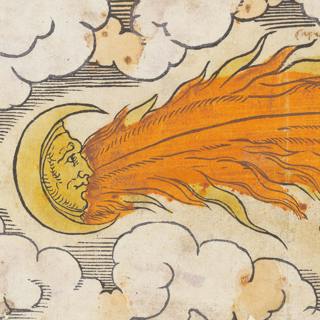
Prolepsis

Prolepsis

In this episode of High Theory, Gloria Fisk talks to Kim about Prolepsis. Defined by Gerard Genette in the 1970s, prolepsis is a flash forward, the opposite of analepsis, a flash back. Initially the p...

23 Mar 16min

Populært innen Vitenskap

fastlegen
rekommandert
jss
tingenes-tilstand
liberal-halvtime
sinnsyn
forskningno
tomprat-med-gunnar-tjomlid
rss-nysgjerrige-norge
villmarksliv
dekodet-2
rss-rekommandert
fjellsportpodden
rss-paradigmepodden
smart-forklart
tidlose-historier
kvinnehelsepodden
utenrikshospitalet
vett-og-vitenskap-med-gaute-einevoll
nevropodden