DH Ep:41 The Thin Blue Line

DH Ep:41 The Thin Blue Line

This episode isn't going to be easy to hear, but it's necessary. I spent sixteen years in law enforcement, ending my career as an Atlanta police officer in 2016, and I can tell you from experience that the conversations we're having about policing in America are missing the most important piece of the puzzle. We're arguing about reform and training and bad apples, but nobody wants to talk about where the tree was planted in the first place.

In this comprehensive deep dive, I trace the direct line from the first organized police force in America to the militarized departments patrolling our streets today, and that line is far darker than most people realize. We start in 1704 South Carolina with the creation of slave patrols, the first publicly funded, professionally organized law enforcement in what would become the United States. These weren't just groups catching runaways. They were psychological warfare operations designed to keep enslaved people in constant fear through random night raids, unlimited search authority, and violence with complete legal immunity.

Every legal framework they operated under, from reasonable suspicion to qualified immunity, still exists in American law today. After the Civil War destroyed slavery, Southern states immediately created the Black Codes, laws specifically designed to recreate slavery under a legal facade. We explore how these codes required new police forces to enforce them, forces often staffed by former slave patrollers who understood their mission perfectly.

The convict leasing system that followed turned arrested Black men into forced labor for private companies, and we trace how that system evolved into modern mass incarceration and the prison industrial complex that still exploits the Thirteenth Amendment's exception for convicted criminals. Meanwhile, Northern cities were developing their own model of policing, and while it looked different on the surface, it served the same essential purpose of controlling dangerous populations.

The creation of the New York Police Department in 1845 established the template that spread across America, departments that were tools of political machines and industrial interests from day one, designed to control immigrants, freed Black people, and the working class. Then we meet August Vollmer, the so-called father of modern policing, a genuinely brilliant reformer who professionalized American law enforcement in the early twentieth century.

He created crime labs, established training academies, recruited college-educated officers, and introduced technologies like patrol cars and radios. On paper, he was building something better. In reality, he was making a system of racial control more efficient while operating from assumptions rooted in scientific racism and eugenics.

His reforms created police departments that were independent from political corruption but also independent from any meaningful democratic accountability.

The 1960s brought everything to a head with the civil rights movement and urban uprisings that forced America to confront police brutality. President Johnson's Kerner Commission spent seven months investigating and released a report in 1968 that predicted exactly the crisis we're living through today. The commission warned that America was moving toward two societies, one Black and one white, separate and unequal, and identified police brutality as a symptom of deeper systemic racism.

The report's recommendations were ignored, and America chose the path of increased policing and tough-on-crime politics instead.We examine "The Police Tapes," the groundbreaking 1977 documentary that gave America an unfiltered look at policing in the South Bronx. The film captured the reality that official reports couldn't convey, showing both the impossible conditions officers faced and the casual dehumanization that had become routine in poor minority neighborhoods. It demonstrated how the system wasn't working for anyone, not the officers burning out from impossible expectations and not the communities being simultaneously over-policed and under-protected.

he militarization of American police accelerated through the drug war and the war on terror, transforming departments into paramilitary forces equipped with armored vehicles and trained in warrior mindset tactics. Legal doctrines like qualified immunity made accountability nearly impossible. Police unions became powerful political forces that could block any meaningful reform. And then smartphones put cameras in everyone's pockets, finally providing undeniable video evidence of what Black Americans had been experiencing for generations. Ferguson in 2014 became the flashpoint that sparked a national reckoning, but as the Justice Department's investigation revealed, Ferguson wasn't unique. It was typical.

The same patterns of constitutional violations, revenue extraction through fines and fees, and racial targeting exist in countless jurisdictions across America. The system is working exactly as it was designed to work.I left law enforcement in 2016 with a clear understanding that the problems aren't individual bad officers but a system built on a foundation of racial control that has never fundamentally changed. Every reform, from professionalization to body cameras, has been absorbed without transforming the essential purpose.

We've made the machine more sophisticated, but we haven't changed what the machine does.This episode connects every dot from slave patrols to stop-and-frisk, from Black Codes to quality-of-life policing, from convict leasing to mass incarceration, from the legal immunity of slave patrollers to the qualified immunity protecting modern officers. It's the history they don't teach in police academies because understanding this history makes it impossible to pretend that reform within the existing system can work.

Real change requires confronting the uncomfortable truth that American policing has always been about control more than safety, and that truth has been consistent for over three hundred years. If you've ever wondered why policing in America looks so different from policing in other developed democracies, why we have more people incarcerated than any nation on earth, why the same videos of police violence keep emerging despite decades of reform efforts, this episode answers those questions.

The answers aren't comfortable, but they're necessary if we're ever going to build something better. This is the dark history of American policing, told by someone who wore the badge for sixteen years and saw the system from the inside. It's time we stopped pretending the problem is a few bad apples and acknowledged that the orchard was planted in poisoned soil from the very beginning.

Have a forgotten historical mystery, disturbing event, unsolved crime, or hidden conspiracy you think deserves investigation?

Send your suggestions to brian@paranormalworldproductions.com.

Disturbing History is a dark history podcast exploring unsolved mysteries, secret societies, historical conspiracies, lost civilizations, and the shadowy stories buried beneath the surface of the past.

Follow the show and enable automatic downloads so you never miss a deep dive into history’s most unsettling secrets.

Because sometimes the truth is darker than fiction.

Denne episoden er hentet fra en åpen RSS-feed og er ikke publisert av Podme. Den kan derfor inneholde annonser.

Episoder(154)

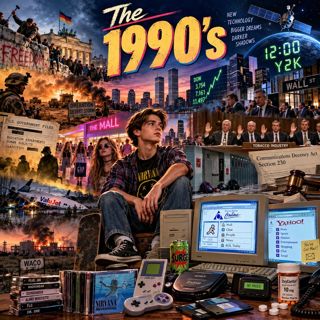
The 1990's

The 1990's

On July 16, 1990, Time magazine put a group of young adults on its cover beneath the word “twentysomething” and asked whether they were laid back, late blooming, or simply lost. The story said they st...

30 Sep 1h 12min
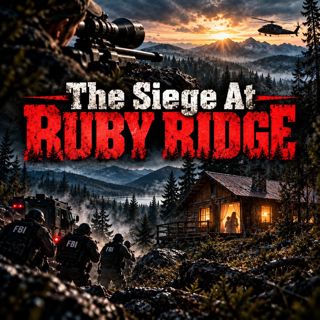
The Siege At Ruby Ridge

The Siege At Ruby Ridge

Listener discretion is advised. This episode contains descriptions of real-life violence and death, including the shooting deaths of a fourteen-year-old boy, his mother, and a federal law enforcement ...

27 Sep 1h 18min
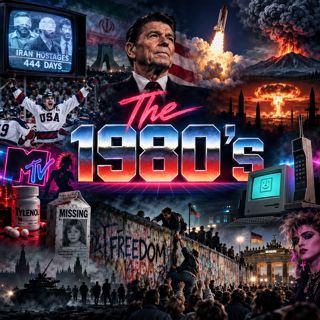
The 1980's

The 1980's

The 1980s began with 52 Americans still being held hostage in Tehran and ended with crowds tearing open the Berlin Wall. Between those two moments came one of the most turbulent, contradictory decades...

25 Sep 1h 9min
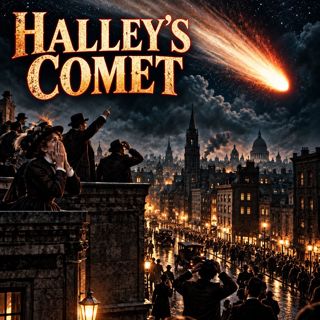
Halley's Comet

Halley's Comet

On the night of May 18, 1910, people across the world waited for Halley’s Comet to kill them.Hotels in New York opened their rooftops. Miners in Pennsylvania refused to go underground. A religious sec...

23 Sep 1h 1min
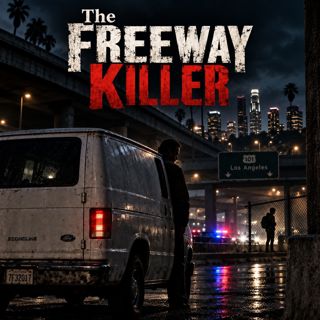
The Freeway Killer

The Freeway Killer

This episode discusses sexual violence against children and teenagers, torture, and murder and is not suitable for younger audiences. Listener discretion is strongly advised. On the night of June 11, ...

21 Sep 1h 19min
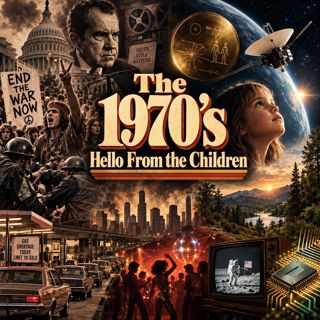
The 1970's

The 1970's

The 1970s opened in conflict.On April 30, 1970, President Richard Nixon announced the expansion of U.S. military operations into Cambodia.Days later, four students were killed by the Ohio National Gua...

18 Sep 1h 2min
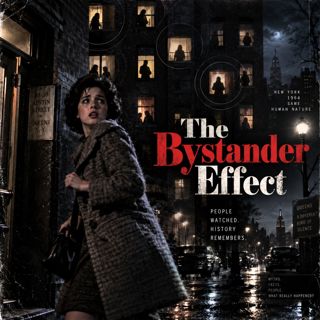
The Bystander Effect

The Bystander Effect

On March 27, 1964, The New York Times published a story that would become one of the most famous examples of human indifference ever told. According to the report, 38 people in Queens watched as 28-ye...

16 Sep 1h
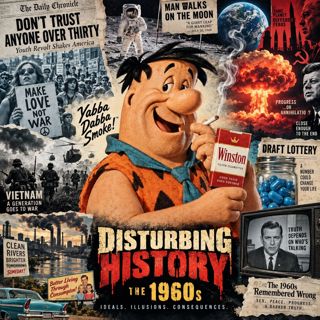
The 1960's

The 1960's

Everybody knows the line: “Don’t trust anyone over thirty.” It became shorthand for an entire generation, even though the man who said it was a 24-year-old Berkeley graduate student who would turn thi...

13 Sep 1h 2min

Populært innen Samfunn

rss-spartsklubben
giver-og-gjengen-vg
aftenpodden
konspirasjonspodden
aftenpodden-usa
popradet
rss-nesten-hele-uka-med-lepperod
rss-henlagt-andy-larsgaard
alt-fortalt
wolfgang-wee-uncut
rss-espen-lee-usensurert
grenselos
min-barneoppdragelse
synnve-og-vanessa
fladseth
frokostshowet-pa-p5
rss-herrepanelet
opptur-med-annette-og-ingeborg
rss-chit-chat-med-rakel-og-helle
krisemoter