AI‑Powered Apps with Azure OpenAI and Power Platform: How to Design Real Architectures That Survive Beyond the Demo

AI‑Powered Apps with Azure OpenAI and Power Platform: How to Design Real Architectures That Survive Beyond the Demo

Most “AI‑powered” Power Platform demos quietly skip the hard parts: scale, performance, and keeping sensitive data under control once real users start hammering the app. In this episode, we walk through what those demos leave out and show how Azure OpenAI, Power Apps, Power Automate, and Azure API Management actually fit together in production—so your AI workflows survive real traffic, real data, and real audits.

We start by unpacking the real architecture behind AI in Power Platform. You’ll see how Power Apps and Dynamics 365 capture user input, how Power Automate orchestrates the flow, how Azure OpenAI does the heavy thinking, and why Azure API Management quietly becomes the gatekeeper that keeps costs, throttling, and security under control. Using concrete examples—from sales call summaries to ticket triage—we show where performance bottlenecks and hallucinations really come from: messy payloads, missing context, and flows that were never designed for thousands of requests.

From there, we dig into use‑case design: sentiment analysis, summarization, classification, and text generation all look similar from the outside, but behave very differently in cost, latency, and risk. You’ll learn why short, focused sentiment calls scale nicely, while long‑form generation can quietly explode both response times and your Azure bill if you don’t tune prompts, payload sizes, and flow patterns. Real stories of projects that worked in staging and collapsed in production show why “just change the prompt” is not a strategy.

Finally, we connect architecture and design to governance. We cover how to treat AI as part of your core platform—not a side experiment—by using API Management for access control and logging, shaping flows for resilience, and setting clear limits on which data can ever leave your tenant for model processing. By the end, “AI‑powered app” means more than a clever demo; it means a system where every piece—from Power Apps to Azure OpenAI—is wired for stability, security, and business impact.

WHAT YOU LEARN
  • Why most Power Platform + Azure OpenAI demos break as soon as real users and real data show up.
  • How Power Apps, Power Automate, Azure OpenAI, and Azure API Management work together in a production‑ready architecture.
  • The practical differences between sentiment analysis, summarization, classification, and text generation in cost, latency, and risk.
  • How to design flows, prompts, and payloads that scale without blowing up performance or your Azure bill.
  • How to use API Management and governance patterns so AI stays inside your security and compliance boundaries.
CORE INSIGHT

The core insight of this episode is that adding Azure OpenAI to Power Platform is not about dropping in a connector—it is about designing an end‑to‑end system where apps, flows, models, and API management each play a clear role. When you treat AI as architecture instead of a magic box, you stop gambling with stability, cost, and data leakage and start building AI‑powered apps that can handle real‑world workloads and real‑world scrutiny.

WHO THIS IS FOR
  • Power Apps and Power Automate makers who want their AI features to survive beyond the demo stage.
  • Developers and architects wiring Azure OpenAI into Microsoft business apps and needing a solid reference architecture.
  • IT, security, and governance teams concerned about performance, cost, and data exposure in AI‑driven workflows.
  • Product owners who want less “AI magic” and more reliable, explainable intelligence in daily business processes.
ABOUT THE HOST

Mirko Peters is a Microsoft 365 and cloud consultant and the host of M365.FM, focused on modern work, security, and AI architectures that actually run in production. He helps organizations move from fragile demos to robust systems on Microsoft 365, Power Platform, and Azure, where tools like Azure OpenAI sit behind proper orchestration, security, and governance. In M365.FM, Mirko turns longform implementation stories—like wiring AI into business apps end‑to‑end—into practical patterns listeners can apply in their own environments.

Become a supporter of this podcast: https://www.spreaker.com/podcast/m365-fm-modern-work-security-and-productivity-with-microsoft-365--6704921/support.

Denne episoden er hentet fra en åpen RSS-feed og er ikke publisert av Podme. Den kan derfor inneholde annonser.

Episoder(715)

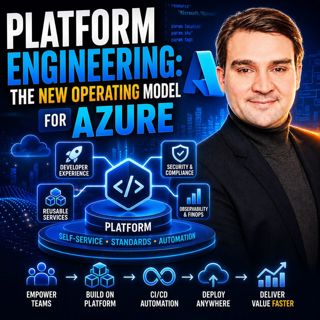
Platform Engineering: The New Operating Model for Azure

Platform Engineering: The New Operating Model for Azure

DevOps changed how software is built, but it didn't eliminate complexity—it simply redistributed it. As organizations adopted cloud platforms, Infrastructure as Code, containers, and CI/CD pipelines, ...

13 Jul 1h 16min
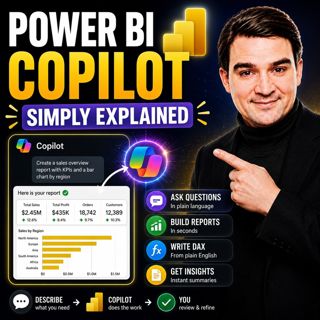
Power BI Copilot - Simply Explained

Power BI Copilot - Simply Explained

Power BI Copilot brings generative AI directly into Microsoft's business intelligence platform, helping users build reports, write DAX formulas, analyze data, and generate insights using natural langu...

13 Jul 11min
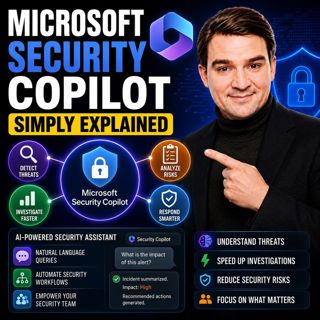
Microsoft Security Copilot - Simply Explained

Microsoft Security Copilot - Simply Explained

Security teams face a common challenge: thousands of security alerts, limited staff, and not enough time to investigate every incident. Most alerts turn out to be harmless, but hidden among them can b...

12 Jul 13min
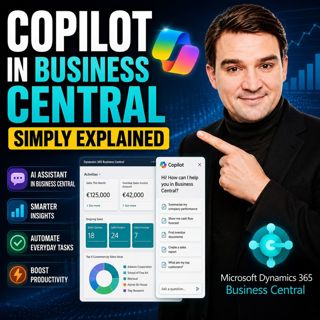
Copilot in Business Central - Simply Explained

Copilot in Business Central - Simply Explained

Microsoft Copilot is becoming a core part of Dynamics 365 Business Central, transforming it from a traditional ERP system into an AI-powered business assistant. Instead of switching between applicatio...

12 Jul 11min
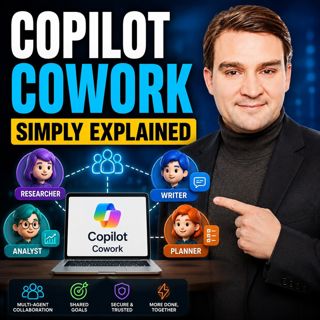
Copilot Cowork - Simply Explained

Copilot Cowork - Simply Explained

Microsoft Copilot changed how we interact with AI by helping us summarize emails, draft documents, and answer questions. But there's still one major problem: you're responsible for connecting everythi...

12 Jul 13min
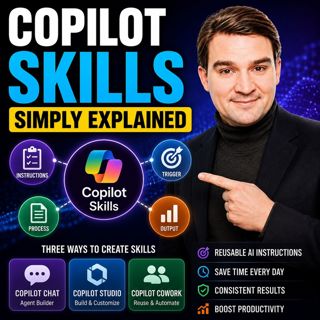
Copilot Skills - Simply Explained

Copilot Skills - Simply Explained

Copilot Skills are one of Microsoft's most important AI building blocks, yet they're also one of the most misunderstood. Depending on which Microsoft product you're using, the same concept appears und...

12 Jul 13min

Microsoft Scout - Simply Explained

Microsoft Scout - Simply Explained

Microsoft has introduced a growing family of AI assistants, and Microsoft Scout represents the next major step in that evolution. While Copilot helps when you ask questions and Cowork executes multi-s...

12 Jul 16min
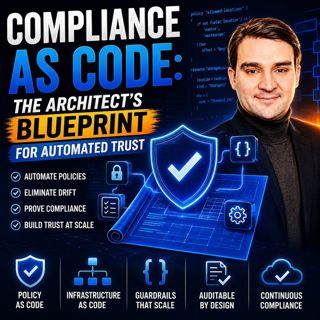
Compliance as Code: The Architect’s Blueprint for Automated Trust

Compliance as Code: The Architect’s Blueprint for Automated Trust

Compliance has traditionally been treated as documentation. Policies live in PDFs, access reviews sit in spreadsheets, and governance depends on people remembering to follow processes. But cloud envir...

12 Jul 1h 13min

Populært innen Politikk og nyheter

giver-og-gjengen-vg
aftenpodden-usa
aftenpodden
fotballpodden-2
forklart
popradet
stopp-verden
det-store-bildet
rss-gukild-johaug
hanna-de-heldige
rss-ness
nokon-ma-ga
dine-penger-pengeradet
aftenbla-bla
lydartikler-fra-aftenposten
rss-penger-polser-og-politikk
rss-utenrikskomiteen-med-bogen-og-grasvik
ta-dokumentar
e24-podden
rss-espen-lee-usensurert