
The Star Schema Trick All Power BI Pros Use (But Won’t Say): Fix Digital Spaghetti, Speed Up DAX & Clean Your Model

The Star Schema Trick All Power BI Pros Use (But Won’t Say): Fix Digital Spaghetti, Speed Up DAX & Clean Your Model

Your tangled web of tables isn’t a data model—it’s digital spaghetti, and that’s why every new slicer makes your report crawl like a floppy drive in 1995. The fix isn’t another DAX hack, it’s the shape of your model: one or more slim fact tables in the center (sales, visits, events), surrounded by clean dimension tables for who, what, when, and where. In this episode, we walk through how star schema design lines up with the VertiPaq engine, why it makes filters and relationships behave predictably, and how a few structural changes can turn a sluggish, fragile model into something you’re actually proud to show your boss.

THE DIGITAL SPAGHETTI PROBLEM

We start with the classic “Digital Spaghetti” pattern: one giant flat table containing every column anyone ever found useful—customer names, regions, job titles, amounts, discounts, everything. It works for the first demo, then collapses once you stack slicers, cross‑filters, and real user traffic, because the engine has to wade through duplicated text and broken relationships on every query. You’ll hear why Microsoft’s own guidance and experts like SQLBI keep repeating the same message: VertiPaq is optimized for star schemas, and flattened models trigger auto‑exist issues, missing combinations, and misleading totals. We walk you through a quick three‑step “spaghetti check” and show how moving attributes out of the fact into dimensions instantly cleans up performance, filter behavior, and the accuracy of your totals.

FACTS VS DIMENSIONS: THE FIRST SORTING HAT

Next, we put your tables under the Sorting Hat: facts vs dimensions. Facts measure (how many, how much, how often), dimensions describe (the who, what, when, where), and the “one” side of every relationship should always be a true dimension. We show how to spot the difference in real models—transactions vs Customers, Products, Dates, Regions—why fact tables should only reference keys plus numeric measures, and why dimension tables should be the single source of truth for slicers and attributes. You’ll learn how to fix identity problems with surrogate keys, why slicers should always point at dimensions (not bloated fact columns), and how this one separation removes an entire class of “why is this total wrong?” debugging sessions.

NORMALIZE THE FACT, FLATTEN THE DIMENSION

Finally, we get to the “trick pros use but won’t say”: normalize your facts, flatten your dimensions. Facts stay lean—keys plus measures—so queries stay fast and storage efficient, while dimensions become rich, flattened lookups that hold all the descriptive context in one place. We unpack why Microsoft pushes this pattern in their guidance, how it lines up with VertiPaq compression and filter propagation, and how to refactor an existing “all‑in‑one” table into a proper star schema without rewriting your entire report. Once you adopt this shape, DAX stops feeling like Sudoku after twelve beers and starts behaving like a simple language on top of a clean structure.

WHAT YOU’LL LEARN
  • How to spot a “Digital Spaghetti” model and run a 30‑second health check on your current schema.
  • The practical difference between fact and dimension tables in Power BI and Fabric.
  • Why VertiPaq and DAX are optimized for star schemas—not flat, all‑in‑one tables.
  • How to use surrogate keys, one‑to‑many relationships, and hidden fact columns to clean up your model.
  • How to normalize facts, flatten dimensions, and move slicers onto lookup tables for instant performance wins.
THE CORE INSIGHT

The core insight of this episode is that most “slow DAX” problems are actually “bad model” problems. When you stop treating your data model as a dumping ground and reshape it into a clean star schema—with lean facts, rich dimensions, and relationships that tell the engine exactly how to filter—performance, clarity, and maintainability all jump at once. That’s the quiet trick the pros rely on: fix the shape, and suddenly the engine works with you instead of against you.

WHO THIS EPISODE IS FOR
  • Power BI developers stuck with slow, fragile reports and bloated tables.
  • Data modelers and analytics engineers designing semantic models in Power BI or Fabric.
  • Consultants and BI leads tasked with “making reports faster” without rewriting every measure.
  • Anyone preparing for Microsoft data exams who needs to internalize why star schema is non‑negotiable.
ABOUT THE AUTHOR / HOST

Mirko Peters is a Microsoft 365 and data platform consultant and host of the M365.FM podcast, helping organizations treat Microsoft 365, Fabric, and Power BI as one integrated operating system instead of a pile of disconnected reports. He works with teams running on Microsoft 365, Azure, and modern BI stacks to design star‑schema‑driven models, governance, and performance patterns—so DAX feels boring and predictable instead of like a late‑night debugging adventure.

Become a supporter of this podcast: https://www.spreaker.com/podcast/m365-fm-modern-work-security-and-productivity-with-microsoft-365--6704921/support.

Denne episoden er hentet fra en åpen RSS-feed og er ikke publisert av Podme. Den kan derfor inneholde annonser.

Episoder(783)

Azure Files - Simply Explained

Azure Files - Simply Explained

Azure Files is Microsoft's fully managed cloud file sharing service that allows you to create secure, scalable file shares without maintaining a traditional file server. Instead of purchasing hardware...

17 Jul 15min

Azure Kubernetes Service (AKS) - Simply Explained

Azure Kubernetes Service (AKS) - Simply Explained

Azure Kubernetes Service (AKS) is Microsoft's fully managed Kubernetes platform that makes it easier to deploy, manage, and scale containerized applications in Azure. Instead of building and maintaini...

17 Jul 18min

Azure Container Apps - Simply Explained

Azure Container Apps - Simply Explained

Azure Container Apps make it possible to run modern containerized applications without the operational complexity of managing Kubernetes clusters. Instead of worrying about virtual machines, node pool...

17 Jul 15min

Azure Arc - Simply Explained

Azure Arc - Simply Explained

Modern IT environments rarely exist in a single cloud. Most organizations run Windows and Linux servers across on-premises data centers, Microsoft Azure, Amazon Web Services (AWS), Google Cloud Platfo...

17 Jul 17min
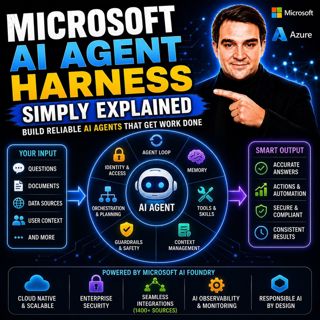
Microsoft AI Agent Harness - Simply Explained

Microsoft AI Agent Harness - Simply Explained

Writing the perfect AI prompt used to be the goal of every AI developer. But as businesses began asking AI to perform increasingly complex tasks—analyzing code, researching topics, coordinating workfl...

17 Jul 16min

Platform Engineering - Simply Explained

Platform Engineering - Simply Explained

For years, DevOps promised to break down the barriers between development and operations by giving teams greater ownership over the software they build. While the idea was powerful, reality became far...

16 Jul 16min
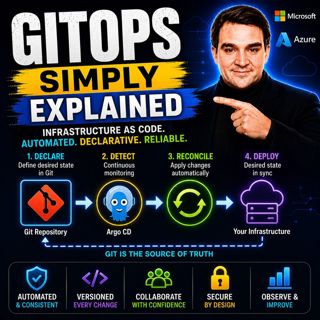
GitOps - Simply Explained

GitOps - Simply Explained

Managing Kubernetes manually quickly becomes a nightmare as environments grow. One engineer updates a deployment directly using kubectl, another changes a ConfigMap through the Azure portal, and sudde...

16 Jul 16min
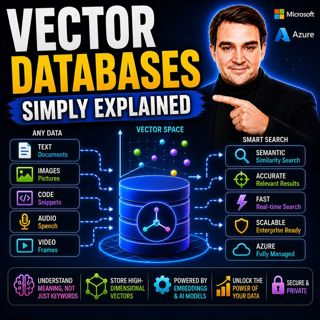
Vector Databases - Simply Explained

Vector Databases - Simply Explained

Large Language Models like GPT-4o, Microsoft Copilot, and ChatGPT are incredibly powerful, but they all depend on one critical technology that most people never hear about: vector databases. Tradition...

16 Jul 14min

Populært innen Politikk og nyheter

giver-og-gjengen-vg
aftenpodden-usa
fotballpodden-2
aftenpodden
forklart
stopp-verden
popradet
det-store-bildet
rss-gukild-johaug
hanna-de-heldige
rss-ness
aftenbla-bla
nokon-ma-ga
dine-penger-pengeradet
rss-penger-polser-og-politikk
lydartikler-fra-aftenposten
rss-utenrikskomiteen-med-bogen-og-grasvik
rss-hor-na-krim-2
e24-podden
unitedno