Food For You and the Planet

Food For You and the Planet

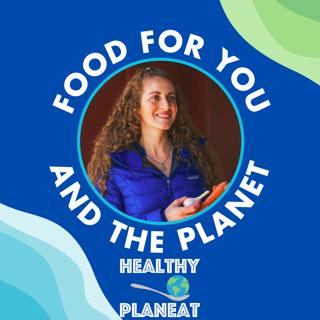
Food For You and the Planet is a fresh new podcast created by Healthy PlanEat that explores healthy and environmentally sustainable food solutions. Food For You and the Planet is hosted by Rosemary Ostfeld, PhD.

Episoder(38)

Episode 14: Demeter USA Evrett Lunquist - What Is Biodynamic Agriculture?

Episode 14: Demeter USA Evrett Lunquist - What Is Biodynamic Agriculture?

Evrett Lunquist is the Director of Certification at Demeter USA, part of the Biodynamic Demeter Alliance. Born and raised in Minnesota, Evrett Lunquist discovered his love of agriculture in college. He went on to complete a self-designed bachelor's degree from the University of Minnesota in Sustainable Food and Agriculture Systems where he studied food science, agronomy, and infrastructures and cultural dynamics involved with the field to table journey of food. He first encountered Biodynamics in 1992 while studying a Wisconsin produce farm inspired by Camphill Communities. He ended up returning to that farm and lived there for two years and followed his Biodynamic interest with an intensive two-week training at Michael Fields Agricultural Institute. Then, in 1996, Evrett Lunquist founded with his wife and kids a diverse Biodynamic produce farm integrated with livestock in southeast Nebraska. He has made all the Biodynamic preparations over the years with the guidance of many individuals at Biodynamic conferences and personal interactions. Expanding the scope of his involvement with Biodynamics, Evrett began inspecting farms and processors for Demeter USA in 2001. Evrett has also inspected for numerous organic certifiers, has extensive inspection training from the International Organic Inspectors Association and has worked as a certification reviewer for several certification agencies. Evrett comes to Demeter USA with a passion for farming, high quality food and its preparation, and educating others about organic and Biodynamic practices. Demeter Association, Inc. is the United States' representative of Demeter International. It is a not-for-profit incorporated in 1985 with the mission to enable people to farm successfully, in accordance with Biodynamic practices and principles. Demeter's vision is to heal the planet through agriculture. TOPICS EXPLORED 0:00 – 2:31 – Introduction 2:31 – 3:26 – What is Demeter USA and what type of work does it do? 3:26 – 4:58 – What is the Biodynamic Demeter Alliance and what types of organizations does it encompass? 4:58 – 7:56 – How did you become interested in biodynamic agriculture? 7:56 – 13:25 – Can you tell me about the history of biodynamic agriculture and its founder, Rudolf Steiner? 13:25 – 18:05 – What were some of Rudolf Steiner's core observations? 18:05 – 26:27 – Can you share a bit about Rudolf Steiner's emphasis on the spiritual side of nature? How does that factor into some of the fundamental teachings of biodynamics? 26:27 – 30:30 – In addition to Rudolf Steiner, who were some of the other key figures in the early biodynamics movement? 30:30 – 32:57 – When and where did biodynamic certification first begin? 32:57 – 39:26 – How is Biodynamic Certification similar or different from USDA Certified Organic? 39:26 – 42:43 – Are there any principles of biodynamic certification that you think are important to share? 42:43 – 44:59 – How does a farm become Biodynamic Certified? 44:59 – 47:18 – How many biodynamic certified farms are there and how can people find them? 47:18 – 50:27 – You shared with me that the founding lectures related to biodynamic agriculture occurred in June 1924, making this the 100th year globally for biodynamics. What are some exciting things that are happening this year to celebrate 100 years globally for biodynamics? 50:27 – 55:10 – Things to share and wrap up DEMETER USA INFORMATION Demeter USA: https://www.demeter-usa.org/ Biodynamic Demeter Alliance: https://biodynamicdemeteralliance.org/ RESOURCES Biodynamic Certification Information: https://www.demeter-usa.org/for-farmers/certification.asp Biodynamic Database: https://www.biodynamicfood.org/ FOOD FOR YOU AND THE PLANET PODCAST INFORMATION Apple Podcasts: https://podcasts.apple.com/us/podcast/food-for-you-and-the-planet/id1739416396 Spotify: https://open.spotify.com/show/7pkAIuXxl9dzD48b7qMOL1 RSS: https://feeds.libsyn.com/506343/rss Podcast Instagram: @foodforyouandtheplanet TAGS Food Environment Health Podcast Sustainability Biodynamic Biodynamic Agriculture Biodynamic Certified Biodiversity Conservation

12 Jun 202455min

Episode 13: Crop Trust Sarada Krishnan PhD - How Does The Crop Trust Conserve Global Crop Diversity?

Episode 13: Crop Trust Sarada Krishnan PhD - How Does The Crop Trust Conserve Global Crop Diversity?

Sarada Krishnan, PhD is the Director of Programs at the Crop Trust. Sarada has an undergraduate degree in Horticulture, master's degree in Horticulture, and PhD in Conservation Biology. Before joining the Crop Trust, she served as the Director of Horticulture and Center for Global Initiatives at Denver Botanic Gardens for 16 years. Sarada is responsible for providing oversight on the implementation of strategic projects and programs designed to support the Crop Trust mandate of securing the world's crop diversity. The Crop Trust is an international non-profit organization dedicated to conserving and making crop diversity available for use globally, forever and for the benefit of everyone. Conserving and making this diversity available in genebanks worldwide ensures a food supply at more stable prices and provides the raw material breeders and farmers will need to grow a more nutritious, affordable and varied food supply. The Global Crop Diversity Trust (Crop Trust) was established in October 2004 by the Food and Agriculture Organization of the United Nations (FAO) and Bioversity International on behalf of CGIAR for the purpose of sustainably supporting a global system for the conservation and use of crop diversity through its Crop Diversity Endowment Fund. TOPICS EXPLORED 0:00 – 1:16 – Introduction 1:16 – 2:05 – What is the Crop Trust and what type of work does it do? 2:05 – 4:16 – How did you become interested in this type of work? 4:16 – 5:07 – What led you to work for the Crop Trust? 5:07 – 7:27 – What types of projects and initiatives do you work on at the Crop Trust? 7:27 – 9:29 – How was the idea of the Crop Trust developed and the organization created? 9:29 – 12:10 – What are some important aspects of the Crop Trust's history? 12:10 – 13:00 – How is the Crop Trust funded? 13:00 – 19:18 – What is the Food Forever Strategic Plan for 2030 and what are some of its aims? 19:18 – 20:54 – What types of foods are part of the Annex 1 list and how are they selected? 20:54 – 24:41 – What is the Svalbard Global Seed Vault and what happens there? 24:41 – 27:16 – How does the Crop Trust source the seeds for the Seed Vault? 27:16 – 29:33 – Where do some of the genebanks exist? 29:33 – 35:35 – What are other projects and types of research is the Crop Trust working on? 35:35 – 37:20 – What are some things everyday people can do to preserve seed and crop diversity? 37:20 – 38:48 – Things to share and wrap up CROP TRUST INFORMATION Crop Trust: https://www.croptrust.org/ Svalbard Global Seed Vault: https://www.croptrust.org/work/svalbard-global-seed-vault/ RESOURCES BOLD Project: https://bold.croptrust.org/ Crop Trust Genebank Resources Hub: https://www.croptrust.org/pgrfa-hub/ FOOD FOR YOU AND THE PLANET PODCAST INFORMATION Apple Podcasts: https://podcasts.apple.com/us/podcast/food-for-you-and-the-planet/id1739416396 Spotify: https://open.spotify.com/show/7pkAIuXxl9dzD48b7qMOL1 RSS: https://feeds.libsyn.com/506343/rss Podcast Instagram: @foodforyouandtheplanet TAGS Food Environment Health Podcast Sustainability Crop Trust Native Plants Seed Saving Food Security Conservation Biodiversity

29 Mai 202438min

Episode 12: San Diego Botanic Garden Colin Khoury PhD - How Do Botanic Gardens Conserve Biodiversity?

Episode 12: San Diego Botanic Garden Colin Khoury PhD - How Do Botanic Gardens Conserve Biodiversity?

Colin Khoury, PhD is the Senior Director of Science and Conservation at the San Diego Botanic Garden. Colin was born and raised in the coastal sage scrub and the avocado and citrus orchards of San Diego County. He obtained a Master of Science in plant genetic resource conservation from the University of Birmingham, UK, and a PhD in production ecology and resource conservation from Wageningen University in the Netherlands. He has held science and conservation positions at academic, nonprofit, industry, government, and international organizations across the US and in Italy and Colombia. Colin is thrilled to be back home, working for the conservation and use of plant diversity for people and for the planet. San Diego Botanic Garden (SDBG) was established in 1907 and is a 37-acre urban oasis located in the city of Encinitas, in north San Diego County. They garden to create, share and apply plant wisdom in our world. The Garden's four miles of trails display more than 5,000 plant species and varieties, including 300 plants for which SDBG is the only garden maintaining a population. SDBG has 15 gardens that represent different regions of the world, 12 demonstration gardens, and the largest public bamboo collection in North America. SDBG has three children's gardens, including its flagship, one-acre Hamilton Children's Garden, the largest kids' garden on the west coast. The Garden works in botany, conservation horticulture, and applied plant sciences to address our biggest local and global issues—from food security and climate change to land management and home gardening. TOPICS EXPLORED 0:00 – 1:27 – Introduction 1:27 – 3:45 – What is the San Diego Botanic Garden and what type of work does it do? 3:45 – 5:17 – What are some of the things people can see at the San Diego Botanic Garden? 5:17 – 9:56 – Can you tell me a little bit about your background and what sparked your interest in food and agriculture? 9:56 – 14:38 – Can you tell me a little bit about your role as the Senior Director of Science and Conservation at the San Diego Botanic Garden? 14:38 – 19:19 – What role can botanic gardens play in conservating a diverse food and agricultural system? 19:19 – 22:34 – Can you share a bit about native species and how they could incorporate them into their diets and gardens? 22:34 – 26:35 – Can you share a bit about the San Diego Botanic Garden's work with the North American fruit and nut crop wild relative working group? 26:35 – 31:54 – Can you share a bit about San Diego Botanic Garden's conservation gap analysis for wild North American grapes? 31:54 – 36:02 – Can you tell me a little bit more about the plant breeding process and about grafting? 36:02 – 41:19 – How is San Diego Botanic Garden collaborating with international organizations such as the World Vegetable Center and the Global Crop Diversity Trust? 41:19 – 42:56 – Things to share and wrap up SAN DIEGO BOTANIC GARDEN INFORMATION San Diego Botanic Garden: https://sdbg.org/ San Diego Botanic Garden Exhibits: https://sdbg.org/exhibitions-public-programs/ San Diego Botanic Garden Project Highlights: https://sdbg.org/science-conservation-projects/ San Diego Botanic Garden Education Resources: https://sdbg.org/educator-school-programs/ San Diego Botanic Garden Community Science Project: https://sdbg.org/budburst/ RESOURCES American Public Gardens Association: https://www.publicgardens.org/ Botanic Gardens Conservation International: https://www.bgci.org/resources/bgci-databases/ FOOD FOR YOU AND THE PLANET PODCAST INFORMATION Apple Podcasts: https://podcasts.apple.com/us/podcast/food-for-you-and-the-planet/id1739416396 Spotify: https://open.spotify.com/show/7pkAIuXxl9dzD48b7qMOL1 RSS: https://feeds.libsyn.com/506343/rss Podcast Instagram: @foodforyouandtheplanet TAGS Food Environment Health Podcast Sustainability San Diego Botanic Garden Botanic Garden Conservation Biodiversity

15 Mai 202442min

Episode 11: Dig2Grow Professor David Montgomery and Anne Bikle - Why Is Soil Health Important?

Episode 11: Dig2Grow Professor David Montgomery and Anne Bikle - Why Is Soil Health Important?

Professor David Montgomery and Anne Bikle are Dig2Grow, a husband and wife and a pair of writers. David Montgomery is an Earth and Space Sciences Professor at the University of Washington. He is a geomorphologist who looks at the process shaping Earth's surface and how they affect ecological systems—and human societies. His book, Growing a Revolution: Bringing Our Soil Back to Life focuses on the potential for regenerative farming practice to reshape agriculture. He is an elected Fellow of the American Geophysical Union and has received many awards throughout his career, including a MacArthur Fellowship and the Vega Medal. Anne Biklé attended the University of California, Santa Cruz earning Bachelors' degrees in Biology and Natural History. She holds a Masters Degree in Landscape Architecture from the University of California, Berkeley. She has over two decades of professional experience spanning field biology, watershed restoration, environmental planning, and public health. She uses her broad background and endless fascination with the natural world to examine connections between people and their environments. David and Anne chose "Dig2Grow" because that's what happens when you write, talk, and act on things that matter to the well-being of people and our one-and-only planet. TOPICS EXPLORED 0:00 – 1:58 – Introduction 1:58 – 6:12 – Can you tell me a little bit about both of your careers and your work on soil? 6:12 – 9:28 – Why is soil so important for our food systems and society as a whole? 9:28 – 14:35 – What are some examples you can share about how some societies have not taken good care of the soil and what we can learn from that? 14:35 – 17:28 – What are important things to think about regarding landscapes and how we interact with them? 17:28 – 22:52 – What are the main takeaways from your book Growing A Revolution and what are some of the most fascinating examples from the farms you explored all around the world? 22:52 – 30:32 – How does moving away from synthetic pesticides and fertilizers help our soil ecosystems? 30:32 – 36:04 – I'd love to hear more about your book The Hidden Half Of Nature. What role do microbes play in soil and human health? 36:04 – 40:29 – How can people build their gut microbiome, and what are some of the benefits? 40:29 – 51:02 – You published an article in 2021 in Frontiers in Sustainable Food Systems which explored nutrient density in conventional versus organic systems. What are some of the nutritional differences between the two, and why do these differences exist? 51:02 – 52:52 – Things to share and wrap up DIG2GROW INFORMATION Dig2Grow: https://www.dig2grow.com/ RESOURCES What Your Food Ate: https://bookshop.org/p/books/what-your-food-ate-how-to-restore-our-land-and-reclaim-our-health/18885013 Growing A Revolution: https://bookshop.org/p/books/growing-a-revolution-bringing-our-soil-back-to-life-david-r-montgomery/11186736 The Hidden Half of Nature: https://bookshop.org/p/books/the-hidden-half-of-nature-the-microbial-roots-of-life-and-health-david-r-montgomery/8771342 Dirt: The Erosion of Civilization: https://bookshop.org/p/books/dirt-the-erosion-of-civilizations-david-r-montgomery/6561383 FOOD FOR YOU AND THE PLANET PODCAST INFORMATION Apple Podcasts: https://podcasts.apple.com/us/podcast/food-for-you-and-the-planet/id1739416396 Spotify: https://open.spotify.com/show/7pkAIuXxl9dzD48b7qMOL1 RSS: https://feeds.libsyn.com/506343/rss Podcast Instagram: @foodforyouandtheplanet TAGS Food Environment Health Podcast Sustainability Dig2Grow Organic Soil Soil Health No Till Regenerative Agriculture Regenerative Organic Agriculture

1 Mai 202452min

Episode 10: EWG Alexis Temkin PhD - What Is The EWG Shopper's Guide To Pesticides In Produce

Episode 10: EWG Alexis Temkin PhD - What Is The EWG Shopper's Guide To Pesticides In Produce

Alexis Temkin, PhD is a Senior Toxicologist at the Environmental Working Group (EWG). Alexis Temkin, PhD supports EWG's consumer databases, policy and research in the areas of personal care and cleaning products, pesticides and tap water. She began her research career at Columbia University Medical Center, working as a lab technician studying the molecular mechanisms responsible for environmental influence on gene regulation. As a doctoral student, she studied how exposure to environmental chemicals during development can influence adult obesity and metabolic syndrome. The Environmental Working Group is a non-profit, non-partisan organization dedicated to protecting human health and the environment. Its mission is to empower people to live healthier lives in a healthier environment. EWG drives consumer choice and civic action with its game-changing investigations and research on toxics and environmental health, food and agriculture, and water and energy. For two decades, EWG's groundbreaking research has changed the debate over environmental health. From households to Capitol Hill, EWG's team of scientists, policy experts, lawyers, communication experts and programmers has worked tirelessly to make sure someone is standing up for public health when government or industry won't. TOPICS EXPLORED 0:00 – 1:20 – Introduction 1:20 – 2:32 – What is the Environmental Working Group and what type of work does it do? 2:32 – 4:12 – Can you tell me a little bit about your background and what led to your career at the Environmental Working Group? 4:12 – 6:40 – What are some of the dangers of synthetic pesticide exposure to humans, animals, and our environment? 6:40 – 9:21 – What is the Environmental Working Group's Shopper's Guide to Pesticides in Produce? 9:21 – 11:49 – Can you tell me about "The Dirty Dozen" and what makes them more likely to have high levels of pesticides? 11:49 – 15:14 – What are some of the fungicides that are commonly found on the Dirty Dozen and why are they used on produce? 15:14 – 20:08 – This year, you also explored pesticides in baby food. Can you tell me a little bit more about that research and its key findings? 20:08 – 22:51 – Can you tell me about "The Clean Fifteen" and what makes them more likely to have lower levels of pesticides? 22:51 – 25:02 – Some types of produce are tested but don't appear on "The Dirty Dozen" or "The Clean Fifteen" lists. What should people know about these types of produce? 25:02 – 26:44 – What actions can people take to advocate for synthetic pesticide-free produce? 26:44 – 28:12 – Things to share and wrap up ENVIRONMENTAL WORKING GROUP INFORMATION Environmental Working Group: https://www.ewg.org/ Environmental Working Group YouTube Channel: https://www.youtube.com/EnvironmentalWG Environmental Working Group Facebook: https://www.facebook.com/ewg.org Environmental Working Group Instagram: @environmentalworkinggroup RESOURCES Environmental Working Group's Shopper's Guide to Pesticides in Produce: https://www.ewg.org/foodnews/full-list.php FOOD FOR YOU AND THE PLANET PODCAST INFORMATION Apple Podcasts: https://podcasts.apple.com/us/podcast/food-for-you-and-the-planet/id1739416396 Spotify: https://open.spotify.com/show/7pkAIuXxl9dzD48b7qMOL1 RSS: https://feeds.libsyn.com/506343/rss Podcast Instagram: @foodforyouandtheplanet TAGS Food Environment Health Podcast Sustainability Organic Organic Certified Environmental Working Group EWG Pesticides in Produce Clean Fifteen Dirty Dozen

17 Apr 202428min

Episode 9: Organic Materials Review Institute Orsi Dezsi - How Organic Inputs Are Approved

Episode 9: Organic Materials Review Institute Orsi Dezsi - How Organic Inputs Are Approved

Orsi Dezsi is the Executive Director of the Organic Materials Review Institute (OMRI). Orsi holds a B.A. in History and Russian & Eastern European Studies, and a Master's in Public Administration, with a focus in Nonprofit Management. For the past 20 years, she has worked closely with the regulatory community, industry stakeholders, and clients to navigate the evolving global regulatory landscape in both equipment design and food contact material regulations. Outside of work, Orsi is actively involved in the community by volunteering at a local animal rescue and food pantry. Founded in 1997, the Organic Materials Review Institute (OMRI) is a nonprofit organization which provides organic certifiers, growers, manufacturers, and suppliers an independent review of products intended for use in certified organic production, handling, and processing. When companies apply, OMRI reviews their products against the USDA Organic or Canada Organic Regime standards. Acceptable products are OMRI Listed and appear on the OMRI Products List. OMRI also provides subscribers and certifiers guidance on the acceptability of various material inputs in general under the organic standards. TOPICS EXPLORED 0:00 – 1:24 – Introduction 1:24 – 2:49 – What is the Organic Materials Review Institute (OMRI) and what type of work does it do? 2:49 – 4:17 – How did OMRI begin and why was it originally created? 4:17 – 5:54 – How does OMRI work with input producers, organic certifiers, and organic farmers? 5:54 – 7:25 – How is OMRI connected with the US Department of Agriculture National Organic Program which develops the rules and regulations for all USDA certified organic products? 7:25 – 8:30 – What is the National Organic Standards Board (NOSB) and what type of work do they do? 8:30 – 10:14 – What is the OMRI products list and what types of products may someone find there? 10:14 – 11:44 – How do input producers apply to have their products become OMRI listed? 11:44 – 13:01 – How does OMRI work with experts to independently and transparently verify input materials that are used in organic farming? 13:01 – 14:47 – How does OMRI provide technical assistance and who does it offer it to? 14:47 – 15:59 – How does OMRI offer education and outreach and who does it offer it to? 15:59 – 17:26 – What are some of the inputs that can be used by certified organic producers? 17:26 – 18:24 – What is an organic system plan and how is that used in the certification process? 18:24 – 21:47 – What is the current state of organic agriculture in the United States and where do you think it will go in the future? 21:47 – 22:42 – Things to share and wrap up ORGANIC MATERIALS REVIEW INSTITUTE INFORMATION The Organic Materials Review Institute: https://www.omri.org/ The Organic Materials Review Institute Facebook: https://www.facebook.com/OMRIorganic The Organic Materials Review Institute YouTube Channel: https://www.youtube.com/channel/UC4PLuF4vgX2fW9kvy_ADBmQ RESOURCES Organic Materials Review Institute Lists: https://www.omri.org/omri-lists FOOD FOR YOU AND THE PLANET PODCAST INFORMATION Apple Podcasts: Spotify: https://open.spotify.com/show/7pkAIuXxl9dzD48b7qMOL1 RSS: https://feeds.libsyn.com/506343/rss Podcast Instagram: @foodforyouandtheplanet TAGS Food Environment Health Podcast Sustainability Organic Organic Certified Organic Inputs Organic Materials Review Institute OMRI

3 Apr 202422min

Episode 8: Cornucopia Institute Kestrel Burcham JD - How Organic Integrity Is Maintained

Episode 8: Cornucopia Institute Kestrel Burcham JD - How Organic Integrity Is Maintained

Kestrel Burcham is the Policy Director at the Cornucopia Institute. Kestrel has a background in Animal Science and English from the University of California, Davis. They have worked as an animal technician in both research and industry settings and have experience with different types of livestock. Organic and environmentally conscious food production is part of their background, having grown up on familial farms and assisted in all aspects of farm management. Kestrel holds a law degree with a certificate in Environmental and Natural Resource Law from Lewis and Clark Law School. The Cornucopia Institute uncovers the truth behind organic food and advocates for an organic label you can trust. It continues to be a watchdog within the organic industry, working to protect the character of the organic standards while auditing the integrity of products bearing the organic seal. It researches, issues, and promotes findings, based in science, that are fundamental to maintaining the integrity of organic labeling, production, processing, and marketing. The Cornucopia Institute is also a vocal, visible catalyst for interaction between consumers and producers within the good food movement. TOPICS EXPLORED 0:00 – 1:19 – Introduction 1:19 – 1:58 – What is the Cornucopia Institute and what type of work does it do? 1:58 – 4:39 – Why is it important for people to support food producers who follow organic practices and are USDA Certified Organic? 4:39 – 6:33 – Why is it critical to uphold the integrity of the organic industry and organic standards? 6:33 – 10:14 – What are some of the organic agriculture issues the Cornucopia Institute has helped address and how has it addressed them? 10:14 – 12:40 – How does Cornucopia watch dog large corporations? 12:40 – 15:59 – What happens if a large corporation violates organic standards? 15:59 – 18:26 – What type of research has the Cornucopia Institute completed and what are some of its findings? 18:26 – 19:40 – What are the different scorecards the Cornucopia Institute creates and what are the methods used to create these scorecards? 19:40 – 21:42 – How does the Cornucopia Institute decide which producers are part of the scorecards? 21:42 – 23:55 – What are some of the findings of the scorecards and some brands people could look out for at the supermarket? 23:55 – 26:30 – What are some of the things you consider for the beef scorecard and what are some of the all-star beef producers? 26:30 – 29:23 – What are some of the things you consider for the eggs scorecard? 29:23 – 31:10 – Are there any other scorecards you would like to share a bit about? 31:10 – 35:01 – What are some of the challenges associated with the cost of certified organic feed for livestock farmers and how could those challenges be overcome? 35:01 – 37:40 – What are some actions people can take to advocate for organic agriculture? 37:40 – 39:02 – Things to share and wrap up THE CORNUCOPIA INSTITUTE INFORMATION The Cornucopia Institute: https://www.cornucopia.org/ The Cornucopia Institute Instagram: @cornucopiainstitute RESOURCES Organic Eggs Scorecard: https://www.cornucopia.org/scorecard/eggs/ Organic Dairy Scorecard: https://www.cornucopia.org/scorecard/dairy/ Organic Beef Scorecard: https://www.cornucopia.org/scorecard/organic-beef-scorecard/ Organic Poultry Scorecard: https://www.cornucopia.org/scorecard/organic-poultry-scorecard/ Plant-Based Beverages Scorecard: https://www.cornucopia.org/scorecard/plant-based-beverages/ Organic Soy Scorecard: https://www.cornucopia.org/scorecard/soy/ FOOD FOR YOU AND THE PLANET PODCAST INFORMATION Apple Podcasts: Spotify: https://open.spotify.com/show/7pkAIuXxl9dzD48b7qMOL1 RSS: https://feeds.libsyn.com/506343/rss Podcast Instagram: @foodforyouandtheplanet TAGS Food Environment Health Podcast Sustainability Organic Organic Certified Eggs Dairy Beef Poultry Soy Plant-Based Beverages The Cornucopia Institute

20 Mar 202439min

Episode 7: Tablas Creek Vineyard Jason Haas - How Regenerative Organic Practices Benefit Vineyards

Episode 7: Tablas Creek Vineyard Jason Haas - How Regenerative Organic Practices Benefit Vineyards

Jason Haas is a Partner and General Manager at Tablas Creek Vineyard. Jason Haas is the second-generation proprietor of Tablas Creek. He learned the wine business at an early age, accompanying his father Robert Haas on European wine-buying trips and spending two summers working at a winery in France. Tablas Creek is a pioneer of California's Rhone movement. Founded in 1989, it is the culmination of friendship between two of the international wine community's leading families dating back to 1967: the Perrin family of Chateau de Beaucastel and the Haas family of Vineyard Brands. After a four-year search, the partners chose Paso Robles, California, for its many similarities to the southern Rhone, and began the lengthy process of importing vine cuttings, building a grapevine nursery, and creating an estate vineyard from scratch. Tablas Creek Vineyard is USDA Certified Organic, Biodynamic Certified, and Regenerative Organic Certified. TOPICS EXPLORED 0:00 – 1:03 – Introduction 1:03 – 3:29 – History of Tablas Creek Vineyard 3:29 – 4:37 – What was your life like before becoming involved with Tablas Creek? 4:37 – 10:59 – Tablas Creek was the first vineyard to become Regenerative Organic Certified – what made you decide to achieve Regenerative Organic Certification? 10:59 – 13:23 – What was it like going through the Regenerative Organic Certification process? 13:23 – 18:29 – What are some of the agricultural practices you implement on your vineyard? 18:29 – 22:51 – What are some of the challenges of using Regenerative Organic practices? 22:51 – 26:03 – What are some of the benefits of using Regenerative Organic practices? 26:03 – 29:44 – Is climate change a concern for people in the wine business and how can using Regenerative Organic practices help vineyards? 29:44 – 33:38 – What makes Tablas Creek wine unique? 33:38 – 37:46 – Alternative packaging innovation and wrap up TABLAS CREEK INFORMATION Tablas Creek: https://tablascreek.com/ Tablas Creek Blog: https://tablascreek.typepad.com/ Tablas Creek Instagram: @tablascreek RESOURCES Tablas Creek Packaging: https://tablascreek.typepad.com/tablas/2024/02/thinking-about-the-box-in-which-we-are-thinking-inside-the-box.html Wine & Spirits Top 100 Wineries in the World – Tablas Creek: https://www.wineandspiritsmagazine.com/top100tastingsf/wineries Food and Wine Innovators of the Year – Jason Haas: https://www.foodandwine.com/drinks/drinks-innovators-of-the-year-jason-haas FOOD FOR YOU AND THE PLANET PODCAST INFORMATION Apple Podcasts: Spotify: https://open.spotify.com/show/7pkAIuXxl9dzD48b7qMOL1 RSS: https://feeds.libsyn.com/506343/rss Podcast Instagram: @foodforyouandtheplanet TAGS Food Environment Health Podcast Sustainability Wine Vineyards Viticulture Organic Organic Certified Biodynamic Biodynamic Certified Regenerative Organic Regenerative Organic Certified

6 Mar 202437min

Populært innen Vitenskap

fastlegen
rekommandert
tingenes-tilstand
rss-rekommandert
abels-tarn
jss
tomprat-med-gunnar-tjomlid
villmarksliv
sinnsyn
fremtid-pa-frys
forskningno
rss-overskuddsliv
fjellsportpodden
aldring-og-helse-podden
rss-paradigmepodden
vett-og-vitenskap-med-gaute-einevoll
noen-har-snakket-sammen
smart-forklart
abid-nadia-skyld-og-skam
hva-er-greia-med