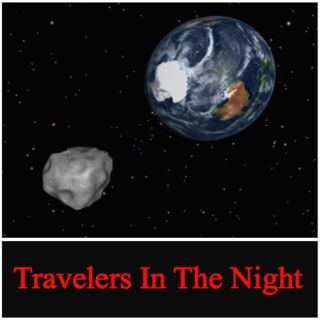
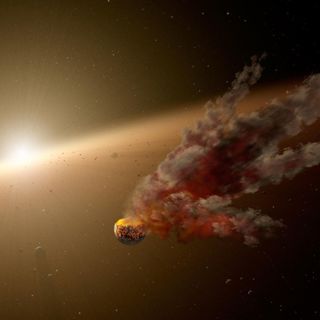
908-Head On
Asteroid hunters find asteroids by looking for objects which change their position relative to the stars. If an asteroid happened to match the Earth’s motion it might appear stationary and thus be vi...
17 Jul 2min
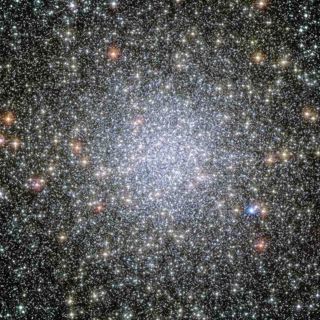
397E-438-Bright Darkness
Most of the humans on planet Earth have never witnessed that the natural night sky is not dark; but rather it is alive with it's own lights. To see for yourself, pick a dark sky place near you like th...
14 Jul 2min
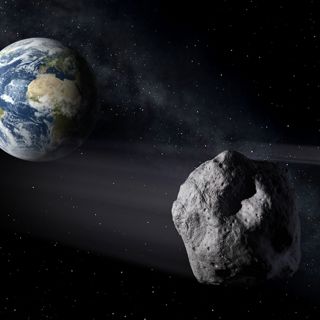
907-Large and Close
My Catalina Sky Survey teammate Josh Hogan was asteroid hunting in the constellation of Ursa Major with our small but mighty Schmidt telescope when he spotted a fast moving point of light in a set of ...
10 Jul 2min
396E-437-Christmas Comet
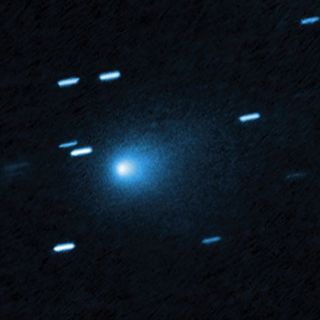
On December 25, 2017, while searching for Earth approaching asteroids in the constellation of Virgo, the Universe gave my Catalina Sky Survey teammate Greg Leonard a Christmas present in the form of a...
7 Jul 2min

906-Pierazzo Lunar Crater
The visually stunning Lunar Crater Pierazzo, named for the late Planetary Scientist Elizabeth “Betty” Pierazzo was observed by the Artemis II Crew as they passed over the Moon’s far side. It is a 5.9...
3 Jul 2min
395E-436-Lonely Asteroids
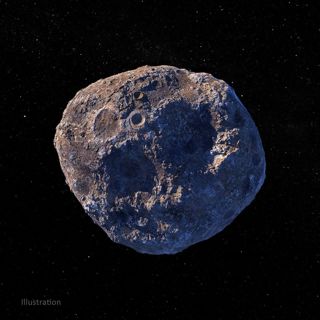
Most asteroids are located in the lonely space between Mars and Jupiter where the average distance between two asteroids is about 600,000 miles. Even though there is a tremendous space between asteroi...
30 Jun 2min
905-Hogan’s Interesting PHA
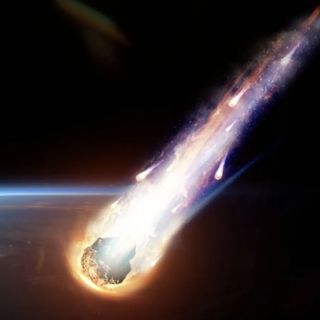
My Catalina Sky Survey teammate Josh Hogan has discovered a 2 football field diameter asteroid that was placed on NASA’s Sentry list because it has a tiny minuscule but non-zero chance of impacting ou...
26 Jun 2min
394E-435-Number 31
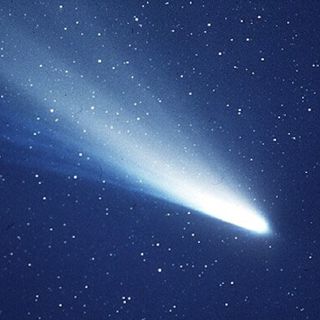
Asteroids appear as moving points of light in an asteroid hunter's images so that when my Catalina Sky Survey teammate Alex Gibbs spotted a fuzzy moving object he immediately suspected it to be a come...
23 Jun 2min