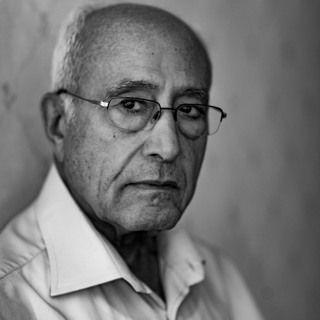
Nakba #10 - Mohamad Zarra
Överlevarna29 Dec 2025

Nakba #10 - Mohamad Zarra

1946 ”As a boy, I remember the beach in Tantura. I was five or six years old. The sand was soft, clean, and white. The water was shallow far out. The coast consisted of alternating coves and small islands. I used to swim in the sea with my father. That is an important memory. 1948 ”I started school in March 1948, but three months later we were forced to flee. Tantura was occupied on May 24, 1948—the same day I turned seven years old. I remember how the bloody night began. I heard bursts of gunfire and the deafening thunder of cannons. The Haganah attacked from three directions. Our family—my aunts on my father’s and mother’s sides and their families—gathered in my grandmother’s house. Everyone was afraid; everyone was screaming and crying. My mother held my three youngest siblings in her arms. That night I could not sleep. Some prayed to Allah; others cursed the Jews. Even the dogs were afraid. More than one hundred villagers were killed that night. In the morning, the streets were filled with bodies. My father and some male relatives went to the school to organize resistance. Around noon the Zionists entered Tantura. The village raised a white flag; there was nothing else to do. The Jewish soldiers gathered the women and children in the square. In the chaos I spotted my mother and my younger siblings. They were searched by female soldiers looking for gold and money. They took everything—rings and necklaces. They tore off earrings so that blood spurted from the women’s and girls’ ears. The soldiers went into the houses and emptied them of everything of value—furniture, valuables, and money. The items were hauled away by horse and cart. Other soldiers collected the dead bodies scattered in the streets. They dumped the bodies in front of the women and children, as a final act of humiliation. Then some of the village’s snipers began shooting at the Zionists again, despite the white flag. They killed some Haganah soldiers, which resulted in the Jewish soldiers, in blind fury, shooting every man who came in their way. People fell like bowling pins. Meanwhile, people from a nearby Jewish settlement joined the Haganah. When things calmed somewhat, we were ordered down to the beach. On the way I saw several dead bodies, among them my maternal grandfather, Abu Hamek Jidek, and one of my uncles, Ami Abdel Aziz. Crying women wandered around looking for men and children among the bodies. The May sun was mercilessly hot. When we reached the beach, the sand was hot like fire. Everyone was barefoot. We began hopping like grasshoppers. We were hungry and thirsty, but the soldiers gave us nothing to eat or drink. My grandfather was the village mukhtar. He had smuggled weapons from Syria to Palestine, and now the Haganah wanted to make an example of him. Two soldiers took him to a house by the beach. They pushed him inside and closed the door. Shortly afterward, two pistol shots echoed out over the sea. The men—those aged sixteen and older—were lined up on the beach. A soldier whipped those who did not keep the line straight. The soldiers marched them away, ten at a time, a few hundred meters down the beach. There they were shot. The remaining men were taken to the village cemetery, lined up, and ordered to dig their own graves. When a line had finished digging, the men were shot in the back of the head and fell into the graves they had dug. We remained on the beach, paralyzed with terror. For some, their stomachs turned. Those of us who survived the massacre were forced to go to Fureidis, a neighboring village about four kilometers away. We walked on foot, and I still remember how badly my legs and feet hurt. We were guarded by soldiers. Some pleaded with the soldiers to be allowed to return to their houses to fetch clothes and other belongings, but in vain. When we arrived in Fureidis, the villagers gave us food and drink. We stayed there for a few days. We learned that the military had blown up all the houses .”

Det här avsnittet är hämtat från ett öppet RSS-flöde och publiceras inte av Podme. Det kan innehålla reklam.

Avsnitt(323)

Det judiska Högalid #29 - Arek Folkman 1975

Det judiska Högalid #29 - Arek Folkman 1975

Inspelning med Rikard Folkmans förälddrar, Arek och Eva Folkman. Arek berättar som sina upplevelser under andra världskriget. Han bevittnade de tyska truppernas intåg i Lwów (Lemberg), levde under sov...

24 Jan 1h
Det judiska Högalid #28 - Rikard Folkman

Det judiska Högalid #28 - Rikard Folkman

- Jag började Hillelskolan för att bli mer judisk, men jag kände mig ensam. Jag åt skinka hemma. Det berättade jag aldrig. Jag kände mig ensam ända fram till högstadiet, då jag bytte skola, säger Rika...

23 Jan 1h 44min
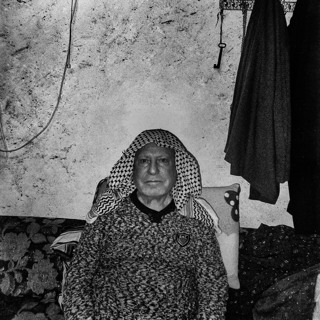
Nakba #52 - Muhammad Mustafa al-Najjar

Nakba #52 - Muhammad Mustafa al-Najjar

1948 “The Egyptian army came to our aid. They were 6,000 men. Our house was located on high ground, and we had a clear view of the Jewish settlement of Gat. The Egyptian commander demanded to take ove...

21 Jan 55min
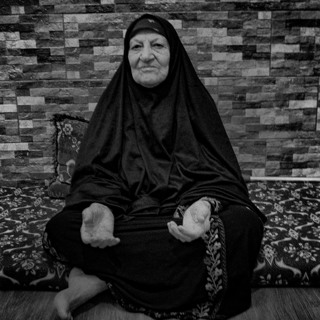
Nakba #51 - Rasmiya ‘Abdalrahman

Nakba #51 - Rasmiya ‘Abdalrahman

1949 “The Jews tried to force us to leave the village and go away, either toward al-Khalil (Hebron) or the Gaza Strip. But we refused. We said that we would rather be buried in ‘Iraq al-Manshiyya. The...

21 Jan 47min
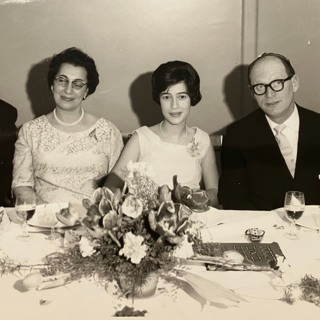
Det judiska Högalid #27 - Renée Hirschfelds bat mitzva-tal

Det judiska Högalid #27 - Renée Hirschfelds bat mitzva-tal

- När jag tagit min bat mitzva håller jag ett tal i synagoga, om vad en judisk kvinna ska göra. Efteråt spelade vi in en skiva med talet i konserthuset. När lampan lyste grönt skulle man tala, säger R...

16 Jan 11min
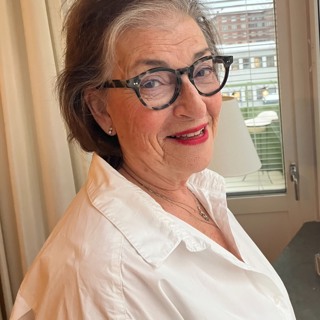
Det judiska Högalid #26 - Renée Hirschfeld

Det judiska Högalid #26 - Renée Hirschfeld

- Som flicka kommer jag ihåg på Jom Kipur, i synagogan på söder. Det var tungt. Uppe på damläktaren satt kvinnor som överlevt Förintelsen och bara grät och grät. Jag tyckte det var obehagligt. säger R...

16 Jan 1h 31min
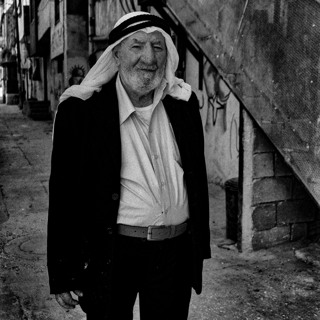
Nakba #50 - Hassan Muhammad al-Ja‘abari

Nakba #50 - Hassan Muhammad al-Ja‘abari

1941 “On the eastern side, up toward the mountain, we had planted olive trees and almond trees. On the western side, close to the coast, we grew wheat, corn, and other grains. To the north was the Jew...

15 Jan 59min
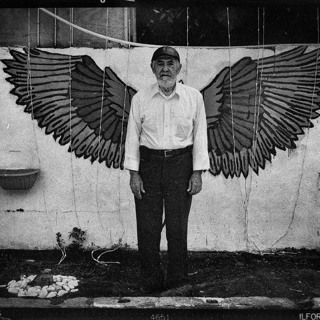
Nakba #49 - Nabil Sa‘id al-Kurd

Nakba #49 - Nabil Sa‘id al-Kurd

“In 1954, UNRWA reached an agreement with Jordan, which at the time governed East al-Quds, to build 28 houses in Sheikh Jarrah. We were one of the families who were to live there, and when the houses ...

15 Jan 1h 7min

Populärt inom Utbildning

historiepodden-se
det-skaver
rss-bara-en-till-om-missbruk-medberoende-2
allt-du-velat-veta
nu-blir-det-historia
roda-vita-rosen
sektledare
johannes-hansen-podcast
harrisons-dramatiska-historia
not-fanny-anymore
rss-viktmedicinpodden
i-vantan-pa-katastrofen
sa-in-i-sjalen
rss-dr-bjorklund
rss-foraldramotet-bring-lagercrantz
rikatillsammans-om-privatekonomi-rikedom-i-livet
rss-max-tant-med-max-villman
rss-real-talk-with-jesper-stahl
rss-relationsrevolutionen
rss-basta-livet