#233 – James Smith on how to prevent a mirror life catastrophe

#233 – James Smith on how to prevent a mirror life catastrophe

When James Smith first heard about mirror bacteria, he was sceptical. But within two weeks, he’d dropped everything to work on it full time, considering it the worst biothreat that he’d seen described. What convinced him?

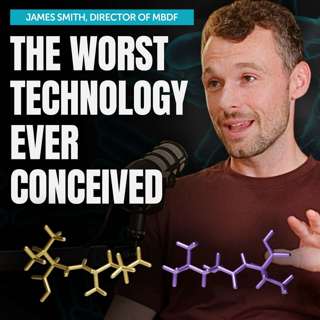
Mirror bacteria would be constructed entirely from molecules that are the mirror images of their naturally occurring counterparts. This seemingly trivial difference creates a fundamental break in the tree of life. For billions of years, the mechanisms underlying immune systems and keeping natural populations of microorganisms in check have evolved to recognise threats by their molecular shape — like a hand fitting into a matching glove.

Learn more, video, and full transcript: https://80k.info/js26

Mirror bacteria would upend that assumption, creating two enormous problems:

  1. Many critical immune pathways would likely fail to activate, creating risks of fatal infection across many species.
  2. Mirror bacteria could have substantial resistance to natural predators: for example, they would be essentially immune to the viruses that currently keep bacteria populations in check. That could help them spread and become irreversibly entrenched across diverse ecosystems.

Unlike ordinary pathogens, which are typically species-specific, mirror bacteria’s reversed molecular structure means they could potentially infect humans, livestock, wildlife, and plants simultaneously. The same fundamental problem — reversed molecular structure breaking immune recognition — could affect most immune systems across the tree of life. People, animals, and plants could be infected from any contaminated soil, dust, or species.

The discovery of these risks came as a surprise. The December 2024 Science paper that brought international attention to mirror life was coauthored by 38 leading scientists, including two Nobel Prize winners and several who had previously wanted to create mirror organisms.

James is now the director of the Mirror Biology Dialogues Fund, which supports conversations among scientists and other experts about how these risks might be addressed. Scientists tracking the field think that mirror bacteria might be feasible in 10–30 years, or possibly sooner. But scientists have already created substantial components of the cellular machinery needed for mirror life. We can regulate precursor technologies to mirror life before they become technically feasible — but only if we act before the research crosses critical thresholds. Once certain capabilities exist, we can’t undo that knowledge.

Addressing these risks could actually be very tractable: unlike other technologies where massive potential benefits accompany catastrophic risks, mirror life appears to offer minimal advantages beyond academic interest.

Nonetheless, James notes that fewer than 10 people currently work full-time on mirror life risks and governance. This is an extraordinary opportunity for researchers in biosecurity, synthetic biology, immunology, policy, and many other fields to help solve an entirely preventable catastrophe — James even believes the issue is on par with AI safety as a priority for some people, depending on their skill set.

The Mirror Biology Dialogues Fund is hiring!

This episode was recorded on November 5-6, 2025.

Chapters:

  • Cold open (00:00:00)
  • Who's James Smith? (00:00:49)
  • Why is mirror life so dangerous? (00:01:12)
  • Mirror life and the human immune system (00:15:40)
  • Nonhuman animals will also be at risk (00:28:25)
  • Will plants be susceptible to mirror bacteria? (00:34:57)
  • Mirror bacteria's effect on ecosystems (00:39:34)
  • How close are we to making mirror bacteria? (00:52:16)
  • Policies for governing mirror life research (01:06:39)
  • Countermeasures if mirror bacteria are released into the world (01:22:06)
  • Why hasn't mirror life evolved on its own? (01:28:37)
  • Why wouldn't antibodies or antibiotics save us from mirror bacteria? (01:31:52)
  • Will the environment be toxic to mirror life? (01:39:21)
  • Are there too many uncertainties to act now? (01:44:18)
  • The potential benefits of mirror molecules and mirror life (01:46:55)
  • Might we encounter mirror life in space? (01:52:44)
  • Sounding the alarms about mirror life: the backstory (01:54:55)
  • How to get involved (02:02:44)

Video and audio editing: Dominic Armstrong, Milo McGuire, Luke Monsour, and Simon Monsour
Music: CORBIT
Camera operators: Jeremy Chevillotte and Alex Miles
Coordination, transcripts, and web: Katy Moore

Avsnitt(325)

AI might let a few people control everything — permanently (article by Rose Hadshar)

AI might let a few people control everything — permanently (article by Rose Hadshar)

Power is already concentrated today: over 800 million people live on less than $3 a day, the three richest men in the world are worth over $1 trillion, and almost six billion people live in countries ...

12 Dec 20251h
#230 – Dean Ball on how AI is a huge deal — but we shouldn’t regulate it yet

#230 – Dean Ball on how AI is a huge deal — but we shouldn’t regulate it yet

Former White House staffer Dean Ball thinks it's very likely some form of 'superintelligence' arrives in under 20 years. He thinks AI being used for bioweapon research is "a real threat model, obvious...

10 Dec 20252h 54min

#229 – Marius Hobbhahn on the race to solve AI scheming before models go superhuman

#229 – Marius Hobbhahn on the race to solve AI scheming before models go superhuman

We often worry about AI models “hallucinating” or making honest mistakes. But what happens when a model knows the truth, but decides to deceive you anyway to achieve a goal of its own? This isn’t sci-...

3 Dec 20253h 3min
Rob & Luisa chat kids, the 2016 fertility crash, and how the 50s invented parenting that makes us miserable

Rob & Luisa chat kids, the 2016 fertility crash, and how the 50s invented parenting that makes us miserable

Global fertility rates aren’t just falling: the rate of decline is accelerating. From 2006 to 2016, fertility dropped gradually, but since 2016 the rate of decline has increased 4.5-fold. In many weal...

25 Nov 20251h 59min
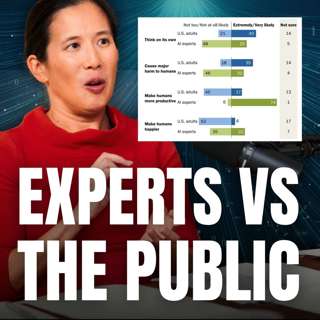
#228 – Eileen Yam on how we're completely out of touch with what the public thinks about AI

#228 – Eileen Yam on how we're completely out of touch with what the public thinks about AI

If you work in AI, you probably think it’s going to boost productivity, create wealth, advance science, and improve your life. If you’re a member of the American public, you probably strongly disagree...

20 Nov 20251h 43min
OpenAI: The nonprofit refuses to be killed (with Tyler Whitmer)

OpenAI: The nonprofit refuses to be killed (with Tyler Whitmer)

Last December, the OpenAI business put forward a plan to completely sideline its nonprofit board. But two state attorneys general have now blocked that effort and kept that board very much alive and k...

11 Nov 20251h 56min
#227 – Helen Toner on the geopolitics of AGI in China and the Middle East

#227 – Helen Toner on the geopolitics of AGI in China and the Middle East

With the US racing to develop AGI and superintelligence ahead of China, you might expect the two countries to be negotiating how they’ll deploy AI, including in the military, without coming to blows. ...

5 Nov 20252h 20min

#226 – Holden Karnofsky on unexploited opportunities to make AI safer — and all his AGI takes

#226 – Holden Karnofsky on unexploited opportunities to make AI safer — and all his AGI takes

For years, working on AI safety usually meant theorising about the ‘alignment problem’ or trying to convince other people to give a damn. If you could find any way to help, the work was frustrating an...

30 Okt 20254h 30min

Populärt inom Utbildning

historiepodden-se
rss-bara-en-till-om-missbruk-medberoende-2
det-skaver
alska-oss
harrisons-dramatiska-historia
nu-blir-det-historia
sektledare
rss-viktmedicinpodden
johannes-hansen-podcast
not-fanny-anymore
roda-vita-rosen
i-vantan-pa-katastrofen
rss-sjalsligt-avkladd
allt-du-velat-veta
rss-basta-livet
rss-om-vi-ska-vara-arliga
sa-in-i-sjalen
rss-max-tant-med-max-villman
rikatillsammans-om-privatekonomi-rikedom-i-livet
rss-pa-insidan-med-bjorn-rudman