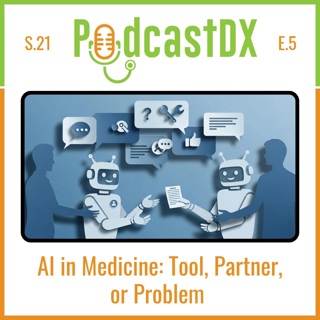

Ai in Medicine Tool Partner or Problem
PodcastDX20 Jan

Ai in Medicine Tool Partner or Problem

AI in medicine is best understood as a powerful tool and a conditional partner that can enhance care when tightly supervised by clinicians, but it becomes a problem when used as a replacement, deployed without oversight, or embedded in biased and opaque systems. Whether it functions more as a partner or a problem depends on how health systems design, regulate, and integrate it into real clinical workflows.

Where AI Works Well
  • Decision support and diagnosis: AI can read imaging, ECGs, and lab patterns with very high accuracy, helping detect cancers, heart disease, and other conditions earlier and reducing some diagnostic errors.

  • Workflow and documentation: Tools that draft visit notes, summarize records, and route messages can cut administrative burden and free up clinician time for patients.

  • Patient monitoring and triage: Algorithms can watch vital signs or wearable data to flag deterioration, triage symptoms online, and guide patients through care pathways, which is especially valuable with clinician shortages.

Risks and Problems
  • Errors, over-reliance, and "automation bias": Studies show clinicians sometimes follow incorrect AI recommendations even when the errors are detectable, which can lead to worse decisions than if AI were not used.

  • Bias and inequity: If training data underrepresent certain groups, AI can systematically misdiagnose or undertreat them, amplifying existing health disparities.

  • Trust, explainability, and liability: Black-box systems can undermine shared decision-making when neither doctor nor patient can understand or challenge a recommendation, and they raise hard questions about who is responsible when harm occurs.

Impact on the Doctor–Patient Relationship
  • Potential partner: By handling routine documentation and data crunching, AI can give clinicians more time for conversation, empathy, and shared decisions, supporting more person-centered care.

  • Potential barrier: If AI outputs dominate visits or generate long lists of differential diagnoses directly to patients, it can increase anxiety, fragment communication, and weaken relational trust.

How To Keep AI a Partner, Not a Problem
  • Keep humans in the loop: Use AI as a second reader or coach, not a final decision-maker; clinicians should retain authority to accept, modify, or reject suggestions.

  • Demand transparency and evaluation: Health systems should validate tools locally, monitor performance across different populations, and disclose AI use to patients in clear language.

  • Align incentives with patient interests: Regulation, reimbursement, and malpractice rules should reward safe, equitable use of AI—not just speed, volume, or commercial uptake.

In practice, AI in medicine becomes a true partner when it augments human judgment, enhances relationships, and improves outcomes; it becomes a problem when it is opaque, biased, or allowed to replace clinical responsibility.

Det här avsnittet är hämtat från ett öppet RSS-flöde och publiceras inte av Podme. Det kan innehålla reklam.

Avsnitt(440)

EECP The Most Underutilized Therapy in Medicine

EECP The Most Underutilized Therapy in Medicine

Retired U.S. Coast Guard Master Chief Petty Officer Jack Clifford joins PodcastDX to share how severe chronic angina once limited even everyday activities and left him facing the possibility of triple...

25 Aug 44min
Diary of An Epileptic

Diary of An Epileptic

In this episode of PodcastDX, we speak with Allany Muniz, founder of Diary of an Epileptic, about the realities of living with epilepsy beyond what most people see. Allany shares how her diagnosis cha...

18 Aug 28min

Memory Villages

Memory Villages

Memory Villages explores the promise and the questions surrounding dementia villages—care communities designed to feel more like neighborhoods than institutions. We discuss how familiar surroundings, ...

11 Aug 17min

Ebola

Ebola

In this PodcastDX episode, Lita and Jean Marie unpack Ebola as a severe but not casually spread viral disease, explaining that infection requires direct contact with blood or other body fluids or cont...

4 Aug 23min

Sunscreen

Sunscreen

In this week's episode of PodcastDX, Lita and Jean Marie break down why sunscreen is about far more than avoiding a bad sunburn—it's everyday cancer prevention. They explain how UV damage happens whil...

28 Juli 17min
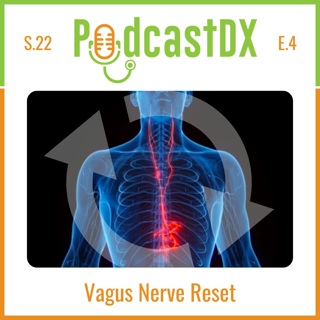
Vagus Nerve Reset

Vagus Nerve Reset

In this solo PodcastDX episode, Lita introduces the concept of the vagus nerve and explains why it has become such a focus in wellness, neurology, psychiatry, and online health spaces. She describes t...

21 Juli 17min

When Seconds Matter

When Seconds Matter

"When Seconds Matter" is a strong, urgent PodcastDX episode.  It is a personal story about emergency response and the critical minutes before help arrives. It's focused on recognizing danger early, ca...

14 Juli 14min
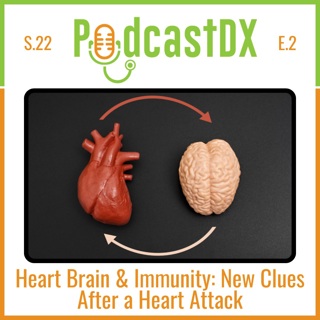
Heart, Brain & Immunity: New Clues After a Heart Attack

Heart, Brain & Immunity: New Clues After a Heart Attack

After a heart attack, the story doesn't end in the arteries. In this episode of PodcastDX, Lita and Jean Marie explore new science showing how the heart, brain, and immune system talk to each other du...

26 Maj 19min

Populärt inom Hälsa

somna-med-henrik
rss-jossan-nina
rss-bara-en-till-om-beroende-medberoende
bullfika
inga-beiga-morsor
rss-vuxna-pa-latsas
not-fanny-anymore
rss-viktmedicinpodden
angestpodden
sexnoveller-deluxe
johannes-hansen-podcast
rss-hos-psykologen
sa-in-i-sjalen
rss-basta-livet
sova-med-dan-horning
tyngre-traningssnack
halsoveckan-by-tyngre
rss-autismandan
rss-angra-inget-3
brottarbroder