
Episode #77: The Napster Effect: Why the Old Guard Always Loses

Episode #77: The Napster Effect: Why the Old Guard Always Loses

In this episode of the Stewart Squared podcast, host Stewart Alsop III sits down with his father Stewart Alsop II to explore the evolution of print media and how technology has continuously disrupted the publishing industry. Stewart Alsop II recounts his early experiences with hot type printing at Groton in the 1960s, working at the Pasadena Guardian after graduating college in 1975, and witnessing the revolutionary shift from lead typesetting to digital systems like CompuGraphic and Atex. The conversation traces the technological transformations that reshaped media—from the introduction of the Macintosh and PageMaker in the mid-1980s to the internet's arrival in the 1990s—and how these changes paralleled disruptions in music, video, and film. Stewart Alsop II also draws fascinating connections between historical media revolutions and today's emerging technologies, touching on everything from Napster's challenge to the music industry to how vibe coding might be the next wave to disrupt software engineering, and even speculating about the future of experiential entertainment spaces and cars as media platforms.


Timestamps

00:00 The Genesis of Print Media
06:33 Evolution of the New York Times
11:25 The Impact of Technology on Media
16:28 The Magazine vs. Newspaper Landscape
20:00 The Digital Revolution in Publishing
20:30 The Evolution of Desktop Publishing
24:10 The Impact of Personal Computers on Media
28:11 The Rise of the Internet and Digital Media
32:07 Democratization of Music and Software
35:34 The Future of Movie Theaters and Experiential Retail

Key Insights

1. Technology has repeatedly revolutionized print media production methods. Stewart Alsop II's career spans from hot type composition in the 1960s at boarding school through CompuGraphic digital typesetting, proprietary Atex publishing systems, and ultimately desktop publishing on the Macintosh with PageMaker and LaserWriter in the mid-1980s. This complete transformation occurred within just 15-20 years, with each technological shift making production dramatically easier and faster while requiring publishing professionals to constantly relearn their craft.
2. Established industries resist technological change because it threatens accumulated expertise. When Napster emerged, a major music label CEO feared his $6 billion industry would collapse to $1 billion because democratized distribution threatened the entire established business model around physical recording, packaging, and retail distribution. This executive had spent decades mastering licensing, publishing rights, and traditional distribution—knowledge that would become obsolete with internet-based music sharing, illustrating why industry veterans often resist innovation.
3. Steve Jobs understood media aesthetics at a fundamental level, which informed Apple's success. Jobs intuitively grasped publishing concepts like fonts, kerning, and composition when creating the LaserWriter and desktop publishing ecosystem. This aesthetic sensibility extended to music with the iPod (holding 1,700 songs versus 12 on a CD) and informed his deals with music labels. His design-centered approach made Apple's devices natural platforms for creative professionals across publishing, music, and video production.
4. The shift from creation tools to distribution platforms fundamentally disrupted traditional media. A YouTube creator recently produced and distributed a feature film for approximately $2 million, earning $12 million in its opening weekend across 2,500 theaters by leveraging 38 million followers rather than traditional Hollywood infrastructure. This represents complete disruption beyond even Netflix, demonstrating how individual creators can now bypass entire legacy distribution systems that previously controlled access to audiences.
5. Physical entertainment spaces are evolving toward experiential centers rather than single-purpose venues. Movie theaters are transforming from simple screening rooms in "scummy lobbies smelling like popcorn" toward multi-attraction experience centers. Examples include Area 15 in Las Vegas (anchored by Meow Wolf) and enhanced AMC theaters offering food and drink service. The future likely involves venues offering movies alongside arcade games, exhibits, and other immersive experiences rather than traditional multiplexes with 20 identical screening rooms.
6. Software development is experiencing the same disruption as traditional media industries. The emergence of vibe coding and AI-assisted programming tools represents to software engineering what desktop publishing represented to print media—a fundamental democratization that threatens established practitioners. Young creators comfortable with new tools (analogous to video gamers learning vibe coding) will disrupt professional programmers who spent careers mastering traditional development methods, following the same pattern seen across music, publishing, and film.
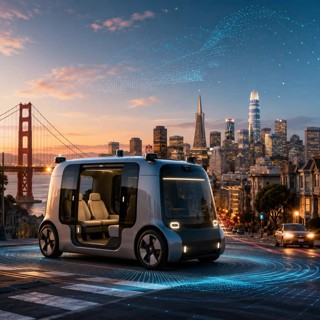
7. The automobile is becoming a media platform rather than just transportation. Apple's abandoned car project and Chinese manufacturers like Xiaomi are reconceptualizing vehicles as "computers with four wheels" where the driving experience itself becomes secondary to the media consumption and interaction experience. With autonomous vehicles eliminating the need for driver attention, the car interior becomes another venue for entertainment experiences, particularly for short urban trips where passengers need engagement during 12-minute rides rather than traditional radio or conversation.

Avsnitt(87)

Episode #87: Tighter Than Microsoft, Smarter Than Apple: Anthropic's Blueprint to Own the AI Stack

Episode #87: Tighter Than Microsoft, Smarter Than Apple: Anthropic's Blueprint to Own the AI Stack

In this episode of the Stewart Squared podcast, host Stewart Alsop is joined by his father, Stewart Alsop II, to talk through a wide range of topics stemming from their shared obsession with AI and te...

30 Apr 1h

Episode #86: The Orchestration Layer: One Indie Builder's War Against Platform Lock-In

Episode #86: The Orchestration Layer: One Indie Builder's War Against Platform Lock-In

In this episode of Stewart Squared, host Stewart Alsop sits down with his father, Stewart Alsop II, for a wide-ranging conversation that kicks off with Stewart's frustrations around Anthropic's shifti...

23 Apr 55min

Episode #85: The Conspiracy Theory That Isn't: When Silicon Valley Quietly Changes the Deal

Episode #85: The Conspiracy Theory That Isn't: When Silicon Valley Quietly Changes the Deal

In this episode of Stewart Squared, host Stewart Alsop is joined by his father Stewart Alsop II to cover a wide range of topics sparked by a growing frustration with Anthropic's recent changes to thei...

16 Apr 54min

Episode #84: From World Models to Robot Orchestras: Inside the New Stack of Real-Time Intelligence

Episode #84: From World Models to Robot Orchestras: Inside the New Stack of Real-Time Intelligence

This week on Stewart Squared, Stewart Alsop sits down with his father Stewart Alsop II — veteran tech journalist, former editor of InfoWorld, and longtime Silicon Valley venture capitalist — for a wid...

9 Apr 50min

Episode #83: The Focus Layer: Why Anthropic, NVIDIA, and Cloudflare Are Winning the Same War

Episode #83: The Focus Layer: Why Anthropic, NVIDIA, and Cloudflare Are Winning the Same War

In this episode of Stewart Squared, host Stewart Alsop III and his father Stewart Alsop II cover a wide range of interconnected topics, starting with a sharp critique of OpenAI's lack of strategic foc...

2 Apr 51min

Episode #82: What Happens When You Stop Trusting Platforms and Start Building Your Own

Episode #82: What Happens When You Stop Trusting Platforms and Start Building Your Own

Stewart Alsop is joined by his guest, Stewart Alsop II, for a wide-ranging conversation about the technology behind modern podcasting and streaming, starting with Riverside’s local recording approach ...

26 Mars 59min

Episode #81: Indoor, Outdoor, In Between: The Real Future of Human Experience

Episode #81: Indoor, Outdoor, In Between: The Real Future of Human Experience

In this episode of Stewart Squared, host Stewart Alsop III is joined by his co-host Stewart Alsop II to cover a wide range of topics stemming from Stewart's recent trip to Tucuman, Argentina for a wed...

19 Mars 51min

Episode #80: The Unreal Engine of Everything: Betting on the Next Shift in Entertainment

Episode #80: The Unreal Engine of Everything: Betting on the Next Shift in Entertainment

In this episode of Stewart Squared, host Stewart Alsop is joined by his longtime co-host and guest Stewart Alsop II to cover a wide range of topics sparked by Stewart's recent fishing trip to Tierra d...

12 Mars 58min

Populärt inom Business & ekonomi

framgangspodden
varvet
rss-jossan-nina
rss-svart-marknad
rss-borsens-finest
badfluence
avanzapodden
uppgang-och-fall
svd-tech-brief
bathina-en-podcast
fill-or-kill
lastbilspodden
rss-dagen-med-di
rss-kort-lang-analyspodden-fran-di
tabberaset
rss-inga-dumma-fragor-om-pengar
24fragor
kapitalet-en-podd-om-ekonomi
rikatillsammans-om-privatekonomi-rikedom-i-livet
borsmorgon