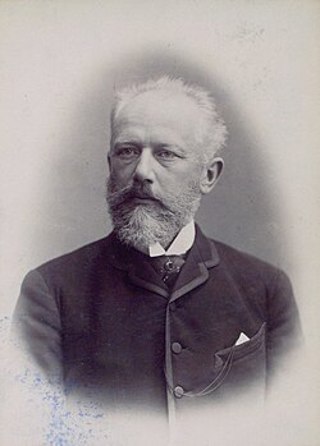
Tchaikovsky Symphony No. 6 (Part 2)

Tchaikovsky Symphony No. 6 (Part 2)

In a letter to Tchaikovsky's nephew Vladimir Davydov, Tchaikovsky wrote: "I'm very pleased with its content, but dissatisfied, or rather not completely satisfied, with the instrumentation. For some reason it's not coming out as I intended. It would be typical and unsurprising if this symphony were torn to pieces or little appreciated, as that wouldn't be the first time such a thing had happened. But I absolutely consider it to be the best, and in particular the most sincere, of all my creations. I love it as I have never loved any of my other musical offspring."

I'm returning to that word sincere this week for Part 2, because it's the through line that makes Tchaikovsky's music so immediately arresting. You always know exactly where you stand with Tchaikovsky, since he always seems to be speaking so honestly in his music. Well, almost always.

The last two movements of Tchaikovsky's 6th Symphony are among the most fascinating in the entire Western classical repertoire, and the reason for their fascination (beyond simply being wonderful movements) is the order in which Tchaikovsky places them. In a typical symphony, the third movement would be either a fast scherzo or a slow movement, depending on what the second movement had been. Since the second movement of this symphony was a waltz, audiences would have expected a slow third movement followed by a fast finale to send them home with some energy. But that is not what Tchaikovsky does. Instead, we hear a thrilling, exhilarating scherzo followed by a devastating slow movement, a choice that completely upended the form of the symphony as a genre, and was revolutionary for its time.

Why did Tchaikovsky do this? And why did this decision, in part, fuel massive controversy surrounding his death, just nine days after the symphony's premiere? We're going to explore all of that today, including the many theories about Tchaikovsky's death, before examining the 3rd and especially the 4th movements of this masterpiece in detail, unpacking the nuances of these profoundly contrasting movements.

Avsnitt(283)

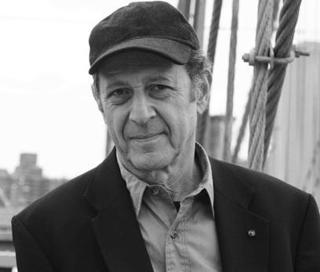
Steve Reich: Different Trains

Steve Reich: Different Trains

Steve Reich, the great American contemporary composer, provided this program note about his work Different Trains: "The idea for the piece came from my childhood. When I was one year old my parents se...

17 Apr 202552min
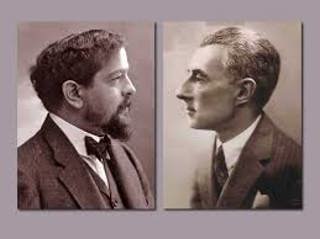
Best of Frenemies: Debussy and Ravel

Best of Frenemies: Debussy and Ravel

Debussy and Ravel are often described as the prototypical musical impressionists. It is often said that the two composers are the closest equivalents to the artistic world of Monet, Renoir, Pisarro, D...

3 Apr 202552min
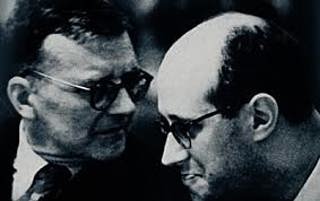
Shostakovich Cello Concerto No. 1

Shostakovich Cello Concerto No. 1

It's hard to overstate the depth of the connection between Dmitri Shostakovich and the legendary cellist Mstistlav Rostropovich. Shostakovich and Rostropovich were extremely close friends, and Shostak...

20 Mars 202550min
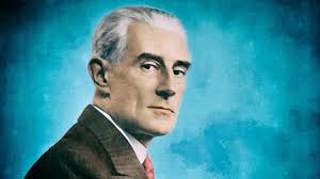
Ravel, Ravel, Ravel, w/Boris Giltburg and G. Henle Verlag!

Ravel, Ravel, Ravel, w/Boris Giltburg and G. Henle Verlag!

Magician, Swiss Watchmaker, Aloof, Elegant, Precise, Soulful, Childlike, Naive, Warm: these are all words that have been used to describe Maurice Ravel, a man of elegant contradictions. But perhaps th...

6 Mars 202559min
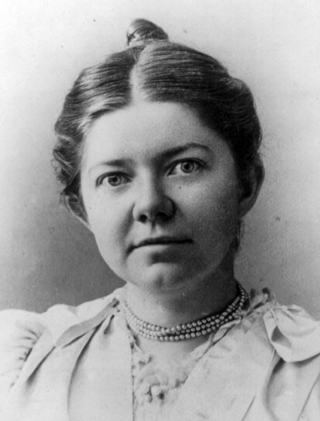
Amy Beach, "Gaelic" Symphony

Amy Beach, "Gaelic" Symphony

Amy Beach is a name that might not be familiar to you. She was born in 1867 and died in 1944, and her life was one of the most fascinating and varied in musical history. She was a child prodigy, becam...

6 Mars 20251h
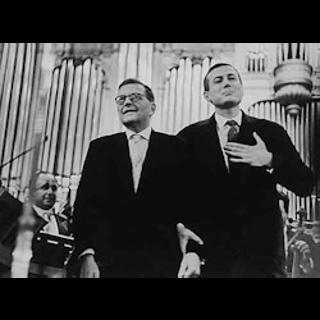
Sticky Notes en Français! Shostakovich Symphonie No. 13 (Bonus Episode)

Sticky Notes en Français! Shostakovich Symphonie No. 13 (Bonus Episode)

Voici un épisode bonus spécial de Sticky Notes en français, en avant-première de mes concerts avec l'Orchestre National de Lille, présentant la 13e symphonie de Shostakovich. Si vous souhaitez écouter...

27 Feb 20251h 10min
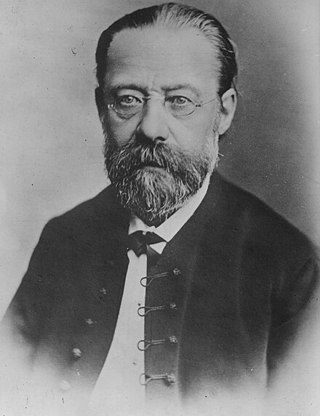
Smetana: Ma Vlast

Smetana: Ma Vlast

Nationalism, patriotism, cultural identity, a sense of home; these are concepts and ideas whose popularity have ebbed and flowed throughout history. Nationalism has been seen as a natural expression o...

6 Feb 20251h 5min
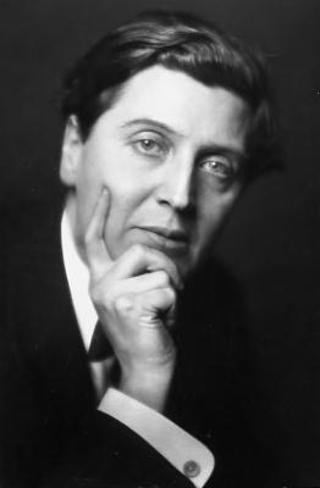
Berg Violin Concerto

Berg Violin Concerto

In the early 1930s, at the height of the atonal and twelve tone movement in music, the American violinist Louis Krasner commissioned a concerto from the Viennese Composer Alban Berg. Berg declined at ...

23 Jan 202548min

Populärt inom Nöje

mellan-himmel-och-jord-med-jlc
filip-fredrik-svarar
fordomspodden
mardromsgasten
badfluence
dialogiskt
rss-p3-musikdokumentar
hemma-hos-strage
schulman-show
chilla-med-de-vet-du
fem-i-topp
mannen-utan-spar
gott-snack-med-fredrik-soderholm
skandal
sexet
rss-rockpodden
podme-bio-4
tv-fabriken
hundaren-motgangspodden-av-tomas-andersson-wij
parterapi