Mahler Symphony No. 5, Part 1

Mahler Symphony No. 5, Part 1

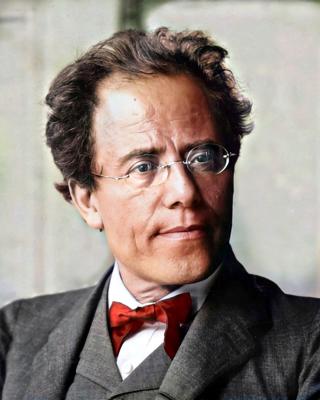
There is a thread of musical theory called Schenkerian analysis, based on the work of Heinrich Schenker. Schenker believed that musical works could be boiled down to their fundamental structures and harmonies. Entire works could be described with single chords. If Schenker had applied his analysis to Mahler's 5th symphony, he might have played just two chords for you: a C# minor chord, and then a D Major chord. The reason why? Over the course of 70 minutes, Mahler takes the listener on a wild journey, starting in C# minor with a lonely military trumpet, and then ending in a glorious D Major coda that might be the most unambiguously sunny thing Mahler ever wrote: But of course, how we get there is the most fascinating part of this monumental symphony. Today, on Part I, I'm going to take you through Part I of the symphony, which encompasses the first two movements. Next week, we'll take a look at Parts 2 and 3 together, which take up the final three movements of the piece. Part I of the piece represents both a shift in Mahler's music, and a nostalgic remembrance. As always with Mahler, there are multiple meanings to every phrase. The opening of the symphony, which sounds so unusual, is itself based on a seemingly random moment of the 4th symphony. The funeral march that dominates the first movement is based at least partly on a piece he was writing at the same time, the Kindertotenlieder, or Songs on the Death of Children. And the second movement, one of the most unusual and complicated movements Mahler had ever written up to this point, quotes a motive from Schubert's Death and the Maiden string quartet. Clearly, death, a specter that always haunted Mahler, is alive and well in Part 1 of the symphony. The first two movements of the symphony might be a perfect distillation of Mahler; they are passionate, wild, intense, but also tightly scored, precisely structured, and full of that constant push and pull between the past, the present, and the modern, that makes Mahler's music both a product of its time, but also music that is always relevant to us. Join us!

Det här avsnittet är hämtat från ett öppet RSS-flöde och publiceras inte av Podme. Det kan innehålla reklam.

Avsnitt(298)

Gerald Finzi: Dies Natalis

Gerald Finzi: Dies Natalis

As I've often said, I love doing Patreon-sponsored episodes in part because they allow me to discover music I might never have encountered otherwise. Today's episode is one of those, because the truth...

1 Okt 51min
Shostakovich Symphony No. 6

Shostakovich Symphony No. 6

Dmitri Shostakovich: "I have set myself a task fraught with tremendous responsibility, to express in sound the immortal image of Lenin as a great son of the Russian people and as a leader of the masse...

17 Sep 1h 2min
Grieg: Peer Gynt

Grieg: Peer Gynt

Grieg's Peer Gynt suites are among the best-known and best-loved works of classical music in the world. They are practically embedded into popular culture, being used in a dizzying number of cartoons,...

3 Sep 1h 7min
Mozart Clarinet Concerto

Mozart Clarinet Concerto

When it comes to a piece like the Mozart Clarinet Concerto, a few words or phrases regularly come up: the concerto is described as "mellow" or Mozart's "swan song," but most often it is described as "...

20 Aug 51min

Bohuslav Martinu Symphony No. 1

Bohuslav Martinu Symphony No. 1

It took a lot to make the composer and critic Virgil Thomson happy. He was famous for savaging new works he didn't like, and the truth is, he didn't like very many new works at all. One exception was ...

6 Aug 1h 1min
Scriabin Poem of Ecstasy

Scriabin Poem of Ecstasy

Thence the universe resounds
 With a joyful cry  I AM. These are the final lines of Alexander Scriabin's epic Poem of Ecstasy, a 300-line poem that takes nearly 10 minutes to read aloud and is one of ...

23 Juli 51min
Sibelius Tapiola

Sibelius Tapiola

Ancient, mysterious, brooding savage dreams; Within them dwells the Forest's mighty God, And wood-sprites in the gloom weave magic secrets. These lines are affixed to the first page of Sibelius' tone...

10 Juli 47min
Arthur Honneger, Symphony No. 3, "Liturgique"

Arthur Honneger, Symphony No. 3, "Liturgique"

In the aftermath of World War II, the Swiss composer Arthur Honegger, who had been living in occupied Paris throughout the war, wrote a new symphony entitled "Liturgical." He wrote an extended comment...

25 Juni 53min

Populärt inom Nöje

mellan-himmel-och-jord-med-jlc
filip-fredrik-svarar
fordomspodden
mardromsgasten
dialogiskt
badfluence
hemma-hos-strage
rss-p3-musikdokumentar
fem-i-topp
chilla-med-de-vet-du
schulman-show
gott-snack-med-fredrik-soderholm
skandal
karatefylla
rss-made-in-sverige-podcast
mannen-utan-spar
sexet
rss-bl-metal-podcast
jag-ar-kinky
podme-bio-4