Sibelius Tapiola

Ancient, mysterious, brooding savage dreams;
Within them dwells the Forest's mighty God,
And wood-sprites in the gloom weave magic secrets.

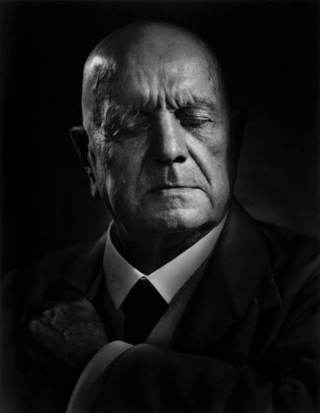
These lines are affixed to the first page of Sibelius' tone poem Tapiola, a piece that is mysterious in many ways and stands as Sibelius' last completed major work. You might be expecting me to say that Sibelius died soon after its composition, but this is not the case. Sibelius wrote Tapiola in 1926, but did not pass away until 1957. Over the course of Sibelius' final 30 years, he wrote almost no music, a creative silence that has never been properly explained. There are many theories about this silence, but the answer to why Sibelius stopped composing might never be found. So, we have this final major piece, Tapiola, written at the very height of the composer's powers. Tapiola, a piece of around 15–20 minutes in duration, is concentrated Sibelius at its very best. It is a piece full of mystery, atmosphere, and most of all, the immense and overwhelming power of nature. Tapiola directly translates to "The Realm of Tapio," Tapio being the forest spirit that is prominent in the Finnish national epic myth, the Kalevala. Throughout this piece, Sibelius uses an incredible economy of ideas to create something wholly unique. There is not a single composer who sounds like Sibelius, and furthermore, no piece of Sibelius' that sounds like this one, save maybe for the 7th symphony, written just before Tapiola. It is a piece absolutely at odds with modern life, with the speed and energy of a city, with the short, attention-grabbing dopamine hits of social media, and even with our modern understanding of nature. As the writer Jay Goodwin says, "Like all art, music is chiefly a humanistic pursuit, meant to provide us with a window to our world. In this piece, however, there is the hair-raising sense that the paradigm has been reversed and that we are the ones being watched. There is the sense that the music is listening to us." I would only change one word in that quote: during Tapiola, I think we have the sense that nature is listening to us, because this music is, essentially, nature. I can't wait to talk you through this wonderfully enigmatic work. Join us!

Det här avsnittet är hämtat från ett öppet RSS-flöde och publiceras inte av Podme. Det kan innehålla reklam.

Avsnitt(296)

Grieg: Peer Gynt

Grieg: Peer Gynt

Grieg's Peer Gynt suites are among the best-known and best-loved works of classical music in the world. They are practically embedded into popular culture, being used in a dizzying number of cartoons,...

3 Sep 1h 7min
Mozart Clarinet Concerto

Mozart Clarinet Concerto

When it comes to a piece like the Mozart Clarinet Concerto, a few words or phrases regularly come up: the concerto is described as "mellow" or Mozart's "swan song," but most often it is described as "...

20 Aug 51min
Bohuslav Martinu Symphony No. 1

Bohuslav Martinu Symphony No. 1

It took a lot to make the composer and critic Virgil Thomson happy. He was famous for savaging new works he didn't like, and the truth is, he didn't like very many new works at all. One exception was ...

6 Aug 1h 1min
Scriabin Poem of Ecstasy

Scriabin Poem of Ecstasy

Thence the universe resounds
 With a joyful cry  I AM. These are the final lines of Alexander Scriabin's epic Poem of Ecstasy, a 300-line poem that takes nearly 10 minutes to read aloud and is one of ...

23 Juli 51min
Arthur Honneger, Symphony No. 3, "Liturgique"

Arthur Honneger, Symphony No. 3, "Liturgique"

In the aftermath of World War II, the Swiss composer Arthur Honegger, who had been living in occupied Paris throughout the war, wrote a new symphony entitled "Liturgical." He wrote an extended comment...

25 Juni 53min
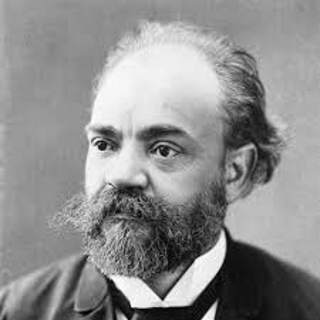
Dvorak Piano Quintet, Op. 81

Dvorak Piano Quintet, Op. 81

In 1872, at the age of 31, Dvořák wrote a Piano Quintet designated as Opus 5. Dvořák was not a prodigy like some other famous composers; instead, his development as a composer was slow and steady. Lat...

11 Juni 49min
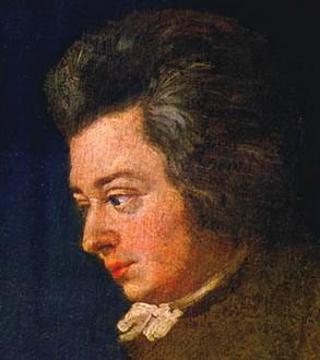
Mozart String Quartet, K. 465, "Dissonance"

Mozart String Quartet, K. 465, "Dissonance"

You might be wondering: why on earth would I choose a piece that is literally called "Dissonance" when I was looking for something a bit simpler or cleaner to talk about on the show today? Actually, M...

28 Maj 49min

Populärt inom Nöje

mellan-himmel-och-jord-med-jlc
filip-fredrik-svarar
fordomspodden
mardromsgasten
dialogiskt
chilla-med-de-vet-du
rss-p3-musikdokumentar
badfluence
fem-i-topp
gott-snack-med-fredrik-soderholm
schulman-show
skandal
karatefylla
hemma-hos-strage
sexet
mannen-utan-spar
vardagsmysterier
rss-bl-metal-podcast
norden-jag
podme-bio-4