PFC Podcast 276: Critical Strategies For Subterranean Rescue

PFC Podcast 276: Critical Strategies For Subterranean Rescue

What happens when the battlefield drops 30 feet underground into a collapsed building, ancient tunnel system, or booby-trapped basement? You don’t just “clear” it — you assess it like a critical trauma patient while everything tries to kill you.


In this raw, no-fluff episode, Dennis sits down with Sean McKay — 20+ year veteran of dynamic high-threat rescue, nonlinear physics guy, and the man who turns “impossible” subterranean ops into repeatable TTPs. Fresh off 48 hours with zero sleep (and still caffeinated to the gills), Sean drops a masterclass on why underground environments are exponentially more dangerous than anything on the surface.


From atmospheric sucker punches (O₂ depletion, CO₂ buildup, toxic off-gassing) to structural collapses, comms blackouts, mental exhaustion, and the brutal reality of casualty extraction in spaces tighter than a coffin, this episode is packed with battlefield-proven principles you won’t find in any manual.


If you run rescue, work in SOF, or just want to understand what happens when the fight goes subterranean — this is required listening.


Key Takeaways

1. Treat the subterranean environment like a patient — use the exact same rapid/ongoing assessment template medics already know by heart.

2. Atmospheric threats (O₂ depletion, CO₂, displacement gases) are silent killers; monitor early and often.

3. Speed is security, but only after deliberate recon — one small “worm” goes first, the team enlarges behind him.

4. Improvise like your life depends on it: rubble, wood studs, high-lift jacks, and building debris become your cribbing and shoring.

5. Plan for mental exhaustion — 45 minutes underground feels like 8 hours; isolation and darkness will mess with your head.

6. Always identify safe havens and load-bearing walls as you move; never trust foreign engineering.

7. Casualty extraction multiplies complexity exponentially — every medical intervention costs time and movement.

8. Worst-case heuristics save lives: assume the worst, then back out from there.

9. Geology and soil type tell you whether a collapsed structure is worth occupying or a death trap.

10. Best practices are written in blood — create your own on the spot using context and innovation.


Chapters

- 03:10 – Why Subterranean Is the Ultimate Nonlinear Nightmare

- 05:29 – Real-World Examples: Afghanistan Karez, Tunnels, Collapses

- 07:25 – Atmospheric & Environmental Pathology (The Silent Killers)

- 09:09 – Structural Collapse, Shoring & Improvised Solutions

- 11:41 – Scenario: Occupying a Collapsed Multi-Story Basement

- 13:36 – Patient-Assessment Template for the Environment

- 15:31 – Tunnel Rat Recon Tactics & Atmospheric Monitoring

- 17:56 – Sustainment, Mental Exhaustion & Comms Hell

- 20:22 – Heuristics, Worst-Case Planning & Spidey Sense

- 23:16 – Real Heuristic Examples from the Field

- 26:11 – Destabilization, Cribbing & Load-Bearing Principles

- 27:19 – Fire Chief Mindset – Maintaining Global Awareness

- 29:45 – Safe Havens, Injuries & Team Support

- 30:56 – Gases, Ventilation & Natural Airflow Hacks

- 35:12 – Fans, Vertical Ventilation & Building Features

- 38:52 – When to Walk Away – Red Flags & Geology Clues

- 41:31 – Water, Electrical & Urban Subterranean Hazards

- 44:48 – Casualty Extraction in Confined Spaces

- 48:39 – Creating Best Practices on the Fly


For more content, go to ⁠⁠⁠⁠⁠⁠⁠⁠⁠⁠⁠⁠⁠⁠⁠⁠⁠⁠⁠⁠⁠⁠⁠⁠⁠⁠⁠⁠⁠⁠⁠⁠⁠⁠⁠⁠⁠⁠⁠⁠⁠⁠⁠⁠⁠⁠⁠⁠⁠⁠⁠⁠⁠⁠⁠⁠⁠⁠⁠⁠⁠⁠⁠⁠⁠⁠⁠www.prolongedfieldcare.org⁠⁠⁠⁠⁠⁠⁠⁠⁠⁠⁠⁠⁠⁠⁠⁠⁠⁠⁠⁠⁠⁠⁠⁠⁠⁠⁠⁠⁠⁠⁠⁠⁠⁠⁠⁠⁠⁠⁠⁠⁠⁠⁠⁠⁠⁠⁠⁠⁠⁠⁠⁠⁠⁠⁠⁠⁠⁠⁠⁠⁠⁠⁠⁠⁠⁠⁠⁠


Consider supporting us: ⁠⁠⁠⁠⁠⁠⁠⁠⁠⁠⁠⁠⁠⁠⁠⁠⁠⁠⁠⁠⁠⁠⁠⁠⁠⁠⁠⁠⁠⁠⁠⁠⁠⁠⁠⁠⁠⁠⁠⁠⁠⁠⁠⁠⁠⁠⁠⁠⁠⁠⁠⁠⁠⁠⁠⁠⁠⁠⁠⁠⁠⁠⁠⁠⁠⁠⁠⁠patreon.com/ProlongedFieldCareCollective⁠⁠⁠⁠⁠⁠⁠⁠⁠⁠⁠⁠⁠⁠⁠⁠⁠⁠⁠⁠⁠⁠⁠⁠⁠⁠⁠⁠⁠⁠⁠⁠⁠⁠⁠⁠⁠⁠⁠⁠⁠⁠⁠⁠⁠⁠⁠⁠⁠⁠⁠⁠⁠⁠⁠⁠ or ⁠⁠⁠⁠⁠⁠⁠⁠⁠⁠⁠⁠⁠⁠⁠⁠⁠⁠⁠⁠⁠⁠⁠⁠⁠⁠⁠⁠⁠⁠⁠⁠⁠⁠⁠⁠⁠⁠⁠⁠⁠⁠⁠⁠⁠⁠⁠⁠⁠⁠⁠⁠⁠⁠⁠⁠www.lobocoffeeco.com/product-page/prolonged-field-care⁠⁠

Det här avsnittet är hämtat från ett öppet RSS-flöde och publiceras inte av Podme. Det kan innehålla reklam.

Avsnitt(624)

294 - Do Antibiotics Really Reduce Mortality in Trauma? Wound Care First in Prolonged Field Care

294 - Do Antibiotics Really Reduce Mortality in Trauma? Wound Care First in Prolonged Field Care

Antibiotics are not magic. In this episode of the PFC Podcast, Dennis sits down with Ryan to cut through the common myth that “I’ve given antibiotics, so the wound is protected.” They unpack why vigor...

31 Aug 36min
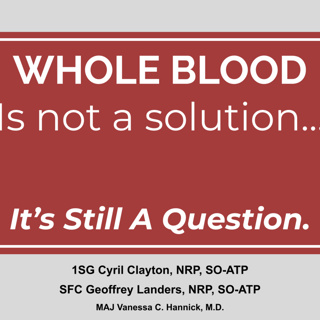
SOMA 26' - Fresh Whole Blood is Not The Answer: It's Still a Question

SOMA 26' - Fresh Whole Blood is Not The Answer: It's Still a Question

Whole Blood Is Not a Solution (Until Conventional Forces Can Deliver It)Recorded live at SOMA 26Dr. Vanessa Hanick (emergency physician, former active-duty Army, now National Guard) and 1SG Cy Clayton...

27 Aug 28min
293 - Dead Tissue Kills in Prolonged Field Care: 4 C’s, Early Debridement & Delayed Primary Closure Lessons from the Field

293 - Dead Tissue Kills in Prolonged Field Care: 4 C’s, Early Debridement & Delayed Primary Closure Lessons from the Field

In this episode of the PFC Podcast, Dennis sits down with missionary surgeon Jason to cut through the noise on real-world wound care in austere and unconventional warfare environments. From the bridge...

24 Aug 49min
SOMA 26' - European Medical Preparations for Major Engagements and Large-Scale Combat Operations

SOMA 26' - European Medical Preparations for Major Engagements and Large-Scale Combat Operations

Recorded live at SOMA 26Pierre Pasquier (France) and his German counterpart deliver a clear-eyed assessment of how European military medical systems are preparing for large-scale combat operations and...

20 Aug 31min
292-Building Mobile Surgical Capability in Denied Environments

292-Building Mobile Surgical Capability in Denied Environments

In this episode of the Prolonged Field Care Podcast, Dennis sits down with Mitch (U.S. family practice/ER physician) and Augustine (frontline surgeon with five years of experience) to unpack what it a...

17 Aug 41min
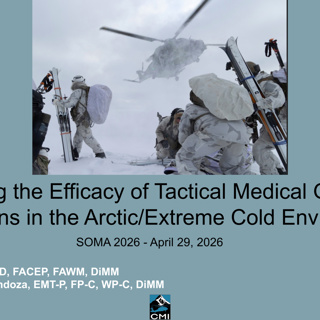
SOMA 26 - Optimizing the Efficacy of Commonly Used Tactical Medical Gear and Medications In The Arctic Extreme Cold Operational Environment

SOMA 26 - Optimizing the Efficacy of Commonly Used Tactical Medical Gear and Medications In The Arctic Extreme Cold Operational Environment

Recorded live at SOMA 26Dr. Emily Johnston (Cascadia Mountain Institute) and SFC Ezequiel Mendoza (Arctic Dustoff, Fairbanks) deliver a hard-hitting, field-validated look at how standard tactical medi...

13 Aug 29min
291 - Pediatric Burns In Prolonged Field Care Assessment, Resuscitation & Airway Management

291 - Pediatric Burns In Prolonged Field Care Assessment, Resuscitation & Airway Management

In this essential episode of the Prolonged Field Care Podcast, Dennis sits down with pediatric intensivist Dr. Sara Bibbens to tackle one of the most challenging and anxiety-inducing scenarios in aust...

10 Aug 30min
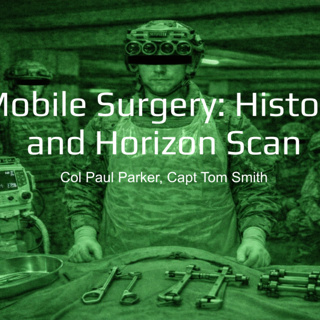
SOMA 26 - A History of Mobile Surgical Teams Role 1-3 and Horizon Scan

SOMA 26 - A History of Mobile Surgical Teams Role 1-3 and Horizon Scan

In this presentation, we take a deep dive into the 300-year history of mobile surgery supporting land campaigns — from Dominique Larrey’s ambulance volantes through the Letterman system, Arnhem, the F...

6 Aug 28min

Populärt inom Utbildning

historiepodden-se
det-skaver
rss-bara-en-till-om-beroende-medberoende
nu-blir-det-historia
harrisons-dramatiska-historia
roda-vita-rosen
not-fanny-anymore
rss-viktmedicinpodden
johannes-hansen-podcast
i-vantan-pa-katastrofen
allt-du-velat-veta
sa-in-i-sjalen
rss-max-tant-med-max-villman
rikatillsammans-om-privatekonomi-rikedom-i-livet
rss-foraldramotet-bring-lagercrantz
rss-basta-livet
rss-ar-det-rimligt
sektledare
rss-traningsklubben
rss-sjalsligt-avkladd