
Is Elon Musk Buying Today’s Election in Wisconsin?
On paper, the election in Wisconsin on Tuesday is about who should control the state’s highest court. In reality, it has become a referendum on Elon Musk, his agenda in Washington and his willingness to flood American politics with his money.Reid J. Epstein, who has been covering this campaign for The Times, explains why it has become the local election that everyone is watching.Guest: Reid J. Epstein, a New York Times reporter covering politics.Background reading: Tuesday’s election will reveal what’s more powerful: Elon Musk’s millions, or liberal anger at him.Mr. Musk and Tesla have a legal bone to pick with Wisconsin.The billionaire has returned to his Trump playbook in the race.For more information on today’s episode, visit nytimes.com/thedaily. Transcripts of each episode will be made available by the next workday. Photo: Jim Vondruska for The New York Times Subscribe today at nytimes.com/podcasts or on Apple Podcasts and Spotify. You can also subscribe via your favorite podcast app here https://www.nytimes.com/activate-access/audio?source=podcatcher. For more podcasts and narrated articles, download The New York Times app at nytimes.com/app.
1 Apr 27min

ICE on Campus
Immigration arrests are taking place at universities across the country. The story of three Columbia students helps explain what’s happening, and why.Hamed Aleaziz, who covers immigration policy, lays out what their cases reveal about the latest immigration crackdown — and about this administration’s views on free speech.Guest: Hamed Aleaziz, who covers the Department of Homeland Security and immigration policy in the United States for The New York Times.Background reading: A Columbia student hunted by ICE has sued to prevent deportation.How a Columbia student fled to Canada after ICE came looking for her.What we know about the detentions of student protesters.For more information on today’s episode, visit nytimes.com/thedaily. Transcripts of each episode will be made available by the next workday. Photo: Eduardo Munoz/Reuters Subscribe today at nytimes.com/podcasts or on Apple Podcasts and Spotify. You can also subscribe via your favorite podcast app here https://www.nytimes.com/activate-access/audio?source=podcatcher. For more podcasts and narrated articles, download The New York Times app at nytimes.com/app.
31 Mars 26min

The Sunday Read: ‘Why Airline Pilots Feel Pushed to Hide Their Mental Illness’
Troy Merritt, a pilot for a major U.S. airline, returned from his 30th birthday trip in Croatia in October 2022 — sailing on a catamaran, eating great food, socializing with friends — and cried. This wasn’t back-to-work blues but collapsed-on-the-floor, full-body-shaking misery. When he wasn’t crying, he slept.“I’ve got to find a therapist,” he told himself. And he did, quickly. If that therapist didn’t write down “depression,” Merritt would be OK. He could still fly planes, keep his job — as long as he wasn’t diagnosed with a mental illness.Merritt, like all pilots, knew that if he was formally diagnosed with a mental-health condition, he might never fly a plane again. Subscribe today at nytimes.com/podcasts or on Apple Podcasts and Spotify. You can also subscribe via your favorite podcast app here https://www.nytimes.com/activate-access/audio?source=podcatcher. For more podcasts and narrated articles, download The New York Times app at nytimes.com/app.
30 Mars 47min
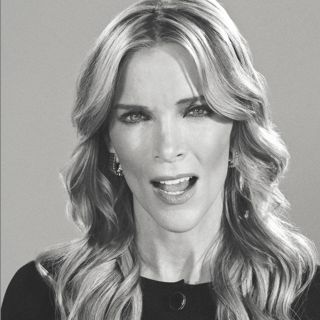
'The Interview': Megyn Kelly Is Embracing Her Bias and Rejecting the 'Old Rules'
The former Fox News and current YouTube host on her professional evolution, conservative media and why she endorsed Trump. Subscribe today at nytimes.com/podcasts or on Apple Podcasts and Spotify. You can also subscribe via your favorite podcast app here https://www.nytimes.com/activate-access/audio?source=podcatcher. For more podcasts and narrated articles, download The New York Times app at nytimes.com/app.
29 Mars 43min

Trump 2.0: Group Chats and a New Spat
What does the continuing fallout from the Signal text security breach tell us about President Trump’s cabinet’s approach to blame and accountability?The Times journalists Michael Barbaro, Eric Schmitt, Julian E. Barnes and Maggie Haberman sit down to make sense of the latest week.Guest: Eric Schmitt, a national security correspondent for The New York Times based in Washington.Julian E. Barnes, a reporter covering the U.S. intelligence agencies and international security matters for The New York Times.Maggie Haberman, a White House correspondent for The New York Times.Background reading: Analysis: President Trump takes government secrecy seriously. But only when it suits him.Intelligence officials faced a fresh round of questions about the Signal leak.A disregard for the rules trickles down from Mr. Trump to his aides.For more information on today’s episode, visit nytimes.com/thedaily. Transcripts of each episode will be made available by the next workday. Photo: Kayla Bartkowski/Getty Images Subscribe today at nytimes.com/podcasts or on Apple Podcasts and Spotify. You can also subscribe via your favorite podcast app here https://www.nytimes.com/activate-access/audio?source=podcatcher. For more podcasts and narrated articles, download The New York Times app at nytimes.com/app.
28 Mars 31min

J.F.K., the C.I.A. and the Original ‘Deep State’
For the past three decades, the U.S. government has released documents related to the assassination of John F. Kennedy with an overriding goal of dispelling conspiracy theories.Julian E. Barnes, who covers the U.S. intelligence agencies, explains why President Trump’s motivations behind releasing the latest batch are far more complicated.Guest: Julian E. Barnes, a reporter covering the U.S. intelligence agencies and international security matters for The New York Times.Background reading: Inside the 24-hour scramble among top national security officials over the Kennedy documents.The thousands of documents posted online this week disappointed assassination buffs. But historians are finding many newly revealed secrets.For more information on today’s episode, visit nytimes.com/thedaily. Transcripts of each episode will be made available by the next workday. Photo: Reuters Subscribe today at nytimes.com/podcasts or on Apple Podcasts and Spotify. You can also subscribe via your favorite podcast app here https://www.nytimes.com/activate-access/audio?source=podcatcher. For more podcasts and narrated articles, download The New York Times app at nytimes.com/app.
27 Mars 28min

The Editor Who Was Accidentally Texted War Plans
This week, top Trump officials inadvertently shared secret U.S. military plans with a prominent journalist after mistakenly adding him to a group chat.The journalist, Jeffrey Goldberg, who is editor in chief at The Atlantic, discusses what he was thinking as he read the messages and what he makes of the fallout.Guest: Jeffrey Goldberg, editor in chief at The Atlantic.Background reading: Read Mr. Goldberg’s piece in The Atlantic about being added to the group chat.Read more about Mr. Goldberg, the editor mistakenly added to the Signal chat.Here’s the leaked chat, annotated.President Trump has downplayed the leak and pointed the finger at Mr. Goldberg.For more information on today’s episode, visit nytimes.com/thedaily. Transcripts of each episode will be made available by the next workday. Photo: Doug Mills/The New York Times Subscribe today at nytimes.com/podcasts or on Apple Podcasts and Spotify. You can also subscribe via your favorite podcast app here https://www.nytimes.com/activate-access/audio?source=podcatcher. For more podcasts and narrated articles, download The New York Times app at nytimes.com/app.
26 Mars 38min

Nixon Dreamed of Breaking the Media. Trump Is Doing It.
As President Trump set out to systematically eliminate or intimidate those who stood in his way — inspectors general, judges, law firms — the news media loomed as one of his most stubborn obstacles. Or so it seemed.Jim Rutenberg, a writer at large for The New York Times, explains how Mr. Trump is circumventing and undermining the fourth estate in a way no president before him ever has.Guest: Jim Rutenberg, a writer at large for The New York Times and The New York Times Magazine.Background reading: President Trump’s blueprint for bending the media to his will has Nixon written all over it.For more information on today’s episode, visit nytimes.com/thedaily. Transcripts of each episode will be made available by the next workday. Photo: Tierney L. Cross for The New York Times Subscribe today at nytimes.com/podcasts or on Apple Podcasts and Spotify. You can also subscribe via your favorite podcast app here https://www.nytimes.com/activate-access/audio?source=podcatcher. For more podcasts and narrated articles, download The New York Times app at nytimes.com/app.
25 Mars 45min